
How Project Managers Are Actually Using AI in 2026: Reddit Workflows for Risk, Reporting, Meetings, Scheduling & Documentation
AI use in project management has moved far beyond rewriting emails. In 2026, experienced PMs are using it to compress information, interrogate project data, turn meetings into control artifacts, accelerate reporting, pressure-test risks, and reduce documentation drag. The advantage comes from combining AI with strong real project management experience, disciplined project governance, effective collaboration systems, and sound PM tool selection. The highest-value workflows still keep human judgment firmly in the loop.
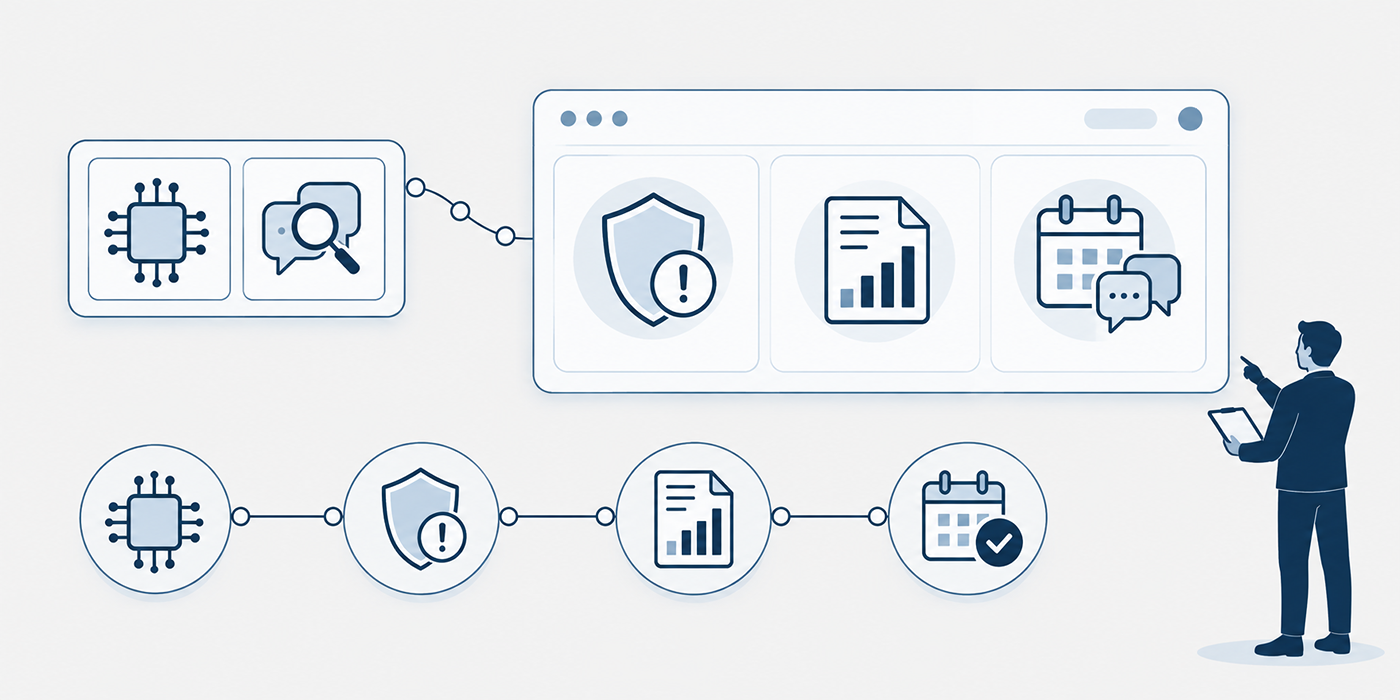
1. What Project Managers Are Actually Using AI for in 2026
The clearest pattern from 2026 Reddit discussions is surprisingly practical. PMs getting value from AI are usually compressing work that already exists rather than asking a chatbot to invent the project. They feed it transcripts, notes, Jira information, project files, emails, status data, risks, decisions, and stakeholder communications, then use it to transform that material into usable management artifacts. That distinction matters for anyone evaluating whether project management is still worth pursuing, how PM software is evolving, what makes an effective modern PMO, and where project-management technology trends are heading.
An August 2026 Reddit thread gives a good example. One PM described using Teams facilitation for agendas, meeting focus, notes, and action items, then using Copilot across OneDrive, OneNote, and email to review several projects for concerns, important topics, and things that may have been missed. That is a much stronger workflow than asking AI, “What risks might my project have?” because the model is being grounded in real project evidence. The approach fits naturally with stronger remote-project collaboration practices, better project-management tool selection, mature PMO reporting structures, and the broader shift toward technology-enabled project management.
Another January 2026 discussion went further. A PM described a workflow where a meeting transcript could be processed into meeting notes, control-register updates, action emails, Jira changes, and eventually weekly reporting. Other practitioners described AI handling charters, work breakdown structures, decks, frameworks, summaries, project documentation, and first-pass executive updates. This starts to explain why employers increasingly value evidence of judgment alongside project-management certification, why certified PMs can still struggle in hiring, and why candidates need both delivery experience and the ability to operate in increasingly digital PM environments.
A useful way to think about this is compression, detection, transformation, and acceleration. AI compresses twenty pages of project material into a decision-ready brief. It detects patterns humans may overlook across schedules, issues, dependencies, and status information. It transforms the same source material into different outputs for executives, delivery teams, vendors, and governance forums. It accelerates administrative work that previously consumed hours. Those advantages become especially valuable for PMs progressing toward program-management responsibilities, senior PM consulting, project-management executive roles, and COO-level operating leadership.
The boundary becomes equally important. AI can identify that three milestones depend on an unstable vendor. The PM decides whether that deserves escalation. AI can draft an executive status report. The PM decides which problem deserves the sponsor's attention. AI can propose a schedule. The PM remains responsible for whether its durations, dependencies, constraints, resource assumptions, and business rules make sense. PMI's 2026 AI standard formalizes this principle through human-in-the-loop oversight and explicit attention to risk, data quality, legal requirements, ethics, IP, and accountability. That reinforces the value of governance leadership, cybersecurity-aware PM practice, strong business-analysis capability, and genuine PM experience.
| Workflow | Best Input | AI's Job | Human Validation | Final PM Output |
|---|---|---|---|---|
| Meeting minutes | Transcript + agenda | Extract decisions, actions and unresolved questions | Confirm meaning, owner and deadline | Approved minutes |
| Action tracking | Transcript + previous action log | Detect new, changed and overdue actions | Resolve ambiguous ownership | Updated action register |
| Decision logging | Meeting/email evidence | Extract decision, rationale and impact | Confirm final authority and wording | Decision log |
| RAID refresh | Notes + project registers | Identify candidate risks, assumptions, issues and dependencies | Score, assign and remove false positives | Reviewed RAID log |
| Risk challenge | Schedule + RAID + status history | Search for emerging patterns and weak signals | Judge materiality and response | Risk-review agenda |
| Issue triage | Issue descriptions + impact data | Cluster, summarize and suggest escalation categories | Set priority and escalation level | Prioritized issue log |
| Weekly reporting | Plan + RAID + accomplishments | Draft concise status narrative | Correct tone, significance and claims | Weekly status report |
| Executive brief | Detailed project update | Compress into decisions, exposure and asks | Choose what executives genuinely need | One-page executive update |
| Steering deck | Current status package | Structure storyline and slide content | Validate narrative and escalation framing | SteerCo deck |
| Email follow-up | Meeting outcome + stakeholder context | Draft concise commitments and requests | Adjust politics, tone and accountability | Stakeholder follow-up |
| Status reconciliation | Jira + notes + email + schedule | Spot conflicting status claims | Investigate source-of-truth conflicts | Reconciled project status |
| Dependency scan | Schedule + backlog + interface list | Find hidden cross-workstream dependencies | Validate technical and organizational links | Dependency map |
| Schedule draft | Scope + milestones + SME estimates | Structure activities and sequencing | Validate logic, duration and constraints | First-pass schedule |
| Schedule challenge | Approved project schedule | Find compressed buffers and dependency exposure | Test findings with SMEs | Schedule review pack |
| Milestone recovery | Slippage + constraints + resources | Generate recovery scenarios | Assess feasibility and consequences | Recovery options |
| Resource analysis | Assignments + capacity + dates | Flag collision and overload patterns | Check availability and skill assumptions | Resource discussion pack |
| Change analysis | Change request + baseline | Map likely scope, schedule and dependency effects | Validate impact with owners | Change-impact assessment |
| Charter drafting | Business case + sponsor input | Build structured first draft | Correct assumptions and authority | Project charter |
| WBS assistance | Approved scope + SME input | Suggest decomposition | Remove invented or excessive work | Validated WBS |
| RACI draft | Deliverables + team structure | Suggest responsibility allocation | Confirm organizational authority | Agreed RACI |
| Requirements synthesis | Workshops + notes + documents | Cluster requirements and identify gaps | Validate with business and technical SMEs | Requirements baseline |
| Document comparison | Old + new versions | Identify material differences | Confirm legal and operational significance | Change summary |
| Contract scan | Approved contract materials | Extract dates, deliverables and obligations | Legal/procurement verification | Obligation tracker |
| Vendor review | SOW + milestones + correspondence | Detect missed commitments and ambiguity | Validate contract position | Vendor performance brief |
| Lessons learned | Project history + retrospectives | Cluster repeated causes and patterns | Separate correlation from cause | Lessons register |
| Project handover | Project records + acceptance evidence | Structure operating handover package | Confirm operational completeness | Transition pack |
| Portfolio scan | Multiple project summaries | Surface common dependencies and systemic risks | Judge enterprise significance | Portfolio hot-topic report |
| Knowledge retrieval | Approved project repository | Answer questions against project history | Verify source and currency | Project knowledge assistant |
| Stakeholder tailoring | One approved status source | Reformat for sponsor, team or vendor | Preserve factual consistency | Audience-specific communication |
| PM second brain | Controlled project knowledge base | Retrieve history, decisions and open loops | Check source evidence before acting | Searchable project memory |
2. Meetings and Reporting Are Where AI Delivers the Fastest, Lowest-Risk PM Wins
Meeting work is currently one of the cleanest AI use cases because the source material already exists. Instead of writing minutes manually while trying to facilitate, a PM can use an approved transcription or facilitation system, then ask AI to separate decisions, actions, unresolved questions, risks, assumptions, dependencies, and follow-ups. Reddit practitioners repeatedly describe meeting notes as one of their highest-frequency AI workflows. That frees the PM to spend more attention on stakeholder alignment, Agile delivery conversations, remote-team collaboration, and the judgment-heavy work that distinguishes a capable PM from a meeting administrator.
The strongest workflow does not stop at a transcript summary. A transcript can become five downstream artifacts: approved minutes, updated actions, candidate RAID entries, decisions, and stakeholder follow-up. The PM should then compare those outputs with the pre-meeting registers. If an existing risk changed materially, update it rather than creating a duplicate. If somebody casually promised a date, confirm that commitment before converting it into an official milestone. This discipline mirrors the governance expected in an effective PMO, the evidence orientation behind real PM experience, the controls required in cybersecurity-related projects, and the stronger communication expected from senior PM consultants.
Reporting is the next obvious gain because AI is good at changing the level of compression without changing the underlying source. One set of project facts can become a detailed delivery-team update, a five-line executive summary, a steering-committee narrative, a vendor escalation, and a sponsor decision brief. A 2026 Reddit PM described AI's strength as moving the same information between formats, including Slack discussions into RAID logs, meeting material into recaps, and project information into different status formats. This becomes powerful when paired with mature project-management software, clear tool-selection standards, good project governance, and the communication discipline needed for program-management progression.
The PM still needs to establish a reporting contract with the AI. Define the reporting period, baseline, approved source data, RAG definitions, escalation threshold, desired audience, permitted conclusions, and missing-data rule. Instruct the model to flag uncertainty instead of filling gaps. Ask it to distinguish an observed fact from an inference and an inference from a recommendation. That one design choice can dramatically improve reliability because many poor outputs begin when missing information gets converted into confident prose. This capability matters for professionals comparing certification with real delivery competence, pursuing PMP career leverage, developing executive-level PM skills, or building stronger governance leadership.
There is also a privacy problem hidden inside meeting automation. An AI note taker may be technically excellent and still be unusable when clients, legal teams, regulators, security policies, or contract terms prohibit recording or external processing. Reddit practitioners have specifically reported client resistance to AI note-taking despite its productivity benefits. PMs therefore need to understand the intersection between cybersecurity and project management, the future security responsibilities of PMs, organizational collaboration-software choices, and the governance maturity expected from PMO leaders.
3. AI Is Useful for Risk and Scheduling When You Make It Challenge the Plan Instead of Own It
Risk management is where AI becomes more strategically interesting. A good model can scan status histories, project notes, open issues, schedule data, dependencies, vendor communications, change requests, and resource information faster than one PM can read them manually. One August 2026 Reddit practitioner described using AI on project data specifically for pattern recognition, including surfacing risks or conversations that might otherwise have been missed, while keeping judgment calls with the PM. That combination is valuable for PMO risk visibility, senior consulting work, program-level coordination, and increasingly complex cybersecurity-project environments.
The mistake is asking, “What are my project risks?” with little context. A stronger risk workflow feeds the AI the risk taxonomy, schedule, milestones, assumptions, dependency map, current issues, resource constraints, vendor obligations, previous status reports, and escalation rules. Then ask it to identify candidate risks and show the evidence supporting each one. Require it to separate newly observed risk from existing risk, issue from risk, cause from event, and impact from mitigation. This discipline resembles the analytical depth valued in business-analysis certification, earned-value management, cost-management practice, and experienced project-governance roles.
AI also works well as a pre-mortem challenger. Feed it the current plan and ask what conditions could make the milestone fail, which assumptions deserve evidence, where several dependencies converge on one date, what resources represent single points of failure, and which risks have mitigation activities that themselves depend on unconfirmed assumptions. Then take those hypotheses to the people who actually understand the work. That produces a much stronger conversation than treating AI output as a risk register. This matters whether you are moving from project coordinator to PM, transitioning from business analysis into project management, developing from IT into PM, or preparing for program-management responsibility.
Scheduling requires more caution. AI can structure SME inputs, propose a work breakdown, detect missing dependency questions, compare baseline and current schedules, highlight compressed buffers, and generate recovery scenarios. It becomes substantially less reliable when asked to manufacture the detailed schedule from vague scope. An April 2026 Reddit thread from a PM trying to generate an IT project schedule reported weak outputs and drew warnings that AI lacked the project's business rules, work-package logic, organizational constraints, and true scope context. Experienced planning still benefits from earned-value discipline, cost controls, appropriate project-management tooling, and genuine delivery experience.
A September 2026 Reddit example shows exactly why. A new PM described asking Copilot for a project plan and WBS and receiving 171 items. The technical SME's own process had 34, and the combined, refined plan ended much closer to 55. The lesson is highly practical: AI can create plausible granularity much faster than a novice can determine whether that granularity belongs. Strong PMs therefore use AI to challenge a schedule built from expert knowledge, rather than treating an AI-generated task list as evidence of planning rigor. The distinction matters for PMP-level judgment, Agile PM development, SAFe career progression, and anyone trying to understand why certification alone does not secure PM jobs.
4. Documentation Gets Powerful When AI Has Project Context Instead of Random Prompts
Documentation is where mature AI workflows begin to separate from casual prompting. A PM can ask a generic model for a project charter and receive something that looks professional within seconds. The real value arrives when the model has the approved business case, project objectives, scope boundaries, assumptions, governance model, stakeholder information, delivery approach, and organizational templates. Then AI is restructuring known facts instead of filling blank space with generic project language. This improves work ranging from project-governance documentation and PMO standardization to Agile career practice and program-level delivery.
The same rule applies to charters, RAID logs, RACI matrices, requirements packs, change assessments, governance decks, decision logs, closure reports, lessons learned, and handover documentation. Reddit practitioners in August 2026 specifically described using Copilot to jump-start charters, risk/issue logs, decision logs, RACI matrices, stakeholder lists, steering materials, and weekly status reports. That can materially reduce blank-page work for PMs learning through CAPM, pursuing PMP, moving through project-coordinator roles, or building evidence for senior PM opportunities.
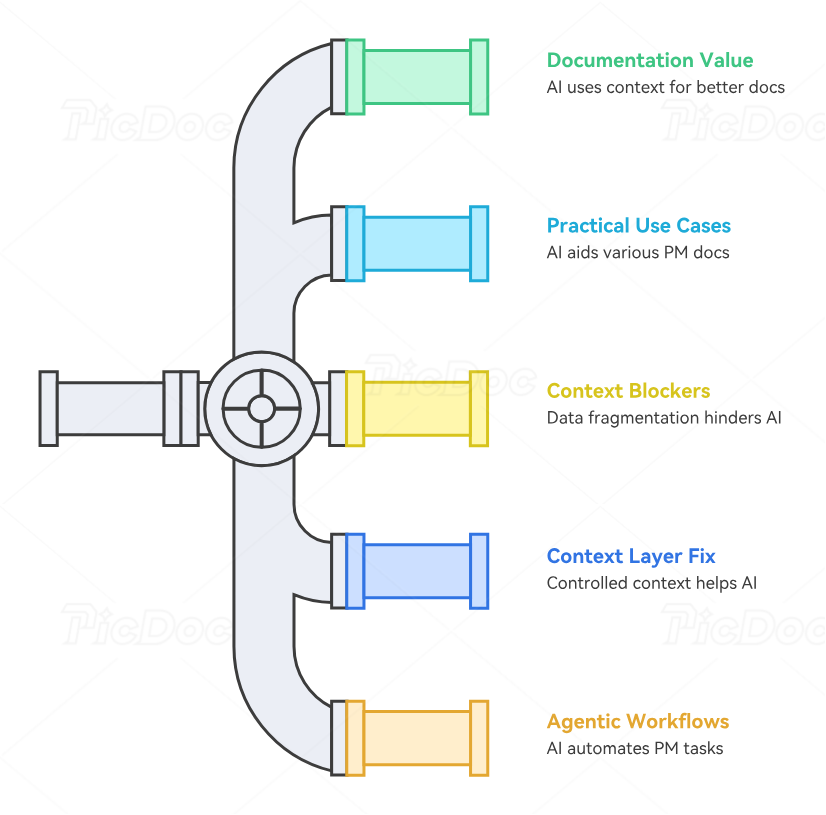
Context, however, remains one of the biggest blockers. A July 2026 Reddit discussion captured the problem well: essential project knowledge may be distributed across Jira, email, Teams, meetings, phone calls, messaging apps, and informal conversations. AI that sees only one repository can confidently summarize an incomplete version of reality. This is fundamentally a knowledge-management problem. Organizations evaluating project-management tools, designing remote collaboration systems, improving PMO effectiveness, or strengthening cybersecurity controls around project data need to solve that fragmentation before expecting reliable AI.
The practical solution is a controlled project context layer. Give every project an authoritative location for objectives, scope, milestones, RAID, decisions, dependencies, stakeholder commitments, changes, meeting records, and current status. Mark documents as approved, draft, superseded, or historical. Require dates and ownership. AI can then retrieve against a cleaner knowledge base. Without those controls, the model can easily mix an old decision with a new baseline or treat a discussion as approval. Building this discipline is relevant to project-management executives, governance leaders, program managers, and PMs working in increasingly AI-affected cybersecurity environments.
This is also where agentic workflows become useful. Instead of manually asking ten unrelated questions, a controlled AI workflow can process the day's approved information and prepare proposed register changes, draft communications, reporting updates, and items requiring PM attention. A 2026 Reddit PMO discussion described agentic AI as particularly effective at repackaging information from one format into another and reducing the information fire hose. The PM remains the approval layer. That operating model strengthens rather than weakens skills valuable in senior PM consulting, project-management leadership, PM-to-COO progression, and PMO governance.
5. The Best AI-Enabled PMs Are Building Controls Around the Tool, Not Handing It the Project
The first control is data permission. Before feeding project material into any AI system, know whether the tool is enterprise-approved, how inputs are retained, what training policies apply, what integrations can access, which contractual restrictions exist, whether client consent is needed, and which classes of information remain prohibited. This is especially important for regulated, government, healthcare, financial, defense, and security-sensitive projects. The intersection between project management and cybersecurity, future cybersecurity responsibilities for PMs, stronger project governance, and modern collaboration platforms is becoming difficult to ignore.
The second control is source traceability. If AI tells you a milestone is at risk, ask which tasks, dates, dependencies, decisions, or issues support that conclusion. If it summarizes a contract obligation, verify the clause. If it says a stakeholder committed to Friday, locate the meeting record or message. If it recommends an escalation, understand which threshold was crossed. This habit moves AI from oracle to analyst. It reflects the same evidence culture valued in earned-value management, cost-control practice, business analysis, and high-quality project portfolio governance.
The third control is decision ownership. AI can create alternatives. It should not quietly become the person deciding scope, accepting risk, approving expenditure, committing resources, changing a baseline, interpreting legal obligations, or communicating politically sensitive conclusions without review. PMI's June 2026 standard explicitly emphasizes human-in-the-loop practices for reviewing AI output, escalation, acceptance, and overrides. That is highly compatible with the durable judgment emphasized in PMP career development, project-governance leadership, program management, and executive PM progression.
The fourth control is workflow measurement. “We use AI” is meaningless. Track whether a workflow reduces preparation time, shortens reporting cycles, decreases missed actions, improves RAID freshness, increases traceability, catches schedule problems earlier, reduces rework, or gives PMs more time with stakeholders. If human correction takes longer than doing the task manually, the workflow needs redesign. This business-value mindset matters when organizations compare project-management platforms, evaluate software adoption trends, rethink PMO effectiveness, or develop PMs for more strategic program-management careers.
The final control is maintaining manual competence. A new PM who cannot judge a WBS, distinguish risk from issue, understand dependency logic, challenge a schedule, or recognize weak requirements is vulnerable to polished AI output. The September 2026 Reddit discussion about an AI-produced 171-item WBS shows how easily volume can masquerade as rigor. AI fluency should therefore sit on top of strong fundamentals developed through real PM experience, appropriate certification choices, deliberate project-coordinator progression, and practical understanding of why employers reject certified candidates.
For career development, this changes the value proposition of the PM. Administrative throughput becomes cheaper. Judgment becomes more visible. The PM who previously spent three hours assembling a report may spend thirty minutes reviewing an AI-assisted draft and the remaining time resolving the problem behind the red milestone. That strengthens the importance of negotiation, systems thinking, commercial judgment, governance, conflict resolution, escalation, stakeholder trust, and decision framing. Those are the same capabilities needed for senior PM consulting, project-management executive roles, PM-to-COO progression, and more complex program-management careers.
6. FAQs About How Project Managers Are Using AI in 2026
-
Meeting-to-control workflows are among the most immediately useful because the input already exists and the output is easy to verify. A transcript can produce draft minutes, actions, decisions, risks, issues, dependencies, and follow-up messages, with the PM approving each artifact before it becomes official. Reddit practitioners repeatedly identify meeting summaries and downstream action extraction as high-frequency use cases. The workflow pairs especially well with modern collaboration software, effective PMO governance, well-selected PM tools, and strong delivery experience.
-
AI can act as an effective second-pass risk detector when it receives meaningful project evidence. Give it schedule data, dependencies, RAID history, issues, changes, resource constraints, assumptions, and status trends, then require evidence for each candidate risk. A 2026 Reddit practitioner specifically described using AI's pattern-recognition capability to surface risks or conversations worth investigating while retaining human judgment. Strong risk decisions still depend on governance capability, earned-value awareness, good business analysis, and authentic project-management experience.
-
AI is more useful for structuring inputs, checking dependencies, challenging an existing schedule, comparing versions, and generating recovery scenarios than for independently inventing a detailed plan. Reddit discussions in 2026 contain examples of disappointing automated schedules and dramatically overbuilt WBS outputs when the model lacked business rules or technical context. PMs should combine AI assistance with project-planning fundamentals, earned-value knowledge, suitable project-management software, and the judgment developed through project coordinator-to-PM progression.
-
Use one approved data set containing milestones, accomplishments, upcoming work, RAID changes, decisions, variances, dependencies, and required executive actions. Ask AI to draft different versions for the delivery team, sponsor, executive committee, or vendor while preserving the same facts. Require it to flag missing data and distinguish observations from interpretations. This supports stronger PMO reporting, more efficient remote collaboration, smarter project-tool usage, and the executive communication expected in senior PM careers.
-
Useful first-draft candidates include charters, status reports, meeting minutes, RAID entries, decision logs, stakeholder summaries, RACI matrices, change-impact drafts, lessons learned, handover packs, and steering-committee materials. The reliability of each output depends on source quality and review. Reddit PMs are already using AI for several of these documentation tasks. Drafting speed should complement real project experience, appropriate PM certification, disciplined project governance, and effective PMO standards.
-
Incomplete context is one of the biggest operational weaknesses. Real project knowledge is fragmented across formal systems, conversations, inboxes, meeting history, informal agreements, technical specialists, and organizational politics. A 2026 Reddit discussion specifically identified this fragmentation as the reason sophisticated AI can still produce generic outputs. Improving collaboration architecture, choosing better project-management systems, strengthening PMO information governance, and understanding cybersecurity constraints can reduce that problem.
