
Ultimate Career Guide to Becoming a Program Manager
Becoming a program manager requires a shift from controlling one delivery plan to coordinating multiple initiatives around a shared business outcome. Employers expect evidence of cross-project leadership, disciplined stakeholder engagement, credible financial management, and dependable program governance. This guide explains how to build those capabilities, secure program-level experience, present measurable evidence, and avoid the career traps that keep capable project managers confined to individual delivery assignments.

1. Understand What a Program Manager Is Actually Hired to Accomplish
A program manager coordinates related projects, operational changes, dependencies, and stakeholders to produce an outcome that individual project plans cannot deliver alone. The role may involve launching a product family, integrating an acquisition, modernizing enterprise systems, entering a new market, redesigning customer operations, or delivering a regulatory transformation.
The defining responsibility is outcome integration. A project manager may deliver a technology platform successfully while training, process redesign, data migration, policy updates, and operational adoption remain incomplete. The program manager sees those connected workstreams as one value system. That perspective requires knowledge of project execution controls, stakeholder engagement methods, risk-response planning, and project closure disciplines.
Move from deliverables to outcomes
Project managers are commonly measured through scope, schedule, cost, quality, and risk. Program managers must connect those delivery measures with adoption, revenue, compliance, customer impact, productivity, operating cost, and strategic capability.
Suppose five projects are delivering a new digital service. One team develops the platform, one migrates customer data, one trains employees, one manages regulatory approval, and one prepares customer communications. Each project can report green while the program remains exposed because launch sequencing, operational readiness, and customer adoption are weak.
A capable program manager uses integrated project reporting, resource-allocation controls, requirements traceability, and project monitoring practices to identify that exposure before individual project dashboards reveal it.
Manage dependencies as business commitments
Program dependency management extends beyond placing connecting lines on a roadmap. Every dependency should identify the provider, receiver, required output, acceptance condition, due date, consequence of delay, and escalation owner.
A dependency such as “Project A must complete before Project B” gives leaders little control. A stronger record states that the data team must provide validated customer records by 14 September so the migration team can complete testing before regulatory review. It also quantifies the consequences if the handoff fails.
This level of precision draws on requirements-engineering practices, schedule compression concepts, risk-register management, and conflict-resolution techniques. It allows the program manager to resolve systemic constraints before they become executive emergencies.
Coordinate decisions across competing sponsors
Projects often have one primary sponsor. Programs can involve technology, finance, operations, HR, compliance, procurement, product, and regional executives. Each leader may support the overall objective while protecting different budgets, deadlines, risks, and performance targets.
Program managers create explicit decision rights, escalation thresholds, and governance forums. They determine which decisions belong to workstream leaders, which require program-level agreement, and which must reach the executive sponsor. Effective decision architecture is grounded in project governance principles, PM leadership terminology, stakeholder mapping, and professional project reporting.
Protect benefits after project completion
Many programs lose value after deliverables transfer into operations. Teams celebrate implementation while adoption remains low, process workarounds continue, expected savings disappear, or customers fail to change their behavior.
A program manager defines benefit owners, baselines, measurement dates, assumptions, dependencies, and corrective actions. This requires fluency in project financial management, earned value concepts, quality-management terminology, and project closure requirements. The program should retain governance until operational leaders can sustain the intended outcome.
2. Build the Program Management Capability Stack Employers Reward
Program management performance depends on a connected set of commercial, strategic, operational, and leadership capabilities. Training helps organize knowledge, while promotion depends on applying that knowledge across multiple delivery areas.
Master integrated program planning
An integrated program plan should reveal how projects combine to create the required outcome. It needs to include operational readiness, business approvals, supplier commitments, data migration, training, regulatory activity, adoption milestones, benefit measurement, and transition into service.
A program manager should challenge milestone quality. “Testing complete” carries limited value until the completion criteria identify which environments, interfaces, business processes, defect thresholds, and acceptance authorities are involved. Strong planning combines Gantt chart knowledge, schedule compression techniques, requirements control, and project monitoring terminology.
Your plan should support decisions. Highlight milestones that affect benefit timing, regulatory commitments, customer communication, revenue, or operational capacity. Track milestone confidence and forecast movement rather than presenting one fixed date as certainty.
Develop financial and commercial fluency
Program managers oversee aggregated financial exposure. They must understand how individual project changes affect total funding, contingency, expected benefits, committed costs, and the remaining business case.
Build the ability to explain:
Cost incurred, committed, forecast, and remaining
Capital and operating expenditure
Contingency usage and remaining exposure
Financial consequences of delay
Benefit timing and confidence
Vendor payment milestones
Cost of operational disruption
Value lost through reduced adoption
Use the project financial management glossary, earned value management guide, Certified Cost Professional guide, and machine-learning estimation forecast to strengthen your technical foundation.
Commercial fluency also matters. Program managers often coordinate several suppliers whose contracts were negotiated separately. Misaligned incentives, vague acceptance criteria, fragmented service levels, and disputed ownership can damage integration. Learn vendor and supplier management, RFP and RFQ terminology, project financial controls, and requirements engineering so you can identify commercial gaps before they affect the program.
Create proportionate program governance
Program governance should help leaders make decisions at the correct level. Excessive governance creates delay and reporting workload. Weak governance allows unresolved decisions, uncontrolled change, and ambiguous ownership to accumulate.
Design each forum around a clear purpose. A workstream meeting should coordinate execution. A program leadership meeting should resolve cross-project dependencies and resource conflicts. A steering committee should make decisions involving funding, risk acceptance, strategic trade-offs, or organizational commitment.
Every forum should have defined attendees, decision authority, required inputs, expected outputs, and escalation criteria. Use future governance practices, PMO evolution insights, project reporting standards, and risk-management terminology to build a governance model that supports delivery.
Lead project managers without taking over their projects
One of the hardest transitions involves leading experienced project managers while preserving their authority. New program managers often enter every delivery detail because detailed control created their earlier success. That behavior slows decisions, weakens ownership, and turns the program manager into a senior coordinator.
Set standards for reporting, dependency control, risk escalation, financial forecasting, and governance preparation. Allow project managers to choose how they manage delivery within those boundaries. Intervene when their decisions create cross-program consequences.
Effective leadership draws on PM communication practices, conflict-resolution methods, stakeholder engagement principles, and team communication platforms. Your success should appear through stronger project leaders, cleaner escalations, and coordinated decisions.
3. Build Program-Level Experience Before You Hold the Title
Most employers want prior program experience, creating a barrier for project managers pursuing their first program role. You can overcome it by taking ownership of program-shaped problems inside your current position.
Lead a cross-project dependency network
Ask to coordinate dependencies across several projects within a transformation, product launch, regulatory initiative, or infrastructure program. Create a dependency register with accountable providers, receivers, due dates, acceptance conditions, consequences, and escalation routes.
Report dependency health through evidence rather than subjective colors. Track overdue commitments, unaccepted outputs, forecast movement, and affected milestones. Apply risk-register methods, schedule control terminology, requirements traceability, and integrated reporting practices to demonstrate that you can operate across project boundaries.
Own one program-wide governance process
Volunteer to lead program risk reviews, integrated planning, benefits tracking, executive reporting, change control, resource planning, vendor coordination, or operational readiness. Select a responsibility that exposes you to several projects and senior stakeholders.
For example, program-wide change control requires you to examine cumulative financial, operational, schedule, risk, and benefit impacts. That work demonstrates broader judgment than approving scope changes within one project.
Strengthen your approach through project governance guidance, financial management concepts, resource-allocation terminology, and stakeholder engagement practices.
Manage benefits and operational readiness
Benefits management gives project managers direct exposure to business outcomes. Work with operations and finance to define baselines, benefit formulas, accountable owners, realization dates, dependencies, and evidence requirements.
Operational readiness creates similarly strong experience. Coordinate the checks required before launch or transition, including staffing, training, support, data, process documentation, controls, communications, service capacity, vendor support, and contingency plans.
These assignments connect project closure principles, quality-management methods, financial management terminology, and project reporting controls. They also give you measurable evidence that your leadership continued beyond technical delivery.
Document your experience as program evidence
Create a career evidence file containing five to eight cases. Each case should explain:
The shared business outcome
The projects or workstreams involved
The cross-project complexity
Your decision authority
The governance or integration problem
The action you led
The measurable result
The program capability demonstrated
A weak statement says, “Coordinated several related projects.” A strong statement explains that you redesigned dependency governance across six workstreams, reduced unresolved milestone conflicts, protected a regulatory deadline, and gave the steering committee a reliable decision process.
Use leadership terminology, project reporting language, risk-response concepts, and project financial measures to express the scale and impact of your work accurately.
4. Position Yourself for Program Manager Hiring and Promotion
Program manager selection depends on how clearly your experience proves integration, strategic judgment, leadership scale, and outcome ownership. A resume filled with larger project budgets can still leave hiring managers uncertain about your ability to coordinate several leaders and workstreams.
Rewrite your resume around program complexity
Each major achievement should establish the business outcome, number of workstreams, functions involved, scale of financial exposure, level of authority, and measurable result.
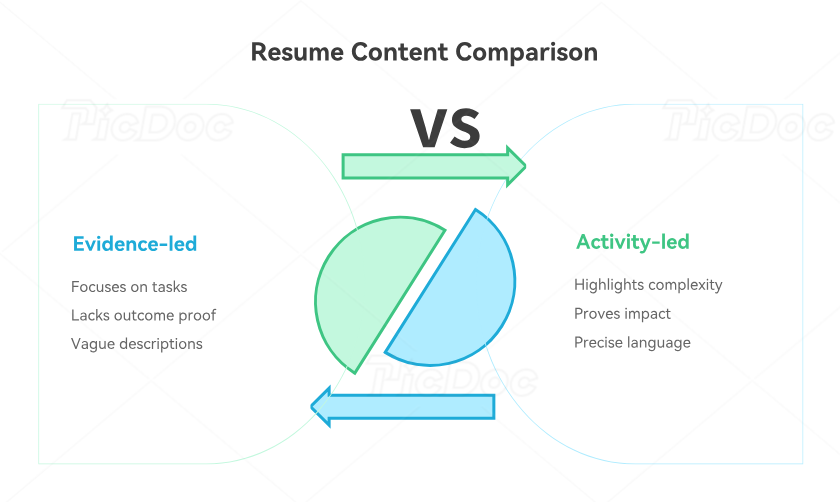
Replace activity-led descriptions such as:
Managed project schedules and risks
Coordinated stakeholders across departments
Prepared steering committee reports
Oversaw multiple project teams
Use evidence-led statements such as:
Integrated six technology, operations, compliance, and training workstreams around a single market-launch date.
Redesigned dependency governance across eight projects, reducing overdue cross-project commitments by 61%.
Consolidated program forecasting across four vendors and identified cost exposure before contract commitments were approved.
Introduced operational-readiness criteria that prevented launch with unresolved support and data-control gaps.
Draw on project reporting terminology, financial management concepts, stakeholder engagement language, and risk-management practices to make each statement precise.
Create a strong program manager value proposition
Your professional summary should identify the environments, business problems, and outcomes where you create value. Generic phrases such as “results-driven professional” waste the most visible section of the resume.
A focused statement may read:
Program delivery leader experienced in integrating technology, operations, compliance, vendors, and organizational change across complex business transformations. Builds decision-ready governance, resolves cross-project dependencies, improves forecast confidence, and converts implementation into measurable operational outcomes.
Support this positioning with program governance knowledge, project leadership concepts, resource-allocation methods, and future PM competencies.
Prepare program-specific interview cases
Program manager interviews frequently test how you think under complexity. Prepare detailed examples covering:
A dependency that threatened several projects
A disagreement between senior sponsors
A program forecast that became unreliable
A benefit assumption that required correction
A project that needed to be delayed, reduced, or stopped
A resource conflict across multiple teams
A supplier failure that affected integration
A launch that required operational-readiness controls
A governance process you redesigned
A project manager whose performance you strengthened
A decision made with incomplete information
A strategic change that required program restructuring
Your answers should establish context quickly, explain the business stakes, show your reasoning, and quantify the outcome. Integrate conflict-resolution principles, project risk techniques, executive reporting practices, and stakeholder engagement methods into your preparation.
Target the right first program role
Program manager titles vary significantly. Some roles involve genuine outcome ownership and executive governance. Others involve consolidating status reports across loosely related projects.
Evaluate job descriptions for evidence of:
Shared business outcomes
Multiple accountable project managers
Benefits-realization ownership
Program-level financial control
Executive steering responsibilities
Cross-functional decision authority
Operational transition accountability
Strategic planning involvement
Vendor and commercial complexity
Organizational change responsibility
Roles connected with PMO transformation, hybrid delivery, AI-driven project management, and future portfolio management can offer valuable exposure when the authority and outcome expectations are clearly defined.
5. Follow a 12-Month Roadmap to Become Program-Manager Ready
A structured twelve-month plan should produce visible evidence every quarter. The goal is to expand your scope while improving the quality of your decisions, leadership, and business contribution.
Months 1–3: Diagnose and reposition
Assess yourself against the 28 capabilities in the readiness matrix. Ask your manager, a program leader, and a senior stakeholder to identify the gaps that would prevent them from recommending you for a program role.
During the first quarter:
Select a target program manager role.
Identify two capability gaps with immediate business relevance.
Rewrite your resume around cross-project outcomes.
Create a program evidence portfolio.
Study your organization’s governance and investment processes.
Request access to one multi-project initiative.
Establish a mentor or sponsor who understands program leadership.
Use the future project manager skills guide, project financial glossary, governance forecast, and PM leadership glossary to build a targeted development plan.
Months 4–6: Own a cross-project process
Take responsibility for integrated planning, dependency control, benefits tracking, operational readiness, program reporting, vendor integration, or cross-project risk management.
Establish a baseline before changing the process. Measure decision time, overdue dependencies, forecast accuracy, unresolved risks, reporting effort, benefit confidence, or readiness gaps. The assignment should produce evidence that can enter your resume and interview portfolio.
Apply project reporting practices, risk mitigation terminology, resource-allocation controls, and schedule-management concepts to improve the process with discipline.
Months 7–9: Build leadership and commercial evidence
Begin leading other project managers or workstream leaders through shared standards, coaching, decision boundaries, and integrated governance. Avoid becoming the owner of every detail. Your progress should appear through stronger delegation, fewer confused escalations, and better cross-project coordination.
Partner with finance or procurement on one commercial assignment. Review program forecasts, supplier commitments, contingency, benefits, contract assumptions, or the cost of delay. Use vendor-management practices, RFP and RFQ guidance, earned value concepts, and financial management terminology to strengthen your judgment.
Months 10–12: Convert evidence into opportunity
Review your evidence with a senior program leader or sponsor. Ask for a direct assessment against an actual program manager job description. Close the remaining gaps through focused assignments rather than broad training.
Prepare:
A program-focused resume
Six quantified leadership cases
A concise value proposition
Twelve interview stories
Two senior references
A target list of internal and external roles
A 30-60-90-day entry plan
Your opportunity list should reflect the direction of project portfolio management, PMO leadership, automation-driven PM careers, and future project management software. The strongest roles will expand your outcome ownership, financial exposure, executive access, and leadership scale.
6. Frequently Asked Questions About Becoming a Program Manager
-
Employers evaluate scope, complexity, and leadership evidence alongside years of experience. Repeating similar project assignments for a decade may produce less program readiness than several years spent coordinating dependencies, benefits, governance, and senior stakeholders across related initiatives.
Your strongest evidence will show that you have managed cross-project consequences, influenced resource decisions, supported executive governance, and connected delivery with measurable business outcomes. Build this evidence through program governance work, stakeholder engagement, financial management, and integrated project reporting.
-
A direct transition is possible when your existing role already includes multi-project integration, business-outcome ownership, executive engagement, or leadership of project managers. Job title progression varies widely between organizations.
Focus on the work you have performed. Experience leading cross-project dependencies, managing enterprise stakeholders, controlling program-level risks, and coordinating resource allocation can demonstrate readiness even when your formal title remains project manager.
-
Certification choice should reflect your experience gap, target market, and delivery environment. PMP can strengthen broad project-management credibility. PRINCE2 supports structured governance environments. Agile and SAFe certifications can help in complex technology and product settings. Advanced program credentials become more useful after you have substantial multi-project experience.
Compare PMP and PRINCE2, review advanced Agile certifications, examine the SAFe Agilist pathway, and study future certification trends before investing.
-
The program manager owns integration across related projects and business changes. Their work includes shared outcomes, cross-project dependencies, benefits, governance, strategic alignment, and operational transition.
Project managers retain responsibility for specific deliverables, plans, risks, budgets, and teams. Program managers create the conditions that allow those projects to combine successfully. Knowledge of project execution, program governance, benefits and closure, and portfolio management helps clarify the boundaries between the roles.
-
Small organizations often provide strong program experience because one strategic initiative may include technology, operations, customers, suppliers, finance, and organizational change. Volunteer to lead the integrated roadmap, executive reporting, benefit tracking, operational readiness, or vendor coordination across those areas.
Document the number of workstreams, functions, decisions, dependencies, and outcomes involved. Apply hybrid project management, vendor-management practices, stakeholder engagement, and financial controls to show that the work carried genuine program complexity.
-
Define common expectations for reporting, risk escalation, forecasting, dependencies, governance preparation, and change control. Give project managers authority within those boundaries and review exceptions that affect the wider program.
Use questions that strengthen ownership: What decision do you recommend? Which dependency requires program intervention? What evidence supports the forecast? Which consequence should the sponsor understand? This approach draws on PM leadership techniques, conflict-resolution methods, project reporting discipline, and stakeholder-management practices.
