
The Ultimate Guide to Getting Your Project Management Certification in Singapore: All You Need to Know in 2026–2027
Singapore’s project-management market rewards professionals who can connect disciplined delivery with commercial judgment, regulatory awareness, stakeholder control, and measurable outcomes. A certification can strengthen your credibility, although employers will still examine the projects, decisions, and results behind it. Whether you are comparing PMP and PRINCE2, preparing through proven PMP study resources, or moving from CAPM into larger responsibilities, this guide gives you a Singapore-specific route from certification selection to job-market execution.
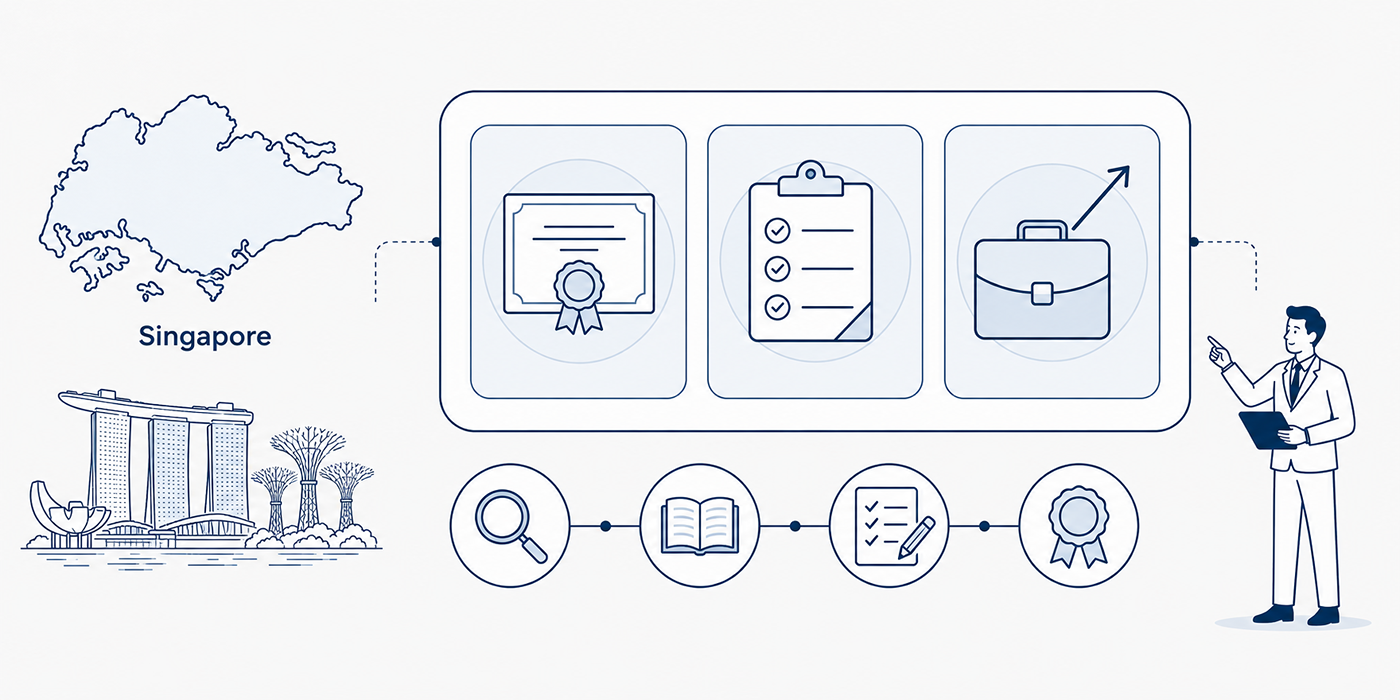
1. Choosing the Right Project Management Certification in Singapore
The strongest credential depends on the level of work you can already prove. Singapore employers recruit project professionals across technology, construction, engineering, finance, healthcare, logistics, consulting, public-sector delivery, and transformation programmes. A candidate managing enterprise implementations needs a different credential strategy from someone entering through project coordination or shifting from operations.
PMP is usually the strongest primary credential for experienced project leaders. It fits professionals who have already managed scope, schedules, budgets, risks, teams, vendors, or stakeholders. Before applying, organise your experience through clear project initiation terminology, defensible project scheduling concepts, accurate project budgeting language, and practical risk-management vocabulary. Weak applications often describe administrative activity while hiding the candidate’s actual leadership decisions.
CAPM suits graduates, coordinators, analysts, engineers, administrators, and career switchers. It establishes foundational knowledge before you have enough experience for PMP. The credential becomes more useful when paired with evidence such as a Gantt chart, RAID log, status report, stakeholder register, change log, or retrospective. Candidates should also understand common CAPM exam mistakes, use focused CAPM preparation resources, and plan for CAPM renewal requirements.
PRINCE2 Project Management Version 7 is valuable in structured governance environments. Its emphasis on business justification, defined responsibilities, management stages, tolerances, and tailoring can support roles involving PMOs, consulting, government-linked organisations, regulated businesses, and regional programmes. Candidates should compare its application model with PMP through a detailed PMP versus PRINCE2 analysis, investigate reputable PRINCE2 training providers, and avoid predictable PRINCE2 exam pitfalls. PeopleCert currently positions PRINCE2 7 as a globally recognised method that candidates can tailor to different project environments.
Agile and Scrum certifications work best as role-specific additions. Product owners, Scrum Masters, delivery leads, technology project managers, and transformation professionals benefit when they can connect certification knowledge to backlog refinement, sprint planning, dependency management, release forecasting, and stakeholder feedback. Reviewing Scrum roles and responsibilities, Scrum project-management platforms, Kanban software options, and leading Agile project-management tools will help you convert framework knowledge into delivery evidence.
Singapore PM Certification Decision Matrix (28 Rows): What Hiring Panels Actually Reward
| Capability | What Strong Evidence Looks Like | Singapore Hiring Relevance | Proof Asset to Build | APMIC Resource |
|---|---|---|---|---|
| Project initiation | Defines the problem, sponsor, objective, constraints, assumptions, and approval path before execution begins. | Prevents teams from starting expensive work without ownership or an agreed business outcome. | Project charter and assumptions log | Initiation terms |
| Scope control | Creates a traceable baseline, acceptance criteria, exclusions, and formal change route. | Important where client requests, compliance changes, and regional dependencies create scope pressure. | Scope statement and change register | Core PM terminology |
| Schedule design | Builds dependencies, milestones, realistic durations, buffers, and named schedule owners. | Hiring panels want evidence that dates were engineered rather than guessed. | Integrated milestone schedule | Scheduling terminology |
| Critical path | Identifies activities that directly control completion and monitors changes to available float. | Useful in construction, infrastructure, systems implementation, migration, and event delivery. | Critical-path analysis | CPM concepts |
| Schedule recovery | Evaluates crashing, fast-tracking, resequencing, resource changes, and the risk created by each option. | Shows commercial judgment when a deadline begins slipping. | Schedule-recovery paper | Compression terms |
| Budget control | Establishes the cost baseline, tracks commitments, forecasts completion cost, and explains variance. | Required for roles carrying vendor spend, capital expenditure, or client billing responsibility. | Budget tracker and forecast | Budgeting guide |
| Cost management | Connects estimates, reserves, actuals, earned progress, and corrective decisions. | Demonstrates financial control beyond recording invoices. | Cost-variance narrative | Cost terms |
| Risk leadership | Quantifies exposure, assigns owners, funds responses, monitors triggers, and escalates residual risk. | Highly relevant in regulated, technology, financial, healthcare, and infrastructure projects. | Prioritised risk register | Risk assessment terms |
| Issue control | Separates active issues from future risks and records decisions, owners, dates, and business effects. | Shows that the candidate can stabilise delivery under pressure. | RAID log with ageing data | Issue-tracking tools |
| Stakeholder analysis | Maps influence, interest, resistance, decision rights, communication needs, and engagement tactics. | Essential for cross-functional and regional projects with several approval layers. | Stakeholder map | Stakeholder terms |
| Engagement planning | Designs targeted engagement around stakeholder expectations and required behaviour changes. | Supports transformation programmes where technical delivery alone cannot secure adoption. | Engagement strategy | Engagement glossary |
| Communication | Matches message, detail, channel, timing, and escalation route to each audience. | Reduces decision latency across sponsors, vendors, users, and regional teams. | Communication matrix | Communication techniques |
| Executive reporting | Explains status, forecast, exposure, decisions required, and consequences of delay in one concise view. | Senior stakeholders expect clarity without operational clutter. | One-page steering report | Reporting practices |
| Dashboard judgment | Selects indicators that expose delivery health instead of filling dashboards with activity counts. | Useful in PMOs and portfolios where leaders compare several initiatives. | Outcome-focused dashboard | Dashboard tools |
| Procurement planning | Links requirements, sourcing route, evaluation criteria, lead time, approvals, and delivery dependencies. | Critical when external suppliers control part of the schedule or technical solution. | Procurement plan | Procurement terminology |
| Tender literacy | Understands when to use an RFI, RFQ, or RFP and how each affects evaluation quality. | Strengthens candidates seeking government, consulting, engineering, or enterprise roles. | Evaluation scorecard | RFI, RFQ and RFP guide |
| Contract control | Tracks obligations, deliverables, milestones, variations, notice periods, acceptance, and remedies. | Protects project outcomes when commercial terms affect execution. | Contract-obligation register | Contract terminology |
| Vendor management | Uses measurable service, quality, schedule, risk, and responsiveness indicators. | Relevant to outsourced technology, construction packages, consulting, and managed services. | Supplier performance scorecard | Vendor-management terms |
| Resource planning | Forecasts capacity, skill gaps, bottlenecks, competing assignments, and handover risk. | Compact teams often require careful allocation across several concurrent initiatives. | Capacity and allocation plan | Resource-allocation tools |
| Team leadership | Clarifies responsibilities, working agreements, decision rules, feedback routes, and performance expectations. | Demonstrates leadership across matrix teams where direct authority may be limited. | RACI and team charter | Team-building terms |
| Conflict resolution | Diagnoses the source of disagreement and chooses a response suited to urgency and relationship risk. | Hiring managers value candidates who can resolve friction without unnecessary escalation. | Conflict case study | Conflict-resolution glossary |
| Quality management | Defines acceptance measures, preventive controls, reviews, defect treatment, and ownership. | Important where rework creates financial, regulatory, safety, or customer consequences. | Quality-management plan | Quality terms |
| Agile delivery | Connects iteration, feedback, prioritisation, dependency control, and release decisions to customer value. | Frequently required in software, product, data, digital, and transformation environments. | Release roadmap | Agile tools |
| Scrum execution | Explains accountabilities, events, artefacts, impediment handling, and product-goal alignment. | Useful for candidates working with software and digital-product teams. | Sprint evidence pack | Scrum responsibilities |
| Kanban flow | Controls work in progress, lead time, blocked items, throughput, and service expectations. | Supports operational, support, product, and continuous-delivery teams. | Flow-performance report | Kanban platforms |
| Predictive delivery | Uses stable requirements, staged planning, baseline control, formal acceptance, and disciplined handovers. | Still central to infrastructure, engineering, construction, and compliance-heavy work. | Baseline-management pack | Waterfall software |
| Tool integration | Connects planning, communication, finance, document, reporting, and workflow systems without duplicate data entry. | Useful in digitally mature organisations expecting efficient portfolio visibility. | Tool-integration map | PM integrations |
| Certification upkeep | Plans continuing education around role gaps and records renewal evidence throughout the cycle. | Protects the credential and creates a structured long-term development plan. | Three-year learning roadmap | PMP renewal guide |
2. Eligibility, Training Costs, and Funding Routes in Singapore
PMP eligibility in 2026–2027
PMI currently provides several eligibility routes. A candidate with a bachelor’s degree or global equivalent generally needs 36 months of experience leading and managing projects within the previous eight years, plus 35 hours of project-management education or training. A candidate with a secondary-school qualification generally needs 60 months of relevant experience within the previous eight years, plus the same 35-hour training requirement. Holding CAPM can also satisfy the education component under PMI’s stated pathways.
Your job title does not need to contain “project manager.” An engineer, implementation consultant, operations lead, business analyst, product lead, construction professional, or transformation specialist may have qualifying experience. The application should show that you led decisions involving scope control, schedule management, stakeholder engagement, risk assessment, and measurable delivery outcomes.
A common pain point occurs when applicants report every task they performed while leaving their leadership role unclear. Replace long operational inventories with concise project narratives: objective, your responsibility, delivery approach, decisions, constraints, and outcome. Review PMP exam-domain expectations, learn from detailed PMP success stories, and remove the recurring weaknesses covered in common PMP exam mistakes.
CAPM eligibility
CAPM requires a secondary qualification or global equivalent and at least 23 hours of project-management education completed before the examination. PMI states that prior project experience is unnecessary, which makes CAPM accessible to early-career and transitioning professionals.
CAPM candidates should avoid relying on the badge alone. Build practical evidence through project templates and resources, issue-tracking workflows, team-communication platforms, and reporting and analytics tools. A small volunteer, academic, community, operational-improvement, or freelance project can produce credible proof when its objective, constraints, decisions, and results are documented properly.
Training costs and SkillsFuture support
Training prices vary by provider, format, course duration, included mock exams, exam voucher, instructor access, and funding eligibility. Singapore’s official SkillsFuture course directory includes project-management and PMP preparation programmes, while some providers advertise SkillsFuture Credit or subsidy eligibility for qualifying participants. Funding status, net payable fees, citizenship or residency conditions, age-related support, employer sponsorship, and claim procedures should be checked against the current course listing before payment.
Compare providers using five questions:
Does the course satisfy the certification body’s required education hours?
Is the provider authorised or officially recognised where applicable?
Does the fee include the examination voucher, resit protection, mock examination, and learning materials?
Are the materials aligned with the exam version you will actually take?
What amount remains payable after confirmed funding or employer reimbursement?
A low headline fee can become expensive when the exam voucher, membership, practice platform, resit, and renewal costs are separate. Evaluate the full certification lifecycle alongside PMP renewal obligations, PRINCE2 recertification requirements, and CAPM renewal planning.
3. Your Step-by-Step Certification Roadmap for 2026–2027
Step 1: Audit your target job market before selecting the credential
Collect 30 to 50 Singapore vacancies matching your intended level and sector. Record the requested certification, years of experience, delivery method, software, domain knowledge, contract exposure, budget responsibility, and stakeholder level. This evidence prevents you from purchasing a credential based on popularity alone.
Technology vacancies may emphasise Agile delivery, cloud migration, cybersecurity, vendor coordination, and regional stakeholders. Construction roles may prioritise programme control, safety, subcontractors, cost, contracts, and construction project-management software. Operations and transformation roles may reward Six Sigma terminology, workforce-management systems, process improvement, change adoption, and benefits tracking.
Step 2: Build a clean eligibility file
Create one folder containing qualifications, training certificates, project dates, organisation names, project objectives, your responsibilities, delivery approaches, and supervisor or verifier details. Check overlapping project periods carefully because concurrent projects do not automatically create additional months of experience.
For every project, prepare a short narrative that covers:
The business problem or required outcome
Your authority and responsibilities
The delivery approach used
The most important decisions you led
Risks, vendors, stakeholders, and constraints managed
The outcome supported by numbers
Use the language found in project risk management, human-resource management, project procurement, and quality management without copying generic framework descriptions.
Step 3: Match your study plan to the correct PMP exam version
The updated PMP examination launches on 9 July 2026. PMI states that candidates sitting the earlier version should test by 8 July, while candidates testing from 9 July should prepare with the updated resources. The revised exam increases the Business Environment weighting to 26%, expands leadership coverage, introduces AI and sustainability in context, and uses more case, scenario, graphic, dashboard, artefact, and data-based questions.
The July 2026 outline allocates approximately 33% to People, 41% to Process, and 26% to Business Environment. PMI also indicates that roughly 40% of items represent predictive approaches, with the remaining 60% divided between adaptive/agile and hybrid approaches.
Candidates preparing for the updated version should practise interpreting project artefacts rather than memorising isolated definitions. Work through critical-path scenarios, schedule-compression decisions, stakeholder-engagement choices, vendor-management conflicts, and project-reporting signals.
Step 4: Use a three-layer study system
The first layer builds conceptual understanding. Study the exam content outline, official learning materials, framework vocabulary, and process relationships. The second layer develops situational judgment through scenario questions. The third layer builds exam endurance through timed practice, review, and error classification.
Create an error log with categories such as:
Misread stakeholder authority
Escalated too early
Acted before analysing
Confused risk with issue
Ignored change control
Selected a technically correct action with weak sequencing
Missed an Agile or hybrid clue
Prioritised activity over business value
Use strong PMP preparation resources, test yourself against known PMP exam traps, and apply practical exam-day survival techniques. CAPM candidates can use the same error-log system while focusing on fundamentals, predictive methods, Agile approaches, and business-analysis concepts.
Step 5: Complete full mock examinations under realistic conditions
A high question-bank score can create false confidence when questions are repeated or answered in short bursts. Schedule full timed mocks, use the permitted break structure, remove distractions, and analyse why each wrong answer failed.
Track performance by domain and decision pattern. A 70% result may conceal serious weakness if nearly every procurement, governance, or Agile question is wrong. Build targeted review sessions around RFP, RFQ, and RFI decisions, contract-management terminology, Scrum accountabilities, and conflict-resolution techniques.
Step 6: Schedule the exam around readiness and career timing
Choose a date that leaves enough time for revision while creating a firm deadline. Avoid booking during a major production release, audit, tender submission, financial closing period, or personal commitment that will break your study rhythm.
Complete technical checks for online testing or confirm the test-centre route and arrival requirements. Practise question pacing, break management, flagging, and final review. Read the certification body’s current rules directly because identification, rescheduling, testing, and security requirements can change.
What Is Your Biggest Barrier to Earning and Using a PM Certification in Singapore?
4. Building a Singapore-Ready Project Portfolio and Resume
Certification gives recruiters a recognisable signal. Your portfolio shows whether you can operate when budgets tighten, requirements change, suppliers miss milestones, stakeholders disagree, and leadership needs a defensible recommendation.
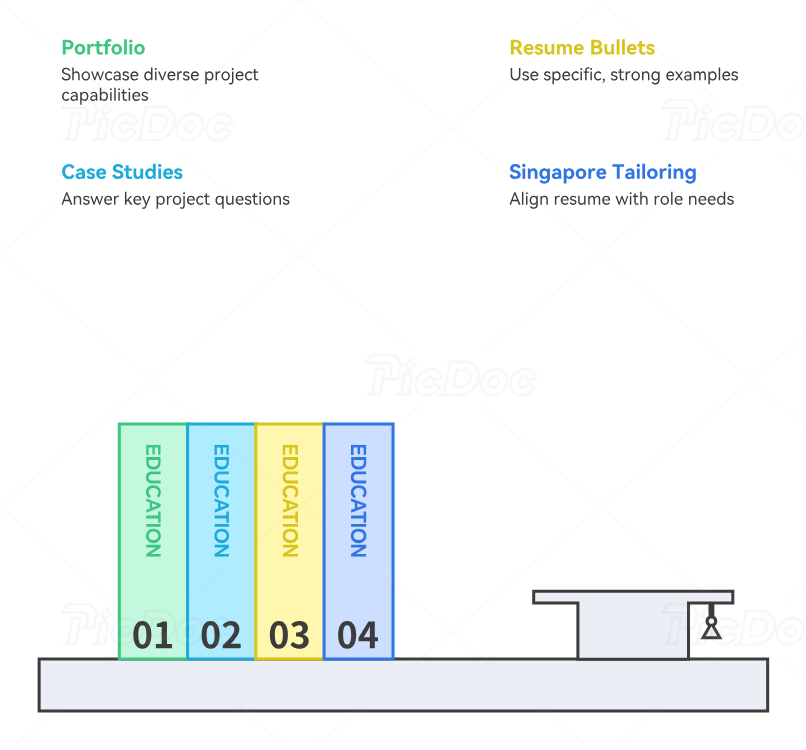
Select two to four projects that demonstrate different capabilities. One might show schedule recovery, another vendor control, another Agile delivery, and another change adoption. Create a concise evidence pack for each project using appropriate project-management templates, reporting practices, dashboard tools, and issue-tracking systems.
Each case study should answer seven questions:
What business problem existed?
What outcome had been approved?
What was your decision-making responsibility?
Which constraints created the greatest delivery pressure?
What action did you personally lead?
Which artefacts or controls supported the decision?
What measurable result followed?
A weak resume bullet says, “Managed project schedules and stakeholders.” A stronger version says, “Rebaselined a six-workstream implementation after a supplier delay, negotiated revised dependencies with technical and business owners, and protected the regulatory launch date without increasing approved headcount.”
Another weak bullet says, “Responsible for vendor management.” A stronger version says, “Introduced a supplier scorecard covering milestone adherence, defect leakage, response time, and acceptance quality, reducing unresolved deliverable disputes from 14 to four within eight weeks.”
Use vendor-management terminology, contract-management language, resource-allocation concepts, and stakeholder-engagement terms only where they accurately describe your work.
For Singapore applications, tailor the first third of the resume to the vacancy. State your target identity clearly: IT Project Manager, Digital Transformation Project Manager, Construction Project Manager, PMO Analyst, Implementation Manager, Scrum Master, or Project Coordinator. Then foreground the sector, project scale, delivery methods, systems, certifications, and outcomes relevant to that role.
The national MyCareersFuture portal showed more than 1,300 “Project Manager” listings when checked, illustrating the breadth of demand while also revealing substantial variation in seniority and domain requirements. Certification candidates should therefore treat “project manager” as a family of specialised roles rather than a single generic occupation.
Regional experience can also strengthen Singapore-based applications. Projects involving teams, vendors, or clients across Malaysia, Thailand, Vietnam, China, Japan, or South Korea can demonstrate cross-cultural communication, remote governance, time-zone coordination, and regional supplier management.
5. Turning Certification Into Career Progression During 2026–2027
Start using the credential before the examination result arrives. The learning process should improve your current project documents, meeting decisions, risk discussions, schedules, reports, and stakeholder conversations. This creates immediate evidence and gives you stronger interview examples.
Build a targeted certification stack
A useful stack contains one core credential, one delivery specialisation, and one domain capability.
An experienced technology project manager might combine PMP with Agile or Scrum knowledge and cloud, cybersecurity, data, or service-management expertise. A construction professional may combine PMP or PRINCE2 with contract, cost, schedule, safety, and construction PM software. An operations leader may combine a recognised PM credential with Six Sigma concepts, workforce planning, analytics, or process automation.
Collecting several introductory certificates can dilute your positioning when none addresses the vacancy’s hardest requirement. Review PRINCE2 career benefits, CAPM career leverage, PMP success patterns, and the tools used in your target environment, including Agile platforms, Kanban systems, and reporting software.
Prepare six interview stories
Build stories covering:
A delayed project you recovered
A difficult stakeholder you aligned
A risk you identified before impact
A vendor or contract dispute you controlled
A change request you evaluated
A delivery outcome that produced measurable value
For each story, explain the decision sequence. Hiring managers need to understand how you diagnosed the situation, compared options, involved stakeholders, controlled exposure, and measured the result. Use accurate conflict-resolution terminology, stakeholder concepts, risk-identification language, and reporting principles.
Plan renewal from the first month
PMP holders currently need 60 professional development units during each three-year cycle, while CAPM holders need 15 PDUs during each three-year cycle. PMI divides qualifying activity across education and giving back, with specific Talent Triangle expectations.
Create a three-year development plan around your real capability gaps. A technology PM may prioritise AI governance, cybersecurity, product delivery, and commercial management. A construction PM may focus on advanced scheduling, contracts, claims, sustainability, and digital construction. A PMO professional may prioritise portfolio governance, benefits, data visualisation, resource planning, and executive reporting.
Use your PDU cycle to strengthen weaknesses through project scheduling, budget management, procurement control, team leadership, and project communications. This approach turns renewal into career development instead of a rushed administrative exercise near expiry.
6. Frequently Asked Questions About Project Management Certification in Singapore
-
PMP is often the strongest broad credential for experienced professionals because it validates prior project leadership and covers predictive, Agile, and hybrid environments. CAPM is more accessible for early-career candidates, while PRINCE2 can be valuable in structured governance and consulting environments. Scrum and Agile credentials suit product and technology delivery roles.
The best choice comes from vacancy evidence. Compare the certification requests, sector requirements, and experience thresholds in your target jobs. Use the PMP and PRINCE2 comparison, CAPM career guide, Scrum responsibilities guide, and Agile tools review to map each option to actual work.
-
Yes. PMI evaluates your education, project leadership experience, training, and application details. Roles such as engineer, consultant, operations lead, product lead, analyst, implementation specialist, or team lead may contain qualifying experience.
Document where you led project objectives, schedules, stakeholders, risks, resources, vendors, decisions, or delivery outcomes. Translate your experience through precise initiation terminology, risk-management language, stakeholder terminology, and scheduling concepts.
-
Candidates already prepared for the earlier version may choose to test by 8 July 2026. Candidates starting later or planning to test from 9 July should use materials aligned with the updated examination. PMI’s revised version increases Business Environment coverage and adds broader contextual treatment of AI, sustainability, business value, governance, and practical project artefacts.
Your decision should reflect readiness. Rushing to beat the transition can increase failure risk. Review the revised PMP exam domains, strengthen project-reporting knowledge, practise stakeholder engagement, and study risk-assessment decisions.
-
Some project-management and PMP preparation courses appear in Singapore’s SkillsFuture course directory, and some providers identify their programmes as SkillsFuture Credit or funding eligible. Eligibility, claimable amount, subsidy level, employer support, course dates, and net fee vary. Confirm the current listing and your individual eligibility before registering.
Compare the funded course with other PMP preparation resources, check whether it covers PMP exam mistakes, and confirm that materials match the correct 2026 examination version.
-
CAPM can strengthen an early-career candidate’s profile by proving structured knowledge. Its impact increases when the candidate also presents project evidence, relevant software skills, and sector understanding.
Create a portfolio using project templates, Gantt-chart knowledge, issue-tracking tools, and team-communication platforms. Target roles such as project coordinator, PMO analyst, junior project manager, implementation coordinator, business analyst, and project administrator where your existing education or domain experience also fits.
-
Preparation time depends on experience, prior framework knowledge, study consistency, and test performance. A focused eight-to-twelve-week plan works for many working professionals, while candidates with major knowledge gaps may need longer.
Measure readiness through domain performance, timed mock results, question-review quality, and the ability to explain why competing answers fail. Use PMP exam resources, analyse common PMP mistakes, study schedule-compression decisions, and practise conflict-resolution scenarios.
