
The Ultimate Guide to Getting Your Project Management Certification in Malaysia: All You Need to Know in 2026-2027
Malaysia’s project management market rewards candidates who can prove delivery control across digital transformation, construction, finance, healthcare, telecom, manufacturing, public-sector modernization, and vendor-led implementation. Certification helps most when it strengthens your evidence: project initiation, stakeholder engagement, risk management, project reporting, and procurement fluency. Malaysia’s Digital Economy Blueprint also places 2026-2030 inside a phase focused on digital content and cybersecurity leadership, which raises demand for PMs who can manage complex, cross-functional change.
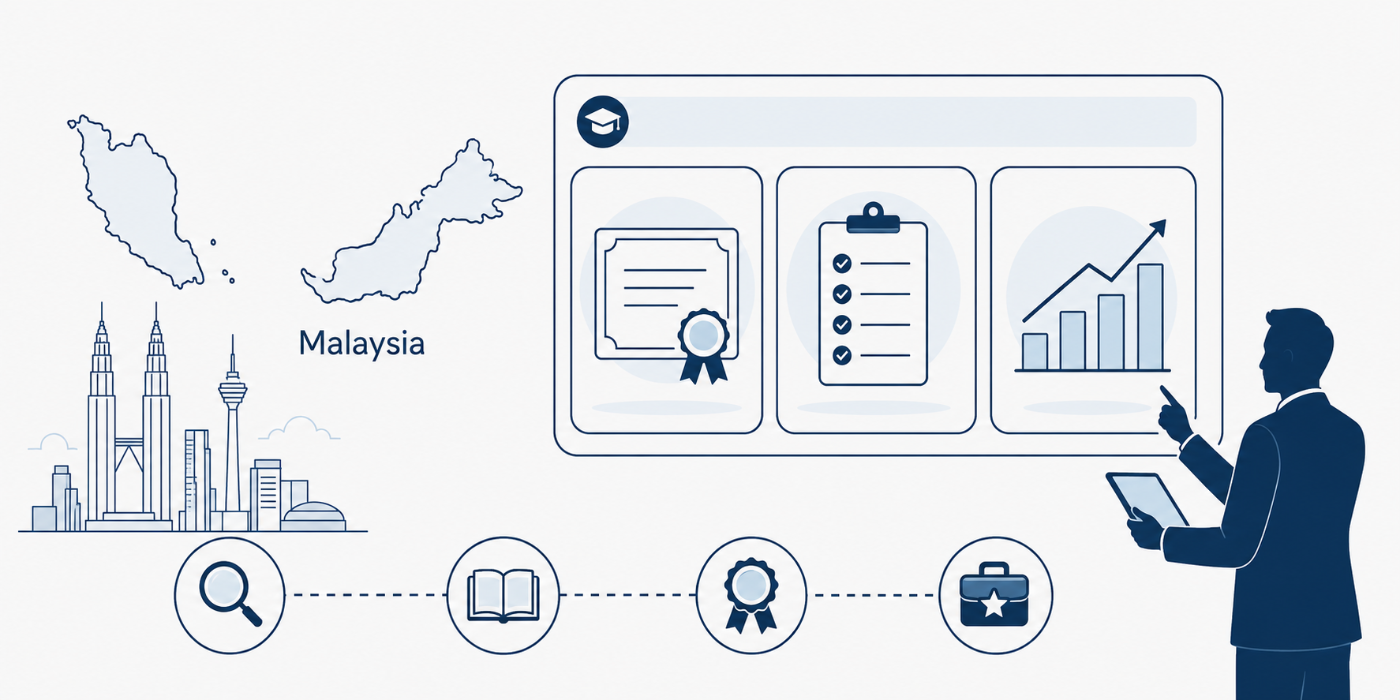
1. Why Project Management Certification in Malaysia Is a Career Advantage in 2026-2027
Malaysia is a serious market for project professionals because many roles sit between business expectations, technical delivery, vendor performance, governance controls, and stakeholder pressure. A hiring manager in Kuala Lumpur, Penang, Johor Bahru, Cyberjaya, or Selangor wants a candidate who can protect scope, translate messy requirements, manage approvals, track delivery health, and keep senior leaders out of surprise mode. That is where PMP preparation, CAPM exam resources, PRINCE2 comparison, Gantt chart knowledge, and critical path fluency become career tools instead of decoration.
The strongest Malaysia PM profiles sound operational. They describe baseline control, decision cadence, risk triggers, vendor escalation, acceptance criteria, budget variance, resource conflicts, and executive reporting. Weak profiles say “coordinated projects,” “supported teams,” or “handled communication,” then leave the real competence hidden. Your certification should help you talk with sharper proof across schedule management, schedule compression, quality management, budgeting terms, and project communication.
Malaysia’s digital transformation push also changes what “good PM” means. MyDIGITAL’s Budget 2026 commentary highlights strategic focus around AI, innovation, and inclusive digital transformation, so project managers need stronger comfort with hybrid delivery, technology vendors, business adoption, cybersecurity dependencies, and data-heavy reporting. That makes Agile project management tools, Scrum roles, Kanban software, team communication platforms, and PM integrations valuable for candidates targeting transformation, IT, fintech, SaaS, shared services, and enterprise systems roles.
Certification also helps candidates who feel stuck between execution and leadership. A coordinator may be doing real PM work while the title still says “executive,” “analyst,” “administrator,” or “project support.” A technical lead may already manage scope and timelines without formal PM language. A construction professional may control vendors and site dependencies while struggling to package that work for hiring panels. The fix is to connect certification with proof assets built from project templates, risk identification, stakeholder terms, vendor management, and dashboard tools.
2. Choosing the Right Certification Path in Malaysia: PMP, CAPM, PRINCE2, Agile, or Hybrid
PMP is the strongest fit when you already lead projects, manage teams, own delivery outcomes, handle stakeholders, or control schedules and risks. PMI lists PMP eligibility routes that include project management experience and 35 hours of project management education or equivalent qualifying training, with experience expectations changing by education level. Malaysia candidates targeting PM, senior PM, implementation manager, transformation lead, PMO lead, construction PM, ERP PM, or program coordinator roles should pair PMP study with PMP domains, PMP exam mistakes, PMP success stories, PMP resources, and PMP renewal.
PMP planning in 2026 needs timing discipline because PMI says candidates planning to take the current PMP exam version need to sit before 8 July 2026, while the new version uses updated resources and PMI also flags planned training-hour updates for late Q4 2026. For Malaysia candidates, that means your study plan should start with exam-version clarity. A candidate already deep into current-version prep should protect momentum with mock-exam review, domain mapping, resource selection, schedule planning, and risk-based study tracking.
CAPM works best for beginners, junior coordinators, fresh graduates, PMO analysts, business analysts moving into delivery, operations executives, and technical professionals who need PM structure before they have enough leadership history for PMP. PMI lists CAPM eligibility around a secondary degree and at least 23 hours of project management education completed before the exam. Make CAPM useful by connecting it to CAPM exam tools, CAPM mistakes, CAPM exam-day strategy, CAPM renewal, and CAPM career advancement.
PRINCE2 is valuable when your target employers care about governance, stage gates, business case control, role clarity, tolerances, escalation, and formal approvals. PeopleCert describes PRINCE2 7 Practitioner around applying and tailoring the method to projects, leading teams, and supporting project success. In Malaysia, PRINCE2 can fit PMO, enterprise transformation, government-linked, consulting, infrastructure, finance, and controlled-delivery environments. Strengthen your route with PRINCE2 vs PMP, PRINCE2 pitfalls, PRINCE2 providers, PRINCE2 salary benefits, and PRINCE2 renewal.
3. Build Malaysia-Ready Proof Before You Apply or Interview
The easiest way to waste a certification is to leave your resume unchanged after earning it. Hiring teams need proof that you can use the credential under real pressure. Build a simple portfolio with one project charter, one stakeholder register, one RACI, one RAID log, one change register, one vendor tracker, one project dashboard, one weekly status report, and one lessons-learned note. These assets turn certification into credibility when they connect with project templates, stakeholder engagement terms, risk identification, project reporting terms, and issue tracking tools.
Malaysia employers often screen for sector translation. A fintech PM should speak about regulatory dependencies, customer journeys, data privacy, release control, testing, and vendor integrations. A construction PM should speak about site sequencing, contractors, permits, safety dependencies, procurement, claims risk, and handovers. A manufacturing PM should speak about quality, downtime, capacity, suppliers, process improvement, and acceptance criteria. A digital transformation PM should speak about adoption, change management, integrations, training, backlog priorities, and executive dashboards. Build that language with construction PM software, procurement tools, quality terms, six sigma terms, and PM APIs.
Your interview stories should prove judgment. Prepare six stories before applying: one scope-change story, one delay-recovery story, one stakeholder-conflict story, one vendor-performance story, one budget-pressure story, and one quality-acceptance story. Each story should name the baseline, pressure point, options considered, decision owner, communication route, action taken, result, and lesson. Polish those answers with conflict resolution terms, contract management terminology, vendor terms, communication techniques, and team building terminology.
4. A Practical 8-Week Study and Career Plan for Malaysia Candidates
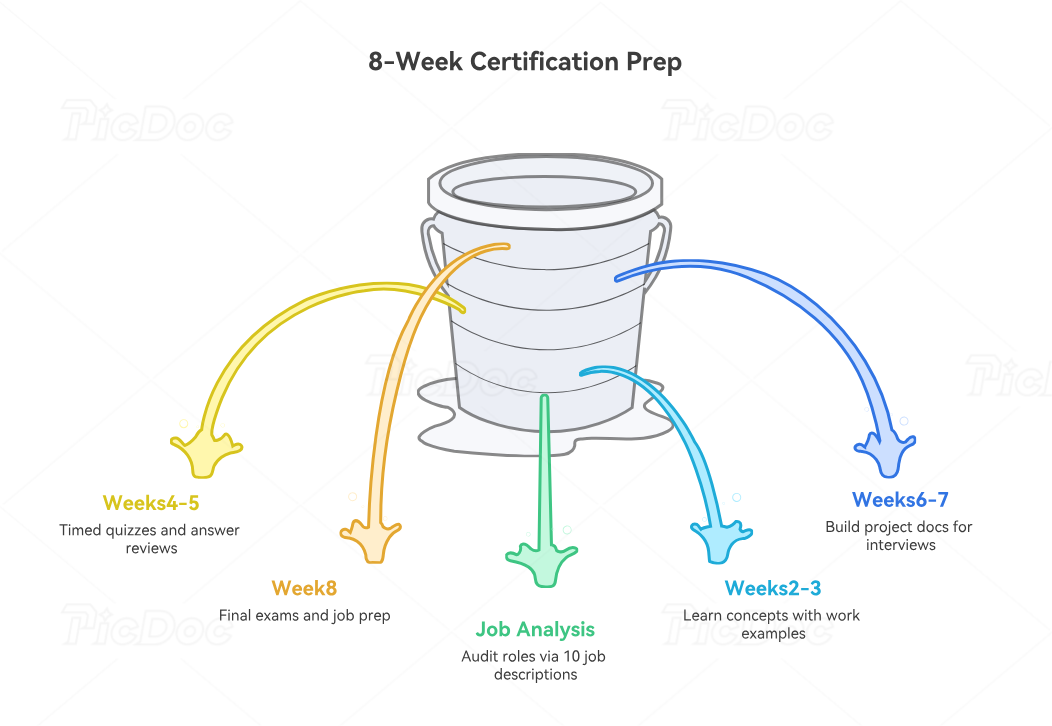
Week 1 should be a target-role audit. Pull 10 Malaysia job descriptions for roles you actually want, then highlight repeated requirements: PMP, PRINCE2, Agile, stakeholder management, vendor control, risk, reporting, budgeting, construction, ERP, cloud, data, or transformation. Your certification choice should come from that pattern. Match your role direction with PMP domains, CAPM career use, PRINCE2 comparison, Agile tools, and Scrum responsibilities.
Weeks 2 and 3 should focus on concept control. Learn the language behind scope, schedule, cost, risk, quality, resources, procurement, communication, stakeholders, and governance. Then force every concept into a real example from your work, internship, university project, volunteering, or operations experience. This matters because interviews reward applied judgment over memorized definitions. Build your base with project initiation terms, schedule terms, risk glossary, budgeting terms, and quality management terms.
Weeks 4 and 5 should move into exam practice. Use timed quizzes, review every wrong answer, and write why the correct answer fits the scenario. PMP candidates should train for judgment across people, process, business value, stakeholders, change, and hybrid delivery. CAPM candidates should build confidence across fundamentals and terminology. PRINCE2 candidates should master principles, practices, processes, roles, tailoring, and stage control. Support practice with PMP mistake avoidance, CAPM mistakes, CAPM exam-day survival, PRINCE2 pitfalls, and PMP resources.
Weeks 6 and 7 should create your proof pack. Build a one-page project charter, milestone plan, risk register, issue log, stakeholder matrix, communication plan, vendor tracker, and reporting dashboard. Anonymize sensitive company details and focus on structure, decisions, and results. This pack helps you explain real capability in Malaysia interviews and gives recruiters stronger reasons to move you forward. Use project templates, Gantt chart guidance, issue tracking tools, dashboard visualization tools, and reporting analytics software.
Week 8 should combine exam readiness with application readiness. Finish mock tests, confirm exam logistics, update your CV, rewrite LinkedIn, prepare interview stories, and build a target-company list. Your resume should show sector, project type, scope, stakeholders, vendors, timeline pressure, tools, budget exposure where appropriate, and measurable results. Finish with PMP renewal planning, CAPM renewal requirements, PRINCE2 renewal, resource allocation tools, and workforce management software.
5. How to Use Certification for Better Roles, Interviews, and Salary Growth in Malaysia
Certification should change the way you position your value. For construction and infrastructure, lead with schedule control, procurement, contractors, risk, safety dependencies, claims awareness, and acceptance handovers. For IT and digital transformation, lead with requirements, backlog, testing, integrations, release planning, adoption, and stakeholder workshops. For finance and healthcare, lead with governance, documentation, audit trails, compliance-friendly reporting, and controlled approvals. Strengthen each pathway with construction project management software, procurement management tools, contract lifecycle management, HR tools for project teams, and team communication platforms.
For interviews, make every answer decision-based. A delay story should mention the baseline, late dependency, critical path impact, recovery options, trade-offs, decision owner, escalation route, and final outcome. A stakeholder story should mention influence, resistance, communication method, approval path, and decision record. A vendor story should mention contract scope, SLA, milestone, acceptance criteria, issue log, and commercial exposure. These answers become stronger when built with contract terminology, vendor management terms, conflict resolution terms, communication techniques, and stakeholder terms.
For salary growth, package the certificate around impact. Employers pay more for PMs who reduce rework, improve decision speed, prevent vendor slippage, protect budget, create better reporting, manage risk early, and help teams finish with fewer surprises. Compare your profile against nearby certification markets such as project management certification in Thailand, project management certification in Vietnam, project management certification in China, project management certification in Japan, and project management certification in South Korea.
6. FAQs
-
PMP is the best fit for experienced candidates who already lead projects, manage stakeholders, and own delivery outcomes. CAPM is better for beginners, coordinators, fresh graduates, and career switchers. PRINCE2 suits governance-heavy roles, PMO environments, consulting, enterprise delivery, and controlled project structures. Agile and Scrum work best for software, product, transformation, fintech, data, and technology implementation roles. Compare your target postings with PMP domains, CAPM resources, PRINCE2 vs PMP, Agile tools, and Scrum roles.
-
PMP is worth it when you have enough experience to back it with proof: scope control, risk ownership, stakeholder leadership, vendor management, schedule recovery, and reporting discipline. The credential carries more weight when your CV shows measurable delivery impact rather than generic task support. Build your PMP story with PMP preparation, PMP exam mistakes, risk management, project reporting, and stakeholder engagement.
-
CAPM is a strong starting point when you need PM credibility before you qualify for PMP or before your experience looks senior enough. It helps candidates learn project language, build confidence, and target coordinator, junior PM, PMO analyst, project executive, and assistant project manager roles. Pair CAPM with CAPM exam tools, CAPM exam-day strategy, CAPM career advancement, project initiation terms, and top PM terms.
-
Rewrite your resume around control and impact. Mention project type, business outcome, stakeholders, timeline, vendors, tools, risks, budget exposure, reporting cadence, and measurable result. Replace weak phrases with proof language: baseline, critical path, variance, RAID log, acceptance criteria, change request, procurement milestone, escalation route, and steering report. Use project templates, communication terms, vendor terms, contract terms, and budgeting terms.
-
The most valuable skills are stakeholder management, scope control, scheduling, risk management, vendor coordination, procurement awareness, reporting, budget discipline, quality acceptance, governance, communication, and tool fluency. Digital roles also reward Agile, Scrum, Kanban, integration awareness, testing coordination, and adoption planning. Strengthen your foundation with Gantt chart terms, critical path terms, RFP/RFQ/RFI terms, Kanban tools, and team communication platforms.
-
Most Malaysia candidates should plan 6 to 10 focused weeks, depending on experience, exam type, available study hours, and confidence with PM vocabulary. Experienced candidates may move faster because real examples make exam scenarios easier. Beginners should spend more time on terms, practice questions, and proof assets. Build the plan with PMP study resources, CAPM preparation tools, PRINCE2 training providers, project scheduling terms, and risk identification terms.
