
The Ultimate Guide to Getting Your Project Management Certification in Bahrain: All You Need to Know in 2026-2027
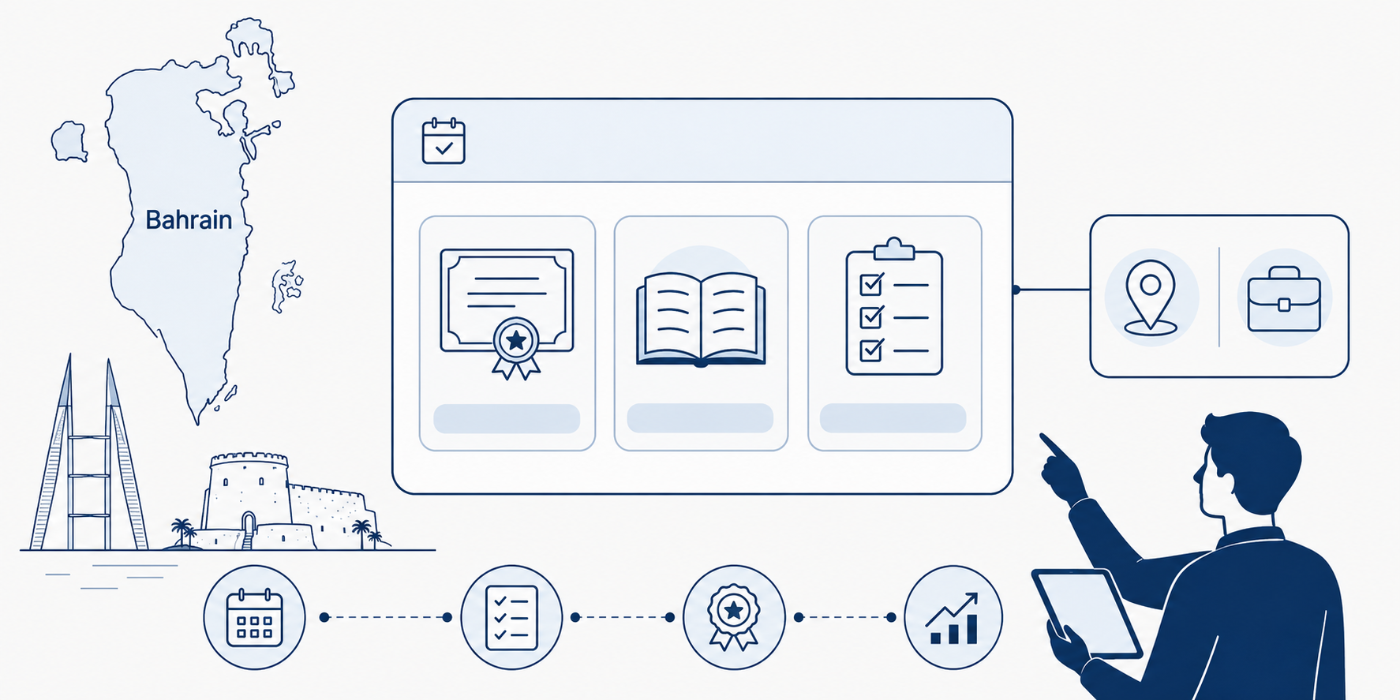
Bahrain is a smart market for project managers who can turn strategy, approvals, vendors, budgets, timelines, and reporting into controlled delivery. Certification helps when it sharpens proof, not when it sits alone on a resume. In 2026-2027, candidates should connect exam prep with PMP exam domains, project reporting best practices, stakeholder engagement terms, procurement terminology, and risk management language so the credential becomes career leverage.
1. Why Project Management Certification Matters in Bahrain in 2026-2027
Bahrain’s project economy rewards delivery discipline because national growth depends on diversification, productivity, digital transformation, infrastructure, tourism, logistics, financial services, manufacturing, and public-private execution. Bahrain’s Economic Vision 2030 is built around sustainability, competitiveness, and fairness, while official digital transformation work connects Vision 2030 with better government services, digitized processes, e-payments, AI usage, and stronger public-private partnerships. That creates a market where candidates who understand project initiation terms, critical path method terms, Gantt chart terminology, project budgeting terms, and project quality management terms can position themselves as practical operators.
The strongest Bahrain PM candidates understand one hard truth: employers hire risk reducers. They want people who can keep a vendor honest, spot a slipping milestone early, document a change before it becomes a dispute, brief a sponsor without drama, and keep delivery moving across finance, procurement, operations, legal, and end users. Certification gives you the vocabulary for that work, while stakeholder engagement terms, project communication techniques, contract management terminology, vendor management terms, and project reporting terms help you prove judgment.
Bahrain also has a compact-market advantage. In a smaller hiring ecosystem, reputation, role fit, sector fluency, and interview clarity carry serious weight. A certified project manager who can explain governance, procurement, reporting, risk, and team leadership in clean business language can stand out faster than a candidate who only lists tools. Build your foundation through top project management terms, risk identification terms, schedule compression terms, conflict resolution terms, and team building terminology.
| Capability | What “Strong” Looks Like | Bahrain Career Impact | Proof Asset to Build | Best APMIC Next Read |
|---|---|---|---|---|
| Scope baseline | Clear deliverables, assumptions, exclusions, acceptance rules, and approval trail. | Protects projects from hidden work and informal scope expansion. | Scope statement + change log. | Project initiation terms |
| Schedule control | Milestones, dependencies, float, blockers, decision dates, and recovery actions. | Useful for construction, technology, operations, and transformation delivery. | Milestone tracker. | Scheduling terms |
| Critical path | Knows which activities threaten the finish date and which ones have float. | Helps you discuss delays with evidence. | Critical path worksheet. | CPM terms |
| Procurement fluency | Understands RFP, RFQ, RFI, bid comparison, SOW, vendor risk, and evaluation criteria. | Strong signal in vendor-heavy Bahrain projects. | Vendor evaluation checklist. | RFP, RFQ, and RFI guide |
| Contract discipline | Tracks obligations, deliverables, payment triggers, approvals, claims, and evidence. | Reduces friction between PM, procurement, legal, and finance. | Contract obligation tracker. | Contract management terms |
| Stakeholder map | Identifies sponsor, approvers, influencers, users, blockers, and escalation routes. | Supports faster decisions in cross-functional environments. | Stakeholder register. | Stakeholder engagement terms |
| Governance rhythm | Uses decision logs, steering packs, RACI, stage gates, and meeting cadences. | Shows PMO maturity and executive readiness. | Governance calendar. | Stakeholder terms to master |
| Risk register | Captures probability, impact, owner, response, trigger, status, and escalation rule. | Builds trust in high-pressure delivery settings. | Risk register sample. | Risk management glossary |
| Issue control | Separates live problems from future risks and assigns owner, deadline, impact, and action. | Stops project updates from becoming vague problem lists. | Issue tracker sample. | Issue tracking tools |
| Budget tracking | Understands baseline, actuals, forecast, variance, contingency, and approval limits. | Helps candidates move beyond coordinator positioning. | Budget variance report. | Budgeting terms |
| Cost control | Connects schedule delays, change requests, vendor claims, and resource use to cost impact. | Important for construction, operations, and service delivery roles. | Cost impact note. | Cost management terms |
| Reporting clarity | Summarizes status, risks, milestones, decisions needed, and next actions cleanly. | Helps executives trust your judgment quickly. | One-page status report. | Reporting best practices |
| Agile literacy | Understands backlog, sprint planning, product ownership, increments, and retrospectives. | Useful for fintech, software, digital services, and transformation work. | Agile delivery board. | Agile PM tools |
| Scrum clarity | Explains Product Owner, Scrum Master, developers, ceremonies, and accountability boundaries. | Prevents shallow tech-project claims. | Scrum role map. | Scrum roles |
| Kanban flow | Uses WIP limits, cycle time, bottleneck review, and visible work queues. | Strong for service teams, operations, support, and digital delivery. | Kanban board. | Kanban tools |
| Waterfall control | Uses baselines, stage gates, documentation, sign-offs, and formal handovers. | Valuable in regulated, construction, engineering, and public-sector work. | Stage-gate checklist. | Waterfall software |
| Resource planning | Matches skills, capacity, leave, vendor resources, workload peaks, and deadlines. | Supports lean delivery teams with limited bench capacity. | Resource allocation sheet. | Resource allocation software |
| Team leadership | Clarifies roles, handles conflict, builds accountability, and supports performance. | Moves your profile into true manager territory. | Team charter. | Team building terminology |
| Conflict handling | Uses facts, options, escalation paths, trade-offs, and documented decisions. | Protects delivery when vendors, users, and sponsors disagree. | Conflict case note. | Conflict resolution terms |
| Quality gates | Defines acceptance criteria, QA checks, defect tracking, rework causes, and sign-offs. | Essential for healthcare, finance, construction, IT, and service projects. | Quality checklist. | Quality management terms |
| Six Sigma basics | Understands defects, variation, root cause, DMAIC, waste, and process improvement. | Useful in operations, manufacturing, banking, and service excellence roles. | Root-cause analysis sample. | Six Sigma terms |
| Tool selection | Chooses tools based on workflow, adoption, integrations, reporting, permissions, and cost. | Shows judgment beyond software name-dropping. | Tool comparison matrix. | PM software guide |
| Dashboard design | Shows KPIs, risks, budget, milestones, blockers, ownership, and decision needs. | Makes leadership updates faster and cleaner. | Dashboard mockup. | Dashboard tools |
| Integration awareness | Connects PM tools with HR, finance, CRM, ticketing, BI, procurement, and document systems. | Important for digital transformation and enterprise PMO work. | Integration map. | PM APIs and integrations |
| PMP readiness | Connects people, process, business value, predictive work, Agile, and hybrid judgment. | Best for experienced PMs seeking senior credibility. | PMP study tracker. | PMP preparation resources |
| CAPM positioning | Uses foundational certification to enter coordinator, analyst, PMO, and junior PM paths. | Strong for early-career candidates and career switchers. | CAPM action plan. | CAPM exam resources |
| PRINCE2 fit | Understands controlled stages, business case, tolerances, roles, and governance documents. | Helpful for structured and documentation-heavy environments. | Certification comparison sheet. | PRINCE2 vs PMP |
| Exam discipline | Tracks weak domains, reviews explanations, practices timing, and removes repeat mistakes. | Protects exam fees, confidence, and study time. | Mistake log. | PMP exam mistakes |
| Career conversion | Turns credential into CV bullets, LinkedIn proof, interview stories, and salary evidence. | Separates certified candidates from hireable certified candidates. | Certification-to-career plan. | Career advancement guide |
2. How to Choose the Right Project Management Certification for Bahrain
Choose your certification by role level, target sector, and proof gap. PMI lists PMP eligibility routes based on education level, project leadership experience, and project management education, while CAPM requires a secondary degree and 23 hours of project management education before the exam. PMI has also announced that candidates planning to take the current PMP exam version need to sit before 8 July 2026, with a new exam coming afterward. That timing makes PMP exam domains, PMP preparation resources, PMP exam mistakes, PMP success stories, and PMP renewal guidance especially important for 2026 planning.
Choose CAPM if you are early-career, shifting from administration, engineering support, customer success, procurement coordination, operations, finance support, or technical delivery into project work. CAPM gives you structured language before your leadership experience is deep enough for PMP. The smart path is to pair CAPM with tool fluency and portfolio proof, using CAPM exam resources, CAPM exam mistakes, CAPM career advancement, CAPM renewal requirements, and CAPM exam day survival tips.
Choose PMP if you already lead work, manage stakeholders, own timelines, coordinate teams, handle vendors, control risks, or report project outcomes. PMP has stronger senior-market value when your resume shows real accountability. In Bahrain, that can mean managing a branch rollout, IT implementation, construction package, compliance upgrade, operational process change, product launch, or service transformation. Support your case with schedule compression terms, procurement management tools, project reporting software, risk assessment terms, and critical stakeholder terms.
Choose PRINCE2 when your target roles value governance, stage control, defined responsibilities, business justification, tolerance limits, and formal documentation. PRINCE2 can fit PMO, public-sector programs, consulting, regulated environments, and structured vendor delivery. It also pairs well with PMP when you want both delivery judgment and governance language. Compare PRINCE2 vs PMP, study PRINCE2 exam pitfalls, review PRINCE2 training providers, understand PRINCE2 salary benefits, and keep PRINCE2 renewal rules visible.
3. Bahrain PM Career Map: Sectors, Skills, and Proof Assets
Bahrain’s diversified economy gives project managers several lanes. The Economic Development Board highlights strengths in financial services, ICT, manufacturing, logistics, and tourism, which means PM candidates should avoid a generic “I manage projects” pitch and speak directly to the sector they want. A banking or fintech PM needs compliance, vendor, systems, and stakeholder language. An ICT PM needs Agile, integration, adoption, and support-transition language. A manufacturing or logistics PM needs process, resource, risk, quality, and supplier language. Build that vocabulary through Agile PM tools, project management APIs and integrations, vendor management terms, Six Sigma terms, and quality management terms.
Construction, infrastructure, real estate, fit-out, and facilities projects demand a different proof style. Hiring teams listen for baseline schedule control, contractor coordination, variation awareness, site reporting, procurement lead times, quality inspections, safety coordination, handover discipline, and decision logs. A candidate who can explain late-material recovery through schedule compression and vendor escalation sounds more credible than a candidate who only says they “managed timelines.” Strengthen this sector path with construction project management software, waterfall project management software, Gantt chart terms, critical path method terms, and contract management terminology.
Digital transformation, government service improvement, and enterprise technology projects require hybrid judgment. Bahrain’s ICT and Digital Economy Strategy 2022-2026 emphasizes e-transformation, digitized documents, e-payments, AI, and public-private partnerships, so PM candidates targeting digital roles should show backlog control, stakeholder adoption, data migration awareness, integration planning, cybersecurity coordination, and change readiness. Use Scrum roles and responsibilities, Kanban software tools, team communication platforms, project management APIs, and advanced persistent threats basics to make your profile sharper.
4. How to Build a 2026-2027 Study Plan That Actually Works
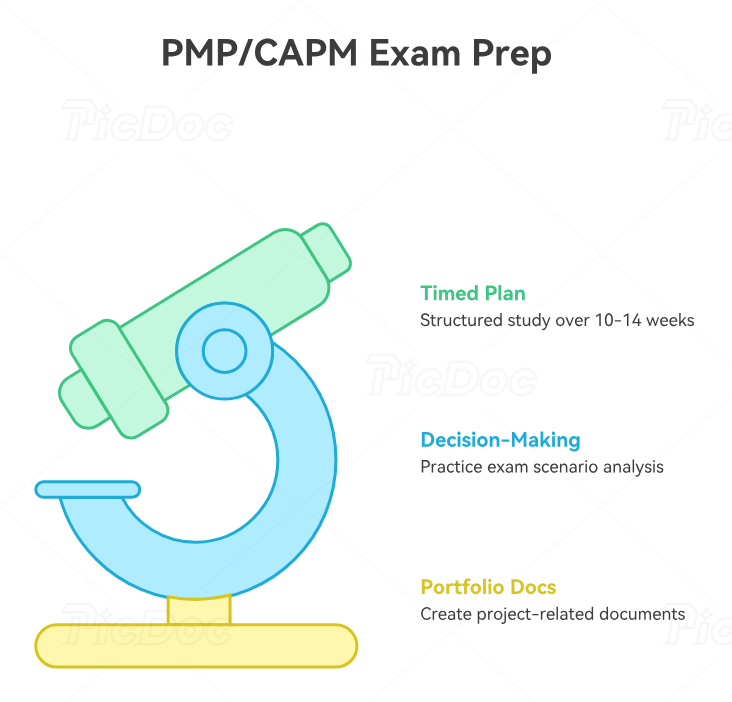
Start with a 10- to 14-week plan. Week one should confirm eligibility, choose the exam, gather resources, build a study tracker, and create a mistake log. Weeks two through six should cover core knowledge, definitions, process flow, Agile concepts, risk, procurement, schedule, stakeholders, and reporting. Weeks seven through nine should focus on timed quizzes, weak-domain repair, and scenario explanations. Weeks ten onward should use full mock exams, revision sheets, formula review, and calm exam logistics. Use PMP preparation resources, PMP exam domains, CAPM exam resources, CAPM exam mistakes, and PMP exam mistakes.
Study like a decision-maker. When a practice question describes a late supplier, decide whether the right action belongs to procurement, risk, schedule, communication, escalation, or contract control. When a question describes sponsor conflict, identify the missing governance path. When a team issue appears, separate coaching, facilitation, escalation, and role clarity. This habit prepares you for both the exam and the interview room. Reinforce it with procurement terms, contract lifecycle tools, stakeholder engagement terms, communication techniques, and conflict resolution terms.
Build portfolio documents while studying. Create a project charter, scope baseline, stakeholder register, risk register, issue tracker, change request form, vendor comparison sheet, budget variance summary, schedule dashboard, and lessons-learned note. These documents make your learning visible. They also give you concrete examples for Bahrain employers who want candidates ready for real delivery pressure. Pull structure from project templates and resources, project reporting best practices, dashboard and data visualization tools, issue tracking software, and resource allocation software.
5. How to Turn Certification Into Interviews, Salary Growth, and Career Momentum
Rewrite your CV around delivery outcomes before you add the certification line. Strong bullets show what changed because you managed the work: delays recovered, risks reduced, approvals accelerated, change requests controlled, reporting improved, vendors aligned, budget variance tracked, defects reduced, or stakeholders coordinated. A Bahrain hiring team should be able to see your value in 20 seconds. Build your evidence with project reporting software, budgeting terms, risk management glossary, schedule compression terms, and vendor management terms.
Customize by sector. For financial services, mention compliance, stakeholder approvals, system changes, vendors, data, and customer impact. For ICT, mention Agile, integrations, adoption, service transition, cybersecurity, and dashboards. For logistics and manufacturing, mention throughput, suppliers, resource planning, quality, and process improvement. For construction and fit-out, mention schedule baseline, contractor coordination, procurement lead times, site issues, and handover. Practice with Agile tools, workforce management software, HR management tools, construction PM software, and team communication platforms.
Prepare six interview stories: a late milestone, a difficult stakeholder, a vendor problem, a scope change, a budget constraint, and a team conflict. Each story should cover context, constraint, action, document or tool used, decision path, result, and lesson. That structure shows maturity without sounding rehearsed. For regional benchmarking, compare your plan with project management certification in Qatar, project management certification in Egypt, project management certification in Turkey, project management certification in Germany, and project management certification in Netherlands.
For salary growth, certification works best as part of a proof file. Track project size, budgets influenced, vendors managed, risks reduced, milestones recovered, cost avoided, reports created, decisions accelerated, and process improvements delivered. Bring that evidence to promotion talks, annual reviews, and recruiter calls. Keep improving with PRINCE2 salary benefits, PMP renewal guidance, CAPM career advancement, PM templates, and project dashboard tools.
6. FAQs About Project Management Certification in Bahrain in 2026-2027
-
PMP is usually the strongest option for experienced project managers because it supports senior delivery, PMO, consulting, and leadership roles. CAPM is better for beginners, coordinators, analysts, and career switchers. PRINCE2 is valuable for governance-heavy environments that care about stages, roles, business justification, and documentation. Choose based on role level, target sector, and proof gap. Compare PRINCE2 vs PMP, CAPM resources, PMP resources, and PMP exam domains.
-
PMP can be worth it if you already have project leadership experience and want stronger credibility for project manager, delivery manager, PMO, consulting, or program-related roles. It becomes more powerful when your CV proves schedule control, stakeholder ownership, vendor coordination, risk management, and business outcomes. Support your preparation with PMP exam mistakes, PMP success stories, project reporting terms, and risk management glossary.
-
CAPM is a practical starting point for beginners because it builds structured PM vocabulary, exam discipline, and confidence before PMP eligibility. It fits fresh graduates, coordinators, administrators, operations staff, procurement support professionals, and technical workers moving toward project roles. Pair CAPM with tool practice and proof assets. Start with CAPM exam resources, CAPM exam mistakes, CAPM career advancement, and project templates.
-
A focused candidate can often prepare in 10-14 weeks with consistent study, timed practice, and serious review. Busy professionals may need 16 weeks. The best study plans combine domain review, scenario questions, explanation analysis, weak-area repair, and mock exams. Use PMP preparation resources, PMP exam domains, CAPM exam day tips, and PMP exam mistakes.
-
Certification can support careers in financial services, ICT, manufacturing, logistics, tourism, construction, healthcare, education, operations, consulting, and PMO environments. Each sector wants different proof. Finance wants compliance and stakeholder control. ICT wants Agile and integration awareness. Construction wants schedule and contractor control. Manufacturing and logistics want process, quality, and resource planning. Build sector language with Agile tools, construction PM software, quality terms, and resource allocation software.
-
Certification can help if you translate outside experience into Bahrain-relevant delivery language. Focus on transferable evidence: vendor management, stakeholder handling, reporting, risk ownership, governance, documentation, budget awareness, and team coordination. Build a sector-specific portfolio to reduce employer uncertainty. Strengthen your profile with stakeholder engagement terms, vendor management terms, contract management terms, and communication techniques.
