
Project coordinator interviews test whether you can keep deadlines, budgets, stakeholders, and deliverables under control when priorities collide. Recruiters want evidence of your ability to anticipate problems, maintain accurate project records, and turn conversations into accountable actions. Whether you're applying for your first coordination role, transitioning from operations management, or building a project management career, these 60 interview questions provide practical sample answers, realistic scenarios, and strategies for demonstrating the skills hiring managers value.
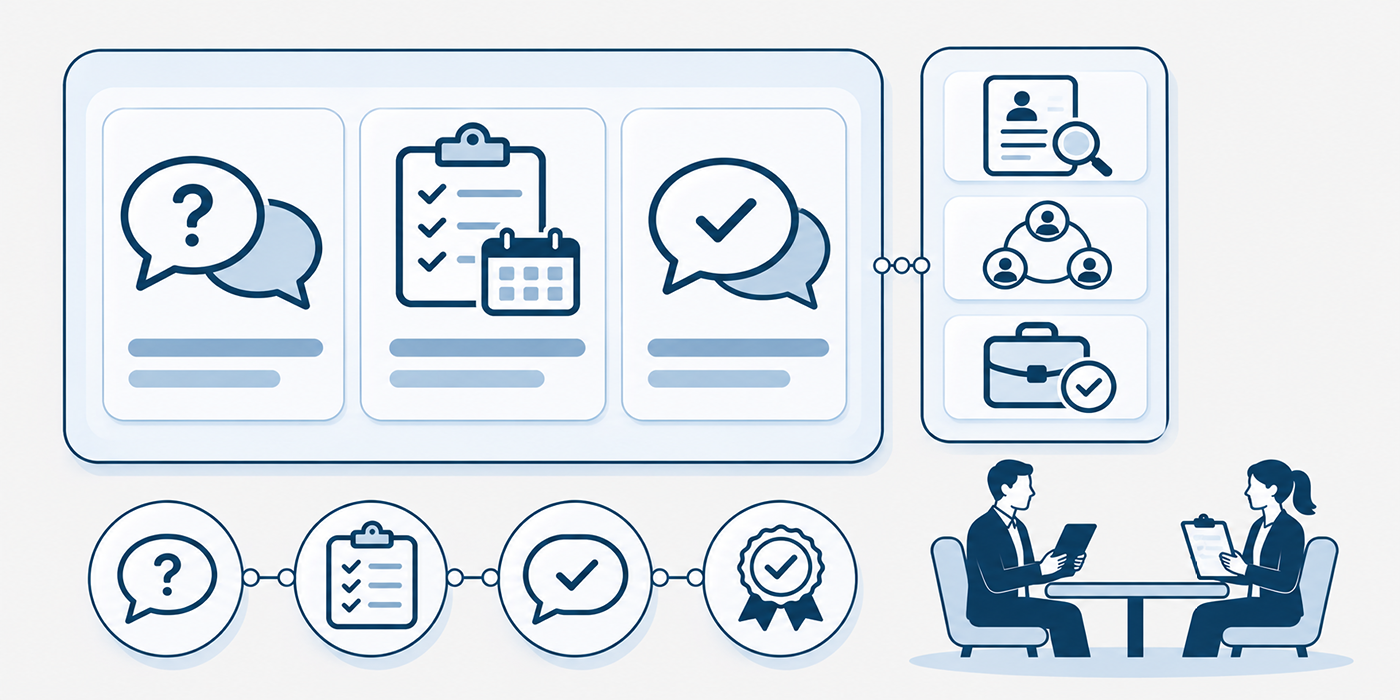
1. How to Prepare for a Project Coordinator Interview and Stand Out From Other Candidates
A project coordinator connects planning decisions to day-to-day execution. The position typically involves tracking deliverables, coordinating stakeholders, maintaining project documentation, monitoring schedules, supporting budgets, and identifying problems before they threaten commitments.
Yet two organizations advertising the same title may expect different capabilities. An IT employer might emphasize Jira, Agile ceremonies, and technical dependencies. A construction company may prioritize contractor schedules, procurement, document control, and change orders. A PMO may expect strong reporting, escalation discipline, and resource tracking.
Understanding these differences is essential when choosing which examples to present.
The project coordinator versus junior PM career comparison helps distinguish coordination responsibilities from broader project ownership. Candidates transitioning from business analysis or IT roles should identify transferable evidence that matches the advertised job.
Understand the five capabilities interviewers are measuring
Planning discipline: Can you translate a business request into tasks, owners, milestones, and dependencies?
Execution control: Can you maintain accurate records and identify deviations before they create serious problems?
Communication: Can you obtain commitments, clarify decisions, and escalate issues without creating unnecessary conflict?
Commercial awareness: Can you track spending, understand budget variance, and recognize which changes require authorization?
Professional judgment: Can you distinguish decisions within your responsibility from those requiring approval by a project manager, sponsor, or functional lead?
Your interview examples should demonstrate these capabilities through work samples such as a RACI matrix, project management templates, and project reporting records.
Use the STAR-D method to structure behavioral answers
A useful interview structure extends the familiar STAR method with an additional decision-making element.
Situation: Establish the business context and problem.
Task: Identify what you personally needed to accomplish.
Action: Explain the concrete steps you took.
Result: Report the measurable outcome or documented deliverable.
Decision rationale: Explain why you selected that approach over available alternatives.
For example, when discussing a delayed vendor delivery, explain how you verified the contractual date, identified affected milestones, assessed alternatives, and escalated the recommended recovery option.
That reasoning matters more than simply claiming you communicated with the vendor.
Reviewers evaluating project governance experience, senior consulting potential, and stakeholder coordination can use this structure to examine how you think.
Prepare an evidence bank before memorizing answers
Select five situations from your actual experience: a deadline risk, a stakeholder disagreement, a process improvement, an error you corrected, and a successful delivery.
For each, record the original problem, your role, the decision taken, supporting evidence, and the outcome.
The sample answers below use illustrative workplace situations. Replace their figures and accomplishments with verified examples from your own experience. Where you lack direct experience, explain how you would approach a scenario rather than claiming to have performed work you have never done.
The strongest preparation also includes practicing aloud. Aim for approximately 45–90 seconds for routine questions and up to two minutes for complex behavioral scenarios.
| Competency | What Recruiters Want to Hear | Evidence You Can Present | Answer Weakness to Avoid | APMIC Preparation Resource |
|---|---|---|---|---|
| 01. Project initiation | Clarifies outcomes before coordinating work | Kickoff checklist and charter review | Starting tasks without authorization | Project governance |
| 02. Scope understanding | Distinguishes deliverables from exclusions | Scope statement and requirement notes | Accepting every stakeholder request | Scope templates |
| 03. Task decomposition | Breaks deliverables into manageable work | Work breakdown and owner assignments | Unstructured activity lists | Planning resources |
| 04. Scheduling | Connects dates with durations and dependencies | Dependency-linked delivery schedule | Deadlines with no underlying logic | Schedule forecasting |
| 05. Milestone tracking | Detects emerging deadline threats | Milestone tracker with variance explanations | Reporting delays after deadlines pass | Performance controls |
| 06. Dependency control | Identifies prerequisite activities and owners | Dependency log with confirmation dates | Assuming other teams are ready | Dependency planning |
| 07. Resource coordination | Checks availability and competing commitments | Capacity tracker and resource requests | Assigning unavailable specialists | Resource allocation |
| 08. Responsibility clarity | Separates contributors from approval owners | RACI responsibility matrix | Multiple unconfirmed approvers | RACI generator |
| 09. Stakeholder engagement | Adapts communication to influence and needs | Stakeholder engagement record | Sending identical messages to everyone | Stakeholder management |
| 10. Meeting facilitation | Produces decisions, owners, and deadlines | Agenda, minutes, action log | Meetings that create no follow-through | Meeting workflows |
| 11. Communication | Reports facts, implications, and required actions | Decision-ready status update | Long updates without a clear request | Status reporting |
| 12. Risk identification | Recognizes threats before their impact | Risk register with response triggers | Listing risks without mitigation | Risk analysis |
| 13. Issue resolution | Tracks active obstacles through closure | Issue log and escalation history | Confusing future risks with current issues | Issue coordination |
| 14. Change control | Records impacts before commitments change | Change request and decision record | Unapproved scope expansion | Change governance |
| 15. Budget monitoring | Reconciles actual, committed, and forecast costs | Cost tracker with variance notes | Confusing budget with cash already spent | Cost controls |
| 16. Procurement support | Maintains approval and supplier lead times | Purchase order and delivery tracker | Making unauthorized commitments | Supplier coordination |
| 17. Vendor management | Verifies dates and escalates contractual exposure | Supplier action and dependency log | Accepting unsupported delivery promises | External dependencies |
| 18. Documentation | Maintains controlled and retrievable versions | Document index and approval history | Multiple conflicting final versions | Document templates |
| 19. Quality coordination | Connects deliverables to testable acceptance | QA checklist and acceptance record | Equating completion with acceptance | Validation planning |
| 20. Agile support | Maintains backlog and iteration visibility | Sprint board and impediment log | Confusing activity with delivered value | Agile coordination |
| 21. Data accuracy | Validates inputs and reporting definitions | Reconciled spreadsheet or reporting audit | Presenting unverified metrics | Data quality |
| 22. Spreadsheet skills | Uses formulas and checks consistently | Excel tracker and exception report | Manual calculations without verification | Metric calculations |
| 23. PM software | Explains tasks, permissions, workflows, and reports | Sanitized board or schedule view | Listing tools without real examples | Tool selection |
| 24. Remote coordination | Clarifies asynchronous ownership and handoffs | Decision log and distributed-team workflow | Relying solely on live meetings | Remote delivery |
| 25. Conflict resolution | Reframes disagreement around objectives and authority | Trade-off and escalation record | Blaming other departments | Stakeholder conflict |
| 26. Adaptability | Assesses impacts when priorities change | Reprioritized delivery plan | Changing commitments without approval | Adaptive delivery |
| 27. Decision escalation | Escalates with evidence and options | Decision brief with recommendation | Escalating problems without context | Decision rights |
| 28. AI-assisted work | Validates generated outputs and protects data | Reviewed draft and source verification | Publishing unchecked AI output | AI workflows |
| 29. Project handover | Transfers ownership and unresolved obligations | Signed handover and support checklist | Closing work without an operating owner | Operational handover |
| 30. Continuous improvement | Connects lessons to changed processes | Retrospective and implemented action | Generic lessons with no follow-through | PMO improvement |
2. Project Coordinator Interview Questions 1–15: Role Knowledge, Organization, and Planning Fundamentals
These questions establish whether you understand the responsibilities, decision boundaries, and practical mechanics of project coordination.
The sample answers are written as spoken interview responses. Adapt their details to your actual experience.
Q1. Tell me about yourself.
Strong answer:
"My background is in operations support and cross-functional coordination, where I've managed action trackers, maintained documentation, and helped teams meet deadlines. I particularly enjoy organizing complex work into clear responsibilities and milestones. I'm now looking to apply those capabilities in a dedicated project coordinator role, where I can support delivery consistency and develop stronger project controls."
Why it works: The answer creates a relevant career narrative rather than reciting a résumé. Connect your background to transferable project management experience, operations-to-PM transitions, or the junior PM career pathway.
Q2. What is the difference between a project coordinator and a project manager?
Strong answer:
"A project manager typically holds broader accountability for project delivery, including scope, planning, stakeholder decisions, and performance. A project coordinator supports that accountability by maintaining accurate schedules, following up on commitments, organizing documentation, and identifying emerging issues. I would focus on giving the project manager reliable information and helping the team execute agreed actions."
The strongest candidates also acknowledge that responsibilities vary by organization. A coordinator may administer the RACI matrix and governance records without possessing final approval authority.
Q3. Why should we hire you as a project coordinator?
Strong answer:
"I bring a structured approach to coordination. I track commitments against owners and deadlines, identify dependencies early, and communicate exceptions with proposed next steps. My strength is helping teams convert plans into verifiable progress. I would use that approach to improve delivery visibility and reduce avoidable follow-up work."
Strengthen the answer with an actual example of improved reporting accuracy, reduced overdue actions, or faster decision turnaround. Evidence from operations management or business analyst work can be persuasive when linked to the position's specific needs.
Q4. What would you do during the first week of a new project?
Strong answer:
"I would review the authorized objectives, scope, milestones, key stakeholders, and escalation rules. Then I'd confirm deliverable owners, identify immediate dependencies, establish document access, and prepare an action tracker. My priority would be understanding which decisions have already been approved and which assumptions still require validation."
A strong first-week checklist also distinguishes the project charter, detailed planning documents, and the stakeholder responsibility matrix.
Q5. How would you handle unclear project requirements?
Strong answer:
"I would document the ambiguity, identify the business owner, and ask targeted questions about the expected outcome, constraints, users, and acceptance criteria. I'd summarize the clarified requirement in writing and request confirmation before allowing it to drive scheduling or resource commitments."
For example, replace "improve reporting" with a defined report, reporting period, data source, refresh frequency, and approver.
This approach demonstrates skills associated with business analysis, project scope management, and stakeholder alignment.
Q6. What is a project charter, and why is it important?
Strong answer:
"A project charter formally establishes the purpose, high-level scope, objectives, sponsor, and authority for the project. It gives the delivery team a common reference for what was authorized. As a coordinator, I would ensure the controlled version is accessible and that the action tracker and major milestones reflect its commitments."
Explain how scope disputes or funding questions are escalated through the approved project governance structure, with supporting records maintained using consistent project documentation templates.
Q7. How do you track project milestones?
Strong answer:
"I maintain a milestone tracker with the baseline date, current forecast, accountable owner, dependencies, evidence required for completion, and risk status. I verify progress with the owners and highlight forecast variances before the milestone is missed."
For example, a design approval should be marked complete only when the designated approver has accepted the required document.
Understanding the distinction between dates, actual completion, and forward-looking schedule forecasts strengthens project reporting. Formal performance measurement may be used when the project has an appropriate baseline.
Q8. How do you organize project documentation?
Strong answer:
"I establish a consistent folder structure, naming convention, document owner, version number, and approval status. I also maintain an index identifying the latest authorized document. That prevents team members from working from outdated requirements or unapproved schedules."
Mention how you separate drafts from controlled records and restrict access where necessary.
Strong project document control supports governance compliance, especially on initiatives involving external vendors or regulated information.
Q9. How do you ensure team members complete their assigned actions?
Strong answer:
"I record each action with one accountable owner, a clear deliverable, a due date, and any dependency. I confirm ownership during the meeting and follow up before deadlines. When an action is blocked, I capture the reason and escalate it according to the agreed process."
For example, "review integration" should become "Technical Lead to approve interface mapping by Thursday."
This demonstrates practical RACI principles, effective meeting follow-up, and reliable project governance.
Q10. What is a work breakdown structure?
Strong answer:
"A work breakdown structure organizes the approved project scope into manageable deliverables and work packages. It helps the team understand what must be produced before we estimate activities, assign responsibilities, and develop the schedule."
Consider a website migration project. The work may be grouped into content preparation, hosting setup, integration, testing, and deployment.
A well-structured WBS supports schedule planning, resource ownership, and consistent project planning documentation.
Q11. What is a RACI matrix, and when would you use one?
Strong answer:
"RACI clarifies who is Responsible for performing work, Accountable for the outcome or decision, Consulted for input, and Informed about progress. I use it when multiple functions participate in the same deliverable and ownership could become unclear."
For example, the technical team may prepare a system for launch while the business owner provides final acceptance.
You can demonstrate this concept using a RACI matrix generator. Connect it to governance decision rights and cross-functional delivery coordination.
Q12. How do you prioritize tasks across multiple projects?
Strong answer:
"I compare deadlines, business impact, dependencies, and the consequences of delay. I identify work that blocks other teams and confirm priorities with the appropriate project managers. When available capacity cannot support all commitments, I present the conflict and options rather than silently choosing which project loses time."
A strong example might involve two project managers requesting the same technical specialist.
This demonstrates the resource coordination practices associated with PMO work, program management, and project scheduling.
Q13. How do you know when a task is truly complete?
Strong answer:
"I check the task against its agreed completion criteria and required evidence. For example, sending a document for review means the submission activity is complete, while the approval milestone remains open until the authorized reviewer accepts it."
This distinction prevents optimistic reporting and false milestone completion.
Bring an example involving an acceptance checklist, approval record, or issue closure. Connect the process to deliverable ownership, project controls, and structured project documentation.
Q14. How do you maintain accuracy when managing large amounts of project information?
Strong answer:
"I use standardized fields, defined data owners, version controls, and routine validation checks. For critical reports, I reconcile source records against the published summary and investigate exceptions before distributing results."
For instance, if a dashboard reports 90% completion, verify whether the percentage represents tasks, milestones, or weighted deliverables.
This answer demonstrates the data discipline required for predictive analytics, earned value calculations, and project reporting workflows.
Q15. What would your first 30 days in this role look like?
Strong answer:
"During the first ten days, I'd learn the project portfolio, reporting expectations, tools, and decision-making structure. During the next ten, I'd verify action ownership, milestone accuracy, and document controls. By day 30, I'd aim to establish a reliable coordination routine and identify one practical improvement for the project manager to consider."
Tailor the improvement to the employer. It might involve reducing overdue actions, improving meeting records, or standardizing status definitions.
This approach supports progression along the project coordinator career pathway and introduces the disciplines of PMO oversight.
3. Project Coordinator Interview Questions 16–30: Schedules, Budgets, Risks, and Delivery Control
These questions require operational judgment. Interviewers want to know whether you can identify emerging problems, analyze their consequences, and provide decision-makers with useful information.
Q16. How would you create a realistic project schedule?
Strong answer:
"I would start from approved deliverables, identify the activities required to produce them, estimate durations with the responsible teams, and establish dependencies. I'd check resource availability and external lead times before proposing milestone dates for approval."
For example, user acceptance testing cannot begin until the necessary environment and test data are ready.
A defensible schedule combines planning templates, dependency analysis, and appropriate schedule forecasting techniques.
Q17. What would you do if a dependent task is delayed?
Strong answer:
"I would verify the revised completion forecast, identify activities that depend on the delayed task, and calculate the resulting milestone exposure. Then I'd discuss recovery options with the task owners and bring the recommended actions to the project manager."
Possible alternatives include resequencing independent work, reallocating available capacity, or adjusting the milestone through approved change control.
Use a dependency register and explain how project scheduling connects to resource coordination and governance decisions.
Q18. What is the critical path in project management?
Strong answer:
"The critical path is the longest-duration path through the project's dependency network and determines the earliest possible project completion date under the current schedule assumptions. A delay to a critical activity generally affects project completion unless corrective action or a schedule change offsets it."
Explain that schedule logic, durations, and constraints must be accurate before critical-path calculations become useful.
The concept supports forecasting project duration and understanding the scheduling implications behind SPI and earned value reporting.
Q19. A major milestone is likely to be missed. What do you do?
Strong answer:
"I'd confirm the current forecast, identify the specific causes of delay, and assess the impact on dependent work and contractual commitments. I'd present the project manager with recovery options, their costs, risks, and required approvals. Once a decision is made, I'd update the forecast and track the selected actions."
The interviewer is assessing your ability to intervene early.
Good examples demonstrate schedule analysis, formal escalation, and accurate performance reporting.
Q20. What should a weekly project status report contain?
Strong answer:
"I would include overall delivery confidence, completed milestones, upcoming commitments, schedule and budget exceptions, critical risks, unresolved issues, and decisions requiring attention. Every significant exception should identify its owner, impact, and recommended next action."
A useful status report helps leadership decide whether intervention is necessary.
Reporting should distinguish actual performance from forecast assumptions. The project reporting workflow guide, EVM calculator, and predictive analytics resources provide useful preparation.
Q21. How would you track a project budget?
Strong answer:
"I would reconcile the approved cost baseline against actual expenditure, outstanding purchase commitments, and forecast remaining costs. I'd investigate variances, confirm the supporting records, and escalate spending risks according to the project's financial thresholds."
For example, a $100,000 project with $45,000 spent and $40,000 committed has only $15,000 of uncommitted budget, before accounting for any additional forecast costs.
This distinction is essential when reviewing project cost performance and working under formal financial governance controls.
Q22. What would you do if an invoice exceeds the approved amount?
Strong answer:
"I would verify the purchase order, contract terms, invoice details, and any approved change orders. I'd identify whether the discrepancy comes from pricing, quantity, tax treatment, or unauthorized work. Then I'd refer it to the appropriate procurement or financial authority before processing."
A coordinator should recognize the limits of their approval authority.
This answer demonstrates understanding of vendor coordination, financial controls, and organizational project governance.
Q23. What is the difference between a project risk and an issue?
Strong answer:
"A risk is an uncertain future event that could affect project objectives. An issue is a problem that has already occurred or currently requires resolution. Risks need triggers and planned responses, while issues require active owners, corrective action, and resolution deadlines."
For example, a vendor might miss a delivery date; that is a risk. Once the contractual delivery date is missed, the delay becomes an issue.
Use this distinction when discussing risk governance, operational coordination, and project planning documentation.
Q24. How do you maintain a project risk register?
Strong answer:
"I record each risk with a clear cause, possible consequence, likelihood, impact, owner, response action, and trigger for escalation. I review significant risks with owners regularly and update their exposure as circumstances change."
A weak risk entry says "vendor problems." A useful entry identifies the specific condition that might delay an agreed milestone and the mitigation owner.
A good example can connect risk documentation, cybersecurity project risks, and the governance decision process.
Q25. How do you handle a stakeholder requesting additional project scope?
Strong answer:
"I'd document the requested change, clarify the business reason, and obtain input on cost, schedule, resource, and risk impacts. I'd then route the request through the approved change-control process. Until authorization is confirmed, I'd keep the existing baseline intact."
Suppose a stakeholder asks for an additional system integration. The request could affect interface design, testing, security approvals, and ongoing support costs.
Understanding API dependencies, change governance, and stakeholder decision rights makes your response more credible.
Q26. How would you manage an unreliable vendor?
Strong answer:
"I would compare vendor commitments against the contract and delivery tracker, document discrepancies, and ask for a recovery plan with dated actions. I'd assess the impact on dependent work and escalate persistent problems through the designated contract owner."
For example, if a supplier repeatedly provides unsupported revised dates, request delivery evidence and identify contingency options.
This reflects practical supplier coordination, schedule control, and project governance.
Q27. Two projects need the same specialist at the same time. How do you respond?
Strong answer:
"I'd confirm each project's actual workload, deadline sensitivity, and dependency impact. Then I'd present feasible options to the project managers or resource owner, such as resequencing work, splitting capacity, or changing an approved milestone."
The key is making the resource conflict visible before the specialist becomes overcommitted.
This answer is particularly useful for candidates targeting PMO positions, program management careers, and project schedule coordination.
Q28. How do you support quality assurance and project acceptance?
Strong answer:
"I confirm the approved acceptance criteria, test owners, evidence requirements, and sign-off process. I track defects and outstanding conditions until the authorized reviewer accepts the deliverable or formally approves an exception."
For an IT project, acceptance could involve functional testing, security review, data reconciliation, and business approval.
Tie your response to technical integration testing, security oversight, and approval ownership.
Q29. When should you escalate an issue to the project manager?
Strong answer:
"I would escalate when the issue threatens an approved milestone, budget threshold, quality requirement, contractual obligation, or another team's ability to deliver, especially when resolution exceeds my delegated authority."
Describe the evidence you would provide: the current situation, consequences, attempted actions, available options, and required decision deadline.
A professional escalation follows governance decision rights, supports effective reporting, and clarifies stakeholder accountability.
Q30. What does successful project closeout involve?
Strong answer:
"I would confirm deliverable acceptance, reconcile outstanding commitments, archive controlled records, transfer operational ownership, record remaining issues, and support the lessons-learned review. I'd also ensure any unfinished benefits measurements have an assigned business owner."
A project can finish delivery while operational benefits remain under review.
This distinction supports program benefits management, operations handover, and PMO continuous improvement.
Select your biggest challenge to receive a targeted interview preparation recommendation. This diagnostic does not collect or publish votes.
4. Project Coordinator Interview Questions 31–45: Stakeholder Communication, Conflict, and Behavioral Scenarios
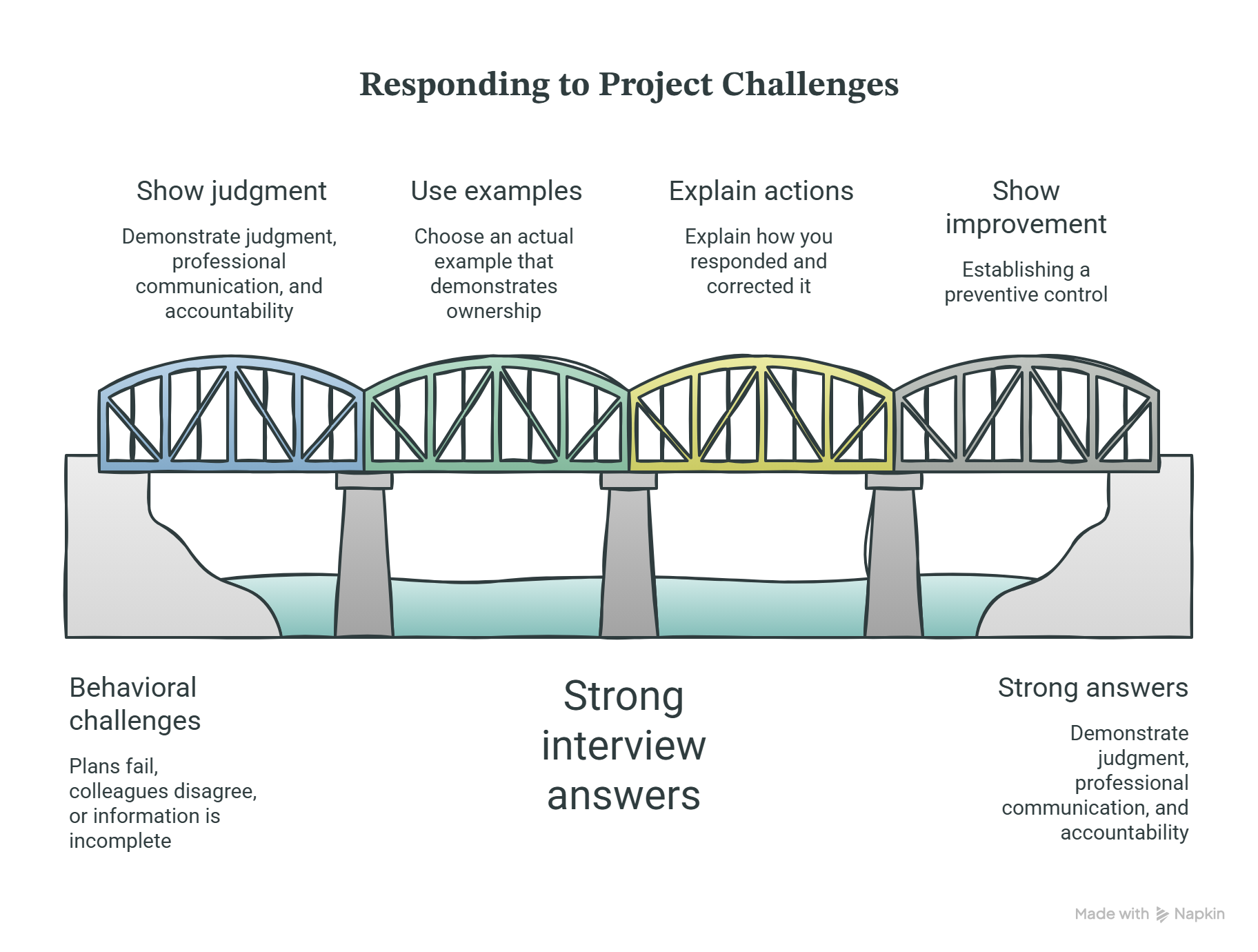
Behavioral interviews reveal how you respond when plans fail, colleagues disagree, or information is incomplete. Strong answers demonstrate judgment, professional communication, and accountability.
Q31. Tell me about a time you dealt with a difficult stakeholder.
Strong answer:
"During a workflow improvement initiative, a department lead repeatedly challenged the proposed reporting deadlines. I arranged a focused discussion to understand their concern and discovered that the required source data arrived later than expected. We adjusted the submission sequence while preserving the final executive reporting deadline."
Why it works: The candidate investigated the underlying constraint instead of treating disagreement as resistance.
Use examples reflecting stakeholder management, RACI responsibilities, and the challenges described in project management burnout discussions.
Q32. How would you respond to an unrealistic deadline?
Strong answer:
"I'd examine the required activities, resource assumptions, dependencies, and available schedule flexibility. Then I'd explain the constraints and present realistic options, such as reducing approved scope, obtaining additional resources, or adjusting the completion date."
Avoid promising an aggressive deadline without a credible delivery plan.
This answer demonstrates schedule reasoning, resource management, predictive project forecasting, and disciplined change governance.
Q33. How do you influence people when you have no formal authority?
Strong answer:
"I focus on clarity, shared objectives, and reliable follow-through. I make dependencies visible, explain how missed commitments affect other teams, and ask owners to agree on realistic dates. When priorities conflict, I involve the appropriate manager rather than attempting to override organizational authority."
Project coordinators frequently depend on people outside their reporting line.
A strong example should demonstrate practical stakeholder engagement, RACI ownership, and cross-team coordination used in program environments.
Q34. Tell me about a time you missed a deadline.
Strong answer:
"During a reporting cycle, I underestimated the time needed to reconcile inconsistent source data. I informed the report owner before the agreed deadline, delivered the verified information that was ready, and provided a revised completion estimate. Afterward, I introduced an earlier source-data cutoff and a validation checkpoint."
Choose an actual example that demonstrates ownership rather than excuses.
Explain how the resulting process improvement relates to project reporting accuracy and operational coordination.
Q35. What would you do if two managers give you conflicting instructions?
Strong answer:
"I would confirm each request, its deadline, and the business consequences. Then I'd explain the conflict to the managers and ask the designated decision-maker to establish priority. I'd document the agreed direction and update the relevant commitments."
The objective is to avoid making unauthorized trade-offs between competing projects.
This response demonstrates understanding of governance authority, resource prioritization, and responsibility assignments.
Q36. How would you run an effective project meeting?
Strong answer:
"I would circulate an agenda focused on decisions, blockers, and upcoming commitments. During the meeting, I'd keep discussion aligned with the objectives, confirm decisions with the responsible authority, and record actions with owners and deadlines. I'd distribute the summary promptly afterward."
A high-value meeting produces usable decisions and accountability.
Connect your approach to structured reporting workflows, stakeholder responsibilities, and project governance practices.
Q37. What if meetings repeatedly end without decisions?
Strong answer:
"I'd identify why decisions are being deferred. If information is missing, I'd assign the evidence required. If approval authority is unclear, I'd confirm the correct decision-maker. I'd also separate discussion meetings from formal decision gates and circulate a short decision brief beforehand."
The answer targets the real causes of decision delay.
It demonstrates the coordination discipline involved in executive project governance, RACI clarity, and effective project communications.
Q38. How do you communicate bad news to a project sponsor?
Strong answer:
"I would communicate the issue early and factually, explain its impact on approved commitments, and present available recovery options. I'd distinguish confirmed information from assumptions and identify which decision the sponsor needs to make."
For example, report a forecast two-week delay with the affected milestone, cost implications, and recommended response rather than merely saying the project is behind schedule.
This connects executive communications, performance forecasting, and formal escalation.
Q39. How would you handle unclear feedback from a stakeholder?
Strong answer:
"I would ask the stakeholder to identify the specific outcome that fails their expectation. Then I'd translate the concern into a testable requirement and confirm the proposed interpretation. If the feedback changes approved scope, I'd route it through the appropriate decision process."
For example, "the report needs to be better" should become a defined layout, dataset, calculation, or reporting frequency.
This demonstrates business analysis techniques, scope control, and stakeholder coordination.
Q40. How would you coordinate a remote project team?
Strong answer:
"I would maintain a shared source of truth for actions, decisions, deadlines, and dependencies. I'd use asynchronous updates for routine progress and reserve meetings for decisions, unresolved issues, and complex collaboration. Time-zone differences and handoff expectations would be documented explicitly."
A strong remote coordination process reduces dependence on constantly overlapping working hours.
This response is relevant to remote PM opportunities, global project management, and digital nomad delivery models.
Q41. Describe a mistake you made and how you corrected it.
Strong answer:
"I once circulated a report containing an outdated milestone date. After discovering the mistake, I issued a corrected version, identified who had received the inaccurate information, and updated the reporting process to require a source verification check before distribution."
The value comes from accepting responsibility and establishing a preventive control.
Interviewers examining project reporting practices or project governance discipline may ask what evidence proves the correction was effective.
Q42. Two departments disagree about project responsibilities. How would you resolve it?
Strong answer:
"I would identify the disputed deliverable, review the existing responsibility assignments, and clarify which decisions require formal accountability. I'd bring the relevant managers together to confirm ownership and document the agreement."
For instance, Operations may assume IT owns user training while IT assumes Operations will manage it.
A RACI matrix provides a practical starting point. For unresolved conflicts, follow the designated governance escalation route.
Q43. Tell me about a time project priorities changed suddenly.
Strong answer:
"When an urgent customer requirement changed our reporting priorities, I confirmed which deliverables were now critical, identified affected deadlines, and worked with the project manager to revise the action plan. I communicated the approved changes and checked that owners understood the new sequence."
A strong answer shows controlled adaptation rather than frantic activity.
This connects to agile project management, resource prioritization, and change control.
Q44. What is your biggest professional weakness?
Strong answer:
"Earlier in my career, I sometimes spent too much time perfecting routine reports. I learned to distinguish the information needed for decisions from details that added little value. I now use predefined reporting standards, validation checks, and time limits to maintain quality without slowing delivery."
Choose a genuine, manageable weakness supported by corrective action.
Avoid generic claims such as being overly hardworking. A useful answer demonstrates the same reflective discipline required for PMO improvement and effective project reporting.
Q45. What would you do if a team member repeatedly missed commitments?
Strong answer:
"I'd discuss the missed actions privately to understand whether the problem involves capacity, unclear requirements, or an unresolved dependency. I'd confirm a realistic recovery commitment, update the tracker, and escalate repeated delivery exposure through the agreed management process."
The answer demonstrates professional follow-through without assuming disciplinary authority.
A coordinator should understand the distinction between tracking commitments and managing employee performance. Use RACI ownership, resource coordination, and escalation governance to explain your approach.
5. Project Coordinator Interview Questions 46–60: Software, Reporting, Agile, and Advanced Hiring Scenarios
Technical questions help employers determine whether candidates can translate coordination principles into practical workflows. Tool names matter less than your ability to explain what you track, why the data matters, and how you validate it.
Q46. Which project management tools have you used?
Strong answer:
"I have experience using spreadsheets and shared collaboration tools to maintain task ownership, deadlines, and reporting. I'm comfortable learning dedicated project platforms because I understand the underlying workflow: tasks, dependencies, status, permissions, and escalation. When adopting a new system, I focus first on the team's actual reporting requirements."
List only tools you have genuinely used.
If familiar with Trello or Basecamp, prepare to explain the differences in their workflows using the Trello versus Basecamp comparison. Candidates can also review PM software resources and project management integrations.
Q47. How would you use Excel to manage project activities?
Strong answer:
"I would maintain a structured tracker with task IDs, descriptions, owners, baseline dates, forecast dates, status, dependencies, and notes. I'd use filters, validation rules, conditional formatting, and formulas to identify overdue or unassigned work. Before reporting, I'd reconcile critical entries with the owners."
Be prepared to explain formulas such as COUNTIF, SUMIF, XLOOKUP, or date-based exception checks, depending on your genuine skill level.
Spreadsheet accuracy also supports cost measurement and reliable project forecasting.
Q48. When would you use Jira, Trello, Asana, or Microsoft Project?
Strong answer:
"I'd choose tools based on the project's workflow and reporting needs. Jira can support structured issue and agile work tracking. Trello offers straightforward visual task boards. Asana supports collaborative work coordination, while Microsoft Project is useful for detailed schedule and dependency planning."
Explain that tool selection also depends on organizational licensing, integrations, security requirements, and team adoption.
Use the Trello and Basecamp analysis, Agile career guidance, and PM integration resources to strengthen your understanding.
Q49. Which KPIs would you include in a project coordination dashboard?
Strong answer:
"I would track milestone variance, overdue actions, unresolved issues, high-priority risks, pending decisions, and budget exceptions where relevant. Each metric should have a clear definition, reporting period, owner, and escalation threshold."
For example, an overdue-task percentage requires a consistent denominator and rules for canceled or rescheduled work.
This demonstrates how to use project analytics, status reporting, and performance indicators to support decisions.
Q50. What is earned value management, and how would you explain CPI and SPI?
Strong answer:
"Earned value management compares planned work, completed work, and actual spending using a consistent cost-based measurement framework. CPI is earned value divided by actual cost, while SPI is earned value divided by planned value."
Consider a project with:
Planned value: $50,000
Earned value: $40,000
Actual cost: $44,000
CPI = 40,000 / 44,000 = 0.91
SPI = 40,000 / 50,000 = 0.80
The project is earning approximately $0.91 of planned value per dollar spent and has completed less budgeted work than planned at the measurement date.
Use the EVM calculator to practice interpretation. These metrics require an appropriate baseline and are not direct substitutes for a dependency-based schedule forecast.
Q51. What is the difference between Agile and traditional project management?
Strong answer:
"Predictive approaches develop substantial planning detail around defined objectives and controlled baselines. Agile approaches use iterative delivery and frequent feedback to adapt priorities as learning occurs. The appropriate approach depends on uncertainty, governance requirements, and the nature of the deliverables."
A coordinator working across both environments needs to understand different reporting rhythms and decision processes.
Review traditional-to-agile career transitions, Agile project leadership, and scaled Agile practices.
Q52. How would you support a Scrum team?
Strong answer:
"I would support the team's agreed coordination needs by maintaining accurate administrative records, helping surface external dependencies, and ensuring stakeholder communications are clear. I'd respect established Scrum accountabilities and avoid taking control of sprint planning or backlog prioritization without the appropriate role."
An interviewer may test whether you understand the difference between supporting team coordination and directing the Development Team's work.
Relevant preparation includes Agile project management progression, Scrum@Scale practices, and SAFe coordination approaches.
Q53. How would you use AI in project coordination?
Strong answer:
"I would use approved AI tools to help draft meeting summaries, organize non-sensitive information, prepare report structures, and identify possible inconsistencies. I'd verify names, dates, calculations, ownership, and decisions against the original records before publishing anything."
For example, AI can propose an action list from authorized meeting material, while the coordinator confirms the actual commitments.
Explain that sensitive information must follow company policy. Review AI-powered PM workflows and project management automation trends.
Q54. How do you protect confidential project information?
Strong answer:
"I follow the organization's data classification rules, access permissions, document retention requirements, and approved communication channels. I verify recipients before sharing sensitive records and escalate suspected exposure through the proper security process."
A coordinator may handle confidential budgets, employee information, contracts, or technical documentation.
Demonstrate awareness of cybersecurity project requirements, future security expectations for PMs, and document governance.
Q55. How would you support project procurement?
Strong answer:
"I would coordinate approved purchasing requests, monitor quotation and contract milestones, verify required approvals, and track supplier commitments. I'd highlight procurement lead times that could affect the project schedule and maintain an accurate record of outstanding decisions."
A useful example might involve equipment that requires six weeks of procurement lead time before installation can begin.
Connect this to supplier coordination, schedule dependencies, and organizational approval controls.
Q56. How would you coordinate training for a new system launch?
Strong answer:
"I'd identify user groups, training objectives, delivery dates, required materials, and proficiency checks. I'd track completion against the target population and confirm that support resources are ready for launch. I'd also distinguish training attendance from actual user readiness."
For example, a team may reach 100% attendance but still fail essential workflow tasks during validation.
This demonstrates skills used in software implementation, marketing and communications project management, and operational change.
Q57. How do you measure whether a project delivered business value?
Strong answer:
"I would compare actual operational outcomes against the baseline and approved success criteria. I'd confirm measurement dates, data sources, and the business owner responsible for verifying benefits. I'd also distinguish completed deliverables from benefits that emerge after implementation."
For example, installing a ticketing system is a deliverable; reducing ticket resolution time is a business outcome.
The distinction is central to program benefits management, operations leadership, and performance analysis.
Q58. How would you answer if you have never held the title "Project Coordinator"?
Strong answer:
"Although my previous title was different, I've performed relevant coordination activities, including maintaining deadlines, organizing stakeholder communication, following up on actions, and documenting progress. I can demonstrate those responsibilities through specific examples and explain how they transfer into this role."
Avoid presenting hypothetical projects as actual employment experience.
Use résumé reframing guidance, operations-to-PM transition advice, and entry-level PM role comparisons to prepare real supporting examples.
Q59. What are your salary expectations?
Strong answer:
"Based on the responsibilities described, the market range for comparable positions in this location, and my relevant experience, I'm targeting a salary within [researched range]. I'd also consider the broader compensation package and the scope of the role."
Research the actual location, industry, job level, and benefits before choosing a range.
For context on compensation variation, review project management salary discussions and the differences between project coordinator and junior PM roles. Community pay reports can inform research but should be checked against current local vacancies and compensation data.
Q60. Do you have any questions for us?
Strong answer:
"Yes. I'd like to understand which coordination challenges are causing the most pressure today. How are milestone delays escalated, who owns project priorities when resources conflict, and what would successful performance look like after my first 90 days?"
These questions uncover whether the organization has clear authority, realistic expectations, and workable reporting practices.
They also help candidates assess risks associated with poor project management environments, unmanageable workloads, and unclear project governance.
6. Project Coordinator Interview FAQs
-
Common topics include schedule tracking, deadline management, stakeholder communication, task prioritization, risk identification, budget monitoring, meeting coordination, and project software.
Behavioral questions often ask candidates to describe missed deadlines, conflicting priorities, difficult stakeholders, and mistakes they have corrected.
Prepare examples demonstrating planning, accountability, and professional judgment. The project coordinator career guide and project management templates provide useful preparation material.
-
Yes, particularly when the position welcomes applicants with transferable administrative, operations, technical, education, or business support experience.
Prepare genuine examples involving deadlines, coordination, communication, documentation, and problem-solving. Explain your responsibilities accurately and distinguish professional experience from simulated work.
Candidates can use guidance on project management résumés without formal titles and career transitions from operations to identify relevant evidence.
-
Certification requirements vary by employer and position. Some coordinator roles accept candidates with administrative or operational experience, while others prefer project management education or credentials.
PMP has its own eligibility requirements, so applicants should verify whether they qualify before committing to exam preparation.
Candidates can explore CAPM preparation resources, understand PMP exam domains, and compare the project coordinator-to-PM career pathway.
-
Routine questions often work well with a focused 45–90-second answer. Complex behavioral questions may need up to two minutes when context, actions, results, and decision reasoning are important.
The objective is to provide enough evidence for the interviewer to evaluate your contribution without unnecessary background.
Practice examples involving stakeholder coordination, project reporting, and project governance.
-
Acknowledge the limit of your knowledge and explain how you would approach the problem.
For example, if asked about an unfamiliar scheduling method, describe how you would verify the concept, consult the project manager, review the existing schedule, and avoid publishing unsupported conclusions.
Demonstrating structured thinking and professional integrity can provide useful evidence of your potential.
Build technical confidence using the earned value calculator, planning resources, and predictive analytics guidance.
-
Prioritize spreadsheets, collaborative document management, task tracking, scheduling, and reporting. Learn at least one project management platform sufficiently well to explain its workflow, permissions, and reporting features.
The exact software depends on the advertised role.
Candidates can explore Trello versus Basecamp, project management APIs and integrations, and AI-supported reporting workflows.
