
Is Project Management Too Stressful? Reddit Experiences by Industry + Workload, On-Call and Work-Life Balance Compared
Project management can range from a predictable 35–40-hour role to a job that follows you into evenings, weekends, vacations, and sleep. The title alone tells you surprisingly little. Industry, project phase, client exposure, staffing, portfolio size, company culture, and escalation responsibility matter far more. Anyone evaluating whether project management is worth pursuing, planning a career change into PM, comparing certification paths, or building real project experience needs to evaluate the specific operating environment, rather than asking whether project management as a whole is stressful.
1. How Stressful Is Project Management Really? Workload Matters Less Than the Type of Pressure
Project management has a built-in psychological challenge: you can be accountable for an outcome without personally controlling every person, supplier, budget decision, technical dependency, or executive priority affecting it. That dynamic becomes especially important for people trying to enter project management without prior experience, professionals moving from project coordinator to project manager, candidates considering whether PMP is worth pursuing, and PMs trying to build stronger portfolio evidence. BLS confirms that most project-management specialists work full time and that some exceed 40 hours, especially when schedules require flexibility across time zones or off-peak periods.
Hours alone can be misleading. A 2026 pharmaceutical PM on Reddit described working roughly 45–50 hours per week from home, yet reported overwhelming mental load because the working day was continuously packed, breaks disappeared, clients applied pressure, and unfinished work accumulated immediately. Another 2026 PM described roughly 40 active projects after a promotion and connected the increase in workload with severe stress-related symptoms. These experiences illustrate why someone researching PM career viability, project-management hiring expectations, PMO effectiveness, and enterprise collaboration systems should examine work intensity, rather than counting hours alone.
A useful stress model separates project work into five pressure sources. Volume pressure comes from too many projects or tasks. Consequence pressure comes from expensive mistakes, safety issues, regulatory exposure, or client commitments. Ambiguity pressure comes from unclear scope and changing requirements. Interpersonal pressure comes from conflict, politics, and stakeholders who cannot agree. Availability pressure comes from after-hours incidents, deployments, global teams, construction deadlines, or client emergencies. A PM developing business-analysis capability, earned-value expertise, project governance skill, and program-management capability may experience substantial responsibility while reducing ambiguity and chaos through stronger systems.
This explains why two people can both report “45 hours a week” while describing completely different lives. One may spend five concentrated days with competent teams, defined scope, realistic deadlines, and no evening contact. Another may move between 12 clients, dozens of Slack channels, repeated escalations, executive pressure, understaffed teams, and weekend launches. Reddit discussions repeatedly emphasize that project workload comes in waves and that organizational culture, staffing, boundaries, and the number of concurrent initiatives frequently matter more than the title itself. That distinction should shape decisions about career-stage certifications, IT project-management careers, agile project leadership, and eventual senior PM consulting.
Reddit also carries obvious selection bias. People enjoying a calm Wednesday afternoon rarely create posts titled “Everything is manageable today.” Burnout, anxiety, terrible bosses, impossible workloads, and career crises produce stronger posting incentives. A 2026 construction thread explicitly debated this problem, with users warning that online forums can overrepresent difficult experiences. That means Reddit is excellent for identifying failure modes, while career decisions should also consider employment-market evidence, project-management software trends, future certification demand, and broader career progression opportunities.
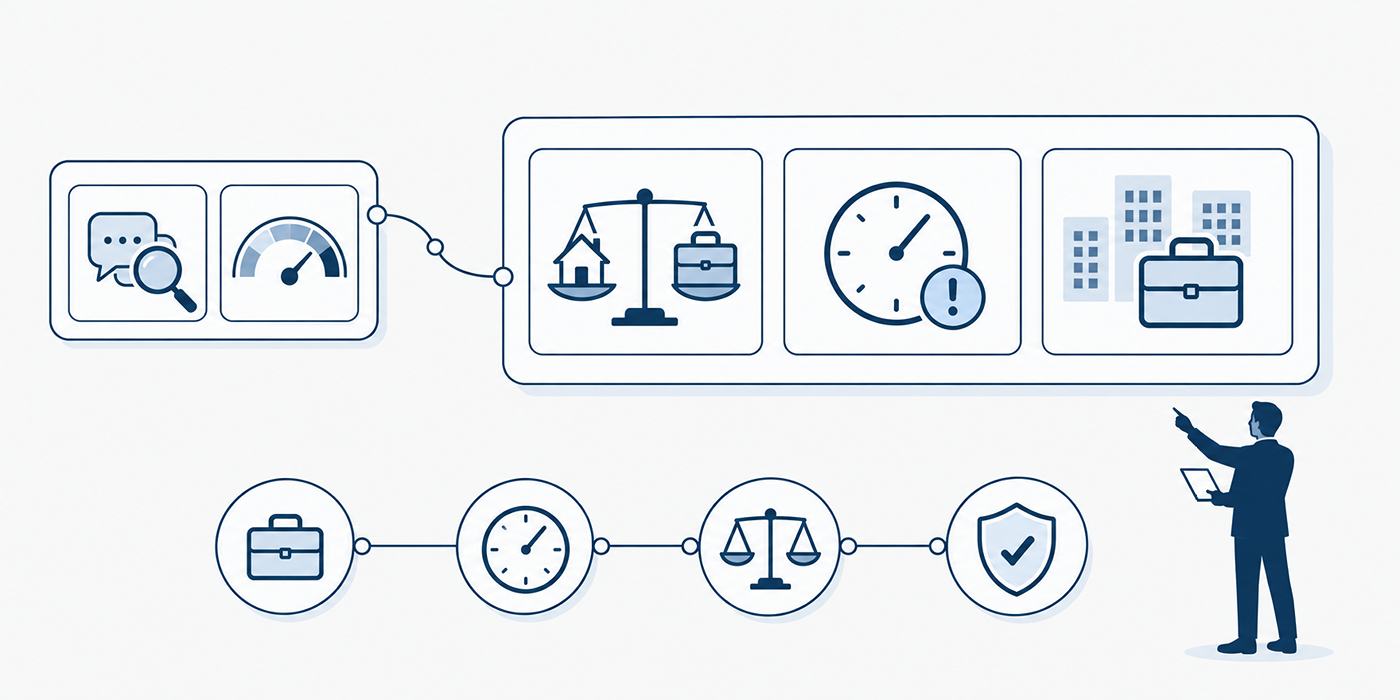
The matrix is a risk map rather than a universal ranking. A well-run construction owner can provide better balance than a chaotic university. A healthcare system can be calm while another expects continual after-hours support. The useful comparison is between operating models: client versus internal, vendor versus owner, startup versus mature enterprise, single strategic program versus dozens of small concurrent projects, and staffed team versus permanent resource shortage.
2. Reddit Experiences by Industry: Construction, IT, Pharma, Government, Healthcare and Consulting
Construction generates some of the strongest stress stories because deadlines are physical, subcontractors depend on one another, weather and site conditions cannot be solved by rescheduling a Zoom call, and errors can become expensive immediately. An August 2026 construction PM described intense anxiety around a role that followed them mentally outside work. Another recent construction discussion showed professionals specifically comparing general-contractor life with owner-side work, with one respondent describing a dramatic work-life-balance improvement after moving to an owner's-representative role. That makes construction-management expertise, earned-value knowledge, cost-management certification, and senior PM consulting skills useful partly because competence increases control over inherently difficult work.
Construction stress also depends heavily on which side of the contract you sit on. General contractors frequently absorb schedule compression, subcontractor problems, owner demands, procurement issues, and site coordination simultaneously. Owner-side PMs may retain substantial accountability while gaining more leverage over priorities and fewer daily site emergencies. A 2026 construction work-life thread contained accounts ranging from reasonable 40-hour weeks to previous roles exceeding 70 hours, reinforcing the importance of career-path specialization, project-governance capability, commercial cost knowledge, and eventually program-level responsibility.
IT and software project management are often less physically demanding but can create severe availability pressure. Infrastructure migrations, production releases, cybersecurity remediation, cloud cutovers, ERP implementations, and global deployments may happen when ordinary users are offline, which means evenings or weekends. Professionals moving from IT into project management, building cybersecurity PM expertise, preparing for future cybersecurity-project-management convergence, or evaluating enterprise PM technology should ask whether “flexibility” in a job description means occasional launch support or routine evening availability.
Technology PM stress can become particularly ugly in high-concurrency client-facing environments. A Reddit poster working around public-sector technology described roughly 60 active projects, frequent software escalations, and days stretching from nine to fourteen hours. A 2026 consulting PM described managing more than ten clients across technologies and industries while also carrying internal responsibilities. Those are structural workload problems, rather than ordinary project-management intensity. They matter for professionals considering PMP certification ROI, developing portfolio evidence, progressing toward program management, or moving into project governance.
Pharmaceutical project management can produce a different kind of pressure: heavy matrix coordination, scientific dependencies, regulatory milestones, external vendors, and clients expecting delivery despite resource limitations. The January 2026 Reddit workload thread is particularly revealing because several pharma professionals described the difference between vendor-side and client-side life. One contributor reported previously juggling 40–80 projects on the vendor side and later finding dramatically lighter workload on the client side. Another described pharma generally as a heavy-workload environment. The takeaway for professionals evaluating business-analysis skills, PM certification strategy, real experience versus credentials, and program-management careers is that contract position within an industry may matter as much as the industry itself.
Healthcare can range from chaotic to highly sustainable. Healthcare PMs may deal with clinical operations, patient-flow improvement, software implementations, compliance, facilities, and system-wide change. One Reddit healthcare professional described the work as unusually gray and dependent on creating operational efficiencies. Other discussions contain experienced healthcare PMs describing calm cultures and no routine post-5 p.m. activity. That wide spread is why someone considering project-management careers generally, IT-to-PM transitions, business-analysis pathways, or project-governance leadership should investigate the actual support model rather than treating “healthcare PM” as a single lifestyle.
Government and public-sector PM work frequently appears in Reddit discussions as a potential refuge from private-sector churn. A March 2026 Canadian public-sector thread began with a PM exhausted by weekends, evenings, churn, and constant private-sector PMO pressure. A U.S. government employee responding described materially improved work-life balance and freedom from constant client emergencies. An older government-project discussion similarly differentiated government employees from contractors, with the former generally associated with stronger balance and contractors with greater pressure and upside. This can be attractive for someone comparing project-management career sustainability, future certification relevance, project governance careers, and PM executive progression.
Consulting and agency work often concentrates several stress multipliers in one role: multiple clients, externally imposed deadlines, utilization pressure, frequent context switching, and limited control over client behavior. One Reddit discussion contrasted an intense agency environment involving regular late evenings with a later client-side higher-education role described as far calmer. Professionals targeting marketing project management, senior PM consulting, remote collaboration careers, or eventual PM-to-COO progression should therefore ask about client count, utilization targets, revision culture, escalation SLAs, and after-hours norms before accepting an apparently attractive role.
3. Workload, On-Call Expectations and Work-Life Balance: The Questions That Reveal a Bad PM Job Before You Accept It
The most useful interview question is rarely “How many hours do PMs work here?” Managers can answer “around 40” while describing a job that mentally occupies 70. Ask instead: How many active projects does one PM typically own at once, and what is the range between the smallest and largest portfolios? Someone considering a first PM role, a project-coordinator promotion, a mid-career transition, or a PMP-driven job search needs the workload denominator before interpreting salary or title.
Then ask what happens after 5 p.m. Do PMs monitor Slack? Who owns production incidents? Are releases conducted overnight? Are weekend construction activities routine? Are customer escalations expected to receive an immediate response? Do global stakeholders create 7 a.m. and 9 p.m. meetings on the same day? BLS specifically notes that project-management schedules can require off-peak or time-zone flexibility, which makes these questions legitimate. They are especially important in IT project management, cybersecurity delivery, remote project teams, and enterprise technology programs.
Ask how vacations work in practice. Who covers your projects when you are gone? A PM who remains the sole repository of stakeholder history, escalation context, decision rationale, and project status cannot truly disconnect. Mature organizations build coverage through strong PMO systems, effective collaboration tools, structured project governance, and deliberate program-management practices. A company that praises “ownership” while expecting employees to answer messages from vacation is telling you something important about its operating model.
Another revealing question is: What caused your last three project escalations? Their answer exposes where stress comes from. “A supplier missed a critical milestone” is ordinary project risk. “Leadership sells dates before teams estimate the work” is structural dysfunction. “Clients change scope constantly and sales promises whatever they ask for” predicts recurring conflict. “Our PMs have too many projects because hiring is frozen” reveals workload risk immediately. These answers help candidates evaluate employer screening reality, project-management tool maturity, project governance, and their longer-term senior PM path.
Also investigate authority-to-accountability ratio. Stress rises sharply when a PM owns deadlines while lacking authority to secure resources, challenge scope, escalate underperformance, or obtain decisions. A healthy organization gives the PM escalation routes and sponsors who will make difficult calls. An unhealthy one tells the PM to “make it happen” while every functional manager can ignore the project. Developing business-analysis strength, governance capability, cost-management knowledge, and program leadership helps, while the organizational design still matters.
Finally, ask how the company handles crunch periods. Healthy project environments can have intense launches, cutovers, regulatory deadlines, or construction milestones followed by recovery. PMI has long distinguished normal project crunch from environments where maximum intensity becomes permanent. Constant urgency destroys prioritization because every request becomes critical. Anyone planning a sustainable project-management career, a move toward senior project consulting, progression into project-management leadership, or eventual operating leadership should look for recovery cycles, rather than expecting a permanently easy job.
4. Why Some PMs Work 60 Hours While Others Finish at 5:00
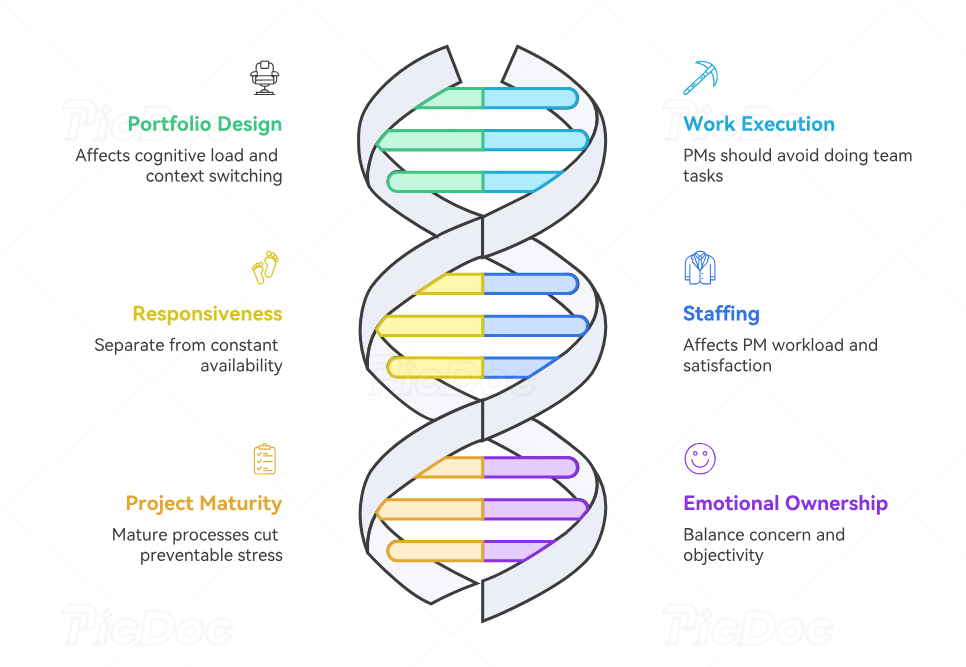
A major separator is portfolio design. Forty simple implementations can create more cognitive load than two complex strategic projects because every project carries its own client, status, email history, deadlines, risks, and follow-ups. Context switching becomes the hidden workload. This helps explain Reddit stories involving 40, 60, or even 80 concurrent items. A professional building real PM experience, preparing for program management, learning PMO governance, or evaluating project-management tools should focus on coordination surfaces, rather than project count alone.
Another separator is whether the PM does the team's work. Early-career PMs frequently rescue late tasks themselves because doing the work seems faster than escalating, delegating, or allowing a deadline to expose a resource problem. Over time this converts one job into several. Reddit responses to overloaded PMs repeatedly advise distinguishing managing work from personally executing every deliverable. That skill becomes especially important while progressing from coordinator to PM, transitioning from business analyst to project manager, moving from IT into PM, or preparing for project-management executive roles.
Strong PMs also understand that responsiveness and availability are separate concepts. A professional can be responsive during working hours while refusing to normalize midnight messages that can wait. Clear escalation rules help: production outage equals immediate contact, a routine status question waits until morning, and an executive's poor planning does not automatically become a team-wide emergency. This becomes essential in remote project environments, cybersecurity-related projects, agile organizations, and global program-management roles.
Company staffing is another massive variable. A capable project coordinator, analyst, planner, scheduler, technical lead, administrator, or PMO can absorb work that otherwise lands on the PM. PMI research has historically connected satisfaction with stronger support structures and appropriately staffed teams. Understaffing forces professionals to compensate personally for organizational design failures. Someone evaluating PMO effectiveness, collaboration-software adoption, project-management technology, or senior consulting careers should therefore see staffing ratios as a career-quality metric, rather than an operational footnote.
Project maturity matters too. An organization with a functioning intake process, realistic resource planning, defined decision rights, templates that genuinely save time, experienced sponsors, proper change control, and usable portfolio data reduces preventable stress. A weak organization pushes ambiguity downward until the PM becomes the human shock absorber. Learning project governance, earned-value management, business analysis, and enterprise tool selection helps a professional create structure, though one employee cannot permanently compensate for a company that refuses to govern work.
The final separator is emotional ownership. Project managers need enough concern to act quickly while retaining enough distance to distinguish a red project from a personal failure. A 2026 construction-stress discussion included an IT infrastructure PM recommending a “facts, not emotions” approach and learning not to fear red or yellow project status. That mental distinction matters because hiding problems creates more pressure than reporting them accurately. Strong project governance, portfolio reporting, program-management discipline, and executive-level PM communication reward early truth over heroic concealment.
5. How to Build a High-Paying PM Career Without Accepting Permanent Burnout
The first strategy is to optimize for stress-adjusted compensation. A $150,000 role requiring persistent 60-hour weeks, weekend monitoring, extensive travel, and constant client escalation may provide less life value than a $130,000 role with genuine 40-hour boundaries, strong retirement benefits, and protected vacations. Professionals should evaluate PMP career ROI, real-experience leverage, senior PM consulting, and program-management progression against total lifestyle cost, rather than salary in isolation.
Second, build enough expertise to choose better environments. Early-career workers often accept whatever project exposure they can obtain. Senior professionals with credible evidence have more power to move from vendor side to client side, from agency to internal enterprise, from general contractor to owner's representative, or from chaotic startups to mature organizations. That bargaining power comes from strong portfolio evidence, appropriate career-stage certification, differentiated technical expertise, and progression toward project governance leadership.
Third, become better at capacity economics. Track how much time each project actually consumes, where meetings multiply, which stakeholder groups create rework, and where administrative effort exceeds project value. When leadership adds work, respond with the trade-off: “We can add Project D, which means reducing cadence on A and B or moving C by three weeks.” This turns boundary setting into resource management rather than personal resistance. The approach aligns with earned-value thinking, project governance, PMO portfolio management, and eventual executive project leadership.
Fourth, automate work that does not require your judgment. Meeting summaries, status synthesis, first-draft reporting, routine reminders, template creation, and data cleanup increasingly deserve automation. Recovered time should go toward risk investigation, stakeholder negotiation, commercial decisions, technical understanding, and project recovery. Someone building technology-enabled PM capability, strengthening cybersecurity-project-management knowledge, learning remote collaboration systems, or developing senior consultant skills should use technology to shrink administrative workload rather than increase the volume of low-value artifacts.
Fifth, treat persistent overload as information about the system. Occasional crunch is common in project work. Repeated 60-hour weeks, no protected leave, dozens of concurrent projects, permanent understaffing, routine weekend work, and managers who respond to overload with “everyone is busy” indicate an operating model that may require a company change rather than another productivity hack. Reddit stories show people moving between organizations within the same profession and experiencing dramatically different lifestyles. That matters when assessing whether PM is still worth it, why experienced candidates change roles, how credentials affect mobility, and how to move toward senior PM positions.
Finally, build a career toward control over your own work architecture. Seniority can increase accountability, while it can also increase leverage over staffing, scope, meeting cadence, delegation, and project selection. A strong program manager or governance leader should spend less time personally chasing tasks and more time shaping the system in which projects run. Progression toward program management, project governance leadership, project-management executive roles, or even a PM-to-COO transition can therefore improve career sustainability when the additional authority grows alongside responsibility.
6. FAQs
-
Project management can become high stress because the role combines deadlines, dependency management, stakeholder conflict, incomplete control, and accountability for other people's work. BLS also confirms that some project-management specialists work more than 40 hours and may need schedule flexibility. Stress varies enormously between employers and industries, which is why candidates should compare PM career environments, actual project experience, project-governance maturity, and PMO effectiveness before judging the profession as a whole.
-
Public-sector, higher-education, mature internal-enterprise, owner-side, and some internal healthcare or technology roles can offer strong balance when properly staffed. Reddit users describe major lifestyle improvements after moving from private-sector PMOs to government, from agencies to client-side organizations, and from general contractors to owner's-representative roles. Someone prioritizing balance should investigate nonprofit project-management careers, enterprise governance roles, IT project-management paths, and program-management progression while screening employer culture carefully.
-
Client-facing consulting, agency work, vendor-side implementations, major general-contractor construction, startup environments, complex ERP transformations, and roles with heavy concurrent portfolios can create especially difficult combinations of deadline, client, availability, and resource pressure. The deciding variables remain workload design and company culture. Building construction expertise, technical PM knowledge, cost-control skill, and senior PM capability can make demanding environments more manageable and increase mobility toward better employers.
-
Many PM roles have no formal on-call requirement. Others effectively create one through deployments, client escalations, infrastructure incidents, construction activity, global time zones, or launch windows. Candidates should ask exactly who receives after-hours calls and what qualifies as an emergency. This matters particularly in IT project management, cybersecurity programs, remote global collaboration, and complex program-management roles. BLS notes that off-peak and cross-time-zone work can be part of the profession.
-
Some PMs regularly work 50 hours or more, while many maintain schedules around 40 hours. Reddit experiences show everything from roughly 30–35-hour arrangements to sustained 60- or 70-hour periods. The more useful question is whether long weeks are temporary responses to critical phases or the company's permanent staffing model. Professionals can improve their position through better project evidence, stronger PMO practices, project-management technology, and program-level resource management.
-
PMP knowledge can improve planning, risk management, stakeholder analysis, governance, scope control, and communication, which can reduce avoidable chaos. A credential cannot repair chronic understaffing, impossible deadlines, abusive clients, or dysfunctional leadership. Professionals should evaluate PMP ROI, compare PMP with alternative certifications, keep building real project-management experience, and use the resulting career mobility to select healthier organizations.
