
Best Industry for Project Managers in 2026: Reddit Experiences Across Tech, Healthcare, Construction, Finance & Pharma
Choosing an industry can matter as much as choosing project management itself. In 2026, two PMs with identical certifications can face radically different salaries, hiring barriers, work-life balance, layoff exposure, and career ceilings because one works in SaaS while another manages hospital implementations or capital projects. The strongest decision starts with the 2026 project-management job market, real hiring evidence employers value, PM certification economics, and the reality that domain expertise increasingly determines who gets hired.
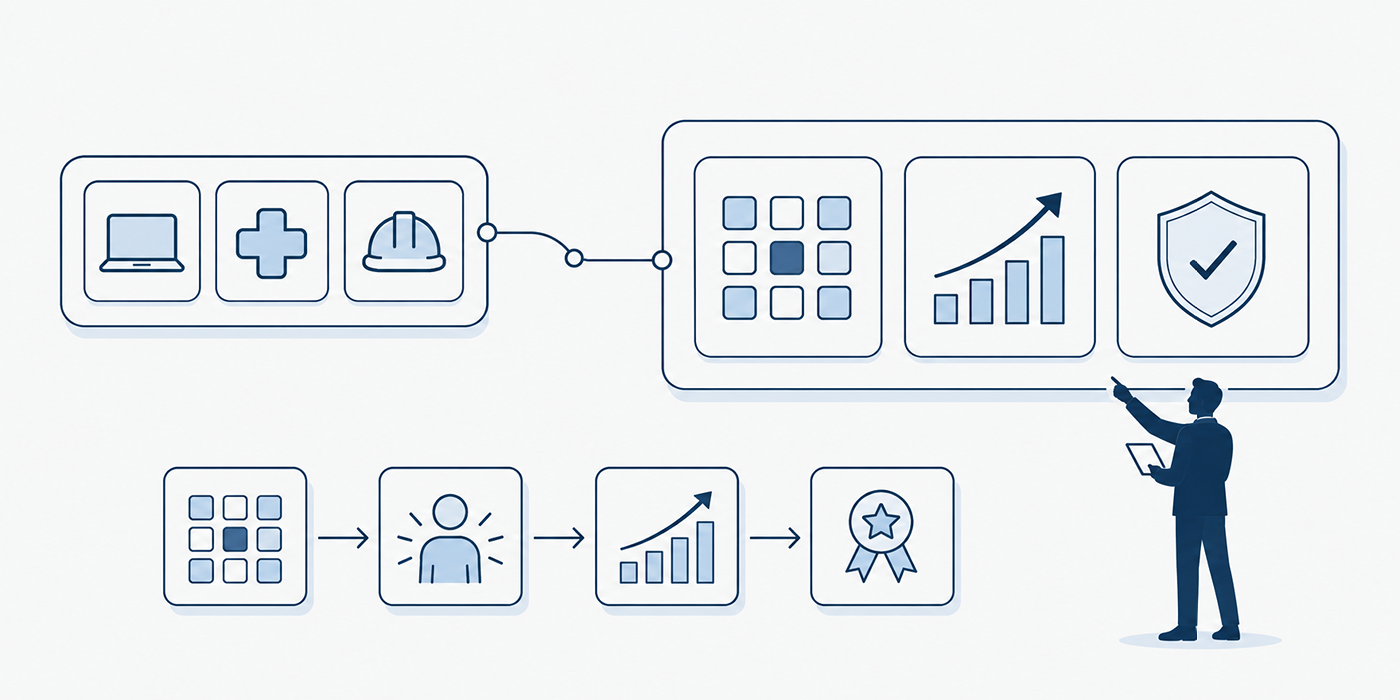
1. What “Best Industry” Actually Means for a Project Manager in 2026
There is no useful answer to “Which industry pays project managers the most?” without also asking how hard that industry is to enter, how portable the experience becomes, whether projects survive economic downturns, how much domain knowledge employers demand, and whether the work style fits your life. The strongest PM career is built around career-adjusted value, combining compensation, demand, durability, advancement, transferable expertise, and personal fit. That broader analysis matters when deciding whether project management is worth pursuing, choosing among PMP, CAPM, PRINCE2 and AgilePM, building portfolio evidence that gets interviews, or planning a longer-term move into program management.
Current labor-market data show why industry selection matters. The U.S. Bureau of Labor Statistics projects employment of project management specialists to grow about 7% from 2025 to 2035, with roughly 76,500 openings annually. PMI's broader global analysis projects demand for project talent could rise dramatically through 2035, with construction, healthcare, manufacturing, and IT services among sectors facing substantial talent pressure. Those trends create opportunities, but they also reward specialization. A candidate with generic project-management certification, basic PM software knowledge, and broad collaboration-tool familiarity increasingly competes against candidates carrying actual domain knowledge.
Healthcare offers perhaps the strongest combination of structural demand and economic durability. BLS projects medical and health services manager employment to grow about 24% from 2025 to 2035, far faster than the overall economy, with a 2025 median wage of $123,860. These figures cover healthcare management rather than PM titles specifically, yet they reveal the scale of organizational growth, digital transformation, regulatory complexity, and operating change generating project work. Healthcare PMs can work across EHR implementations, clinical operations, facilities, payer systems, compliance, digital health, data modernization, mergers, and process transformation. The downside is domain gating: employers often want candidates who understand healthcare workflows alongside formal project delivery, business analysis, project governance, and increasingly cybersecurity risk.
Construction provides one of the clearest PM labor shortages. PMI's February 2026 construction talent-gap research estimates the industry will require nearly 2.5 million additional project professionals by 2035, roughly 60% more than 2025 levels. BLS separately projects construction manager employment to grow 9% between 2025 and 2035, with a 2025 median annual wage of $114,990. The trade-off is lifestyle. Site demands, travel, deadline pressure, procurement problems, subcontractors, safety concerns, and long hours can be intense. Anyone considering this path should understand construction-management certification, cost-management credentials, earned value management, and the route toward senior project consulting.
Technology still offers strong upside, especially for technically credible PMs, but the easy-entry era has weakened. BLS projects computer and information systems manager employment to grow 16% through 2035, supported by cloud, cybersecurity, digital platforms, and AI investment. Yet 2026 Reddit career discussions repeatedly describe generic SaaS and corporate PM openings as heavily saturated, while technical PM, cybersecurity, cloud, implementation, data, and infrastructure experience remains more defensible. The strongest candidates combine an IT-to-project-management background, cybersecurity delivery knowledge, agile leadership, and real experience beyond certification.
Finance can offer excellent compensation and highly transferable governance experience. Financial managers had a 2025 U.S. median wage of $166,570, with employment projected to grow 10% through 2035. These are adjacent management-market indicators rather than PM-specific salaries, but they reflect continued demand around financial operations, regulation, risk, transformation, and technology. Banking and fintech PMs regularly work across regulatory change, payments, cybersecurity, digital transformation, risk, data, compliance, acquisitions, and platform modernization. That environment rewards business-analysis strength, project governance, cybersecurity-aware project leadership, and eventual program-management capability.
Pharma offers one of the strongest specialization moats. BLS projects pharmaceutical and medicine manufacturing employment to rise about 5% from 2024 to 2034, adding approximately 19,000 jobs across the industry. PM opportunities extend well beyond manufacturing into clinical development, R&D, regulatory affairs, commercialization, quality, validation, technology, data, supply chain, and portfolio programs. Reddit career discussions consistently show the central downside: pharma employers often prefer prior pharma or life-sciences exposure, creating a difficult entry barrier but a valuable moat once experience has been acquired. This mirrors the broader lesson behind real PM experience, career-change strategy, project governance, and senior PM consulting.
2. Tech vs Healthcare: High Upside Meets Structural Stability
Tech remains compelling because project work sits close to cloud migration, cybersecurity, AI deployment, data platforms, enterprise applications, SaaS implementations, infrastructure modernization, and acquisitions. BLS expects computer systems design employment itself to grow 13.1% between 2025 and 2035, while computer and information systems manager employment is projected to grow 16%. The opportunity is concentrated, though. A PM with cloud, cybersecurity, ERP, data, or architecture fluency occupies a stronger position than someone whose experience consists mostly of Jira administration and sprint ceremonies. That makes IT-to-PM specialization, cybersecurity-project knowledge, agile PM progression, and program-management capability increasingly valuable.
The pain point in tech is competition and organizational volatility. A May 2026 Reddit discussion from an experienced PMP described corporate PM hiring as exceptionally difficult and specifically contrasted saturated corporate roles with greater resilience in sectors such as healthcare and construction. Tech PMs also face pressure from AI because the lowest-value coordination work is easier to compress. Meeting summaries, action extraction, basic status reports, documentation, and routine task management increasingly require fewer human hours. Building project governance skills, understanding how companies choose PM tools, strengthening business-analysis capability, and pursuing senior PM consulting skills moves a PM away from that vulnerable administrative layer.
Healthcare's advantage is different. Demand is driven by demographics, care-delivery complexity, regulation, technology, cybersecurity, cost pressure, staffing, interoperability, and continuing modernization. BLS expects medical and health services management employment to rise 24% over the coming decade, adding roughly 155,100 jobs. A hospital cannot indefinitely abandon compliance, clinical-system modernization, operational redesign, cybersecurity, or capacity improvement because the SaaS funding market changes. That underlying necessity gives healthcare projects a resilience premium. PMs who combine project-management experience, business analysis, cybersecurity awareness, and project governance can become difficult to replace.
The catch is that healthcare wants proof that you understand healthcare. A January 2026 Reddit poster with experience across healthcare operations, public health, clinical research, regulated programs, dashboards, and a graduate public-health degree still described difficulty because openings wanted formal PM history or highly specific payer, device, consulting, or other subsector experience. That is a powerful warning for anyone relying solely on PMP certification, CAPM, a Google PM certificate, or a generic career-change roadmap.
For someone already working in software, cloud, data, or cybersecurity, tech may create more leverage because existing knowledge carries forward. For nurses, healthcare administrators, clinical researchers, health analysts, medical-device employees, or payer staff, healthcare may provide the stronger career compounder. The most profitable move often preserves a domain advantage while adding formal project leadership, program-management scope, governance responsibility, and eventually executive-level project capability.
3. Construction, Finance and Pharma: Where Specialization Creates a Career Moat
Construction has a major advantage that digital-only PM work lacks: projects collide constantly with the physical world. Permits, subcontractors, weather, material availability, safety, inspections, change orders, sequencing, procurement, labor capacity, field conditions, schedules, and cash flow create problems that require contextual judgment. PMI estimates construction needs nearly 2.5 million additional project professionals by 2035. That demand gives candidates who understand construction management, cost control, earned value, and project governance substantial leverage.
The lifestyle cost deserves equal weight. A January 2026 Reddit construction PM described progressing from project engineer into assistant PM while struggling with stress and questioning whether construction remained desirable long term. Another highly upvoted 2026 Reddit comment from a construction project manager described strong pay alongside travel, long hours, and poor work-life balance. Those stories do not describe every employer, but they expose a key career trade-off. A high-paying role with relentless site pressure may be economically attractive and personally unsustainable. Candidates considering project-management executive paths, senior consulting, program management, or PM-to-COO progression should measure the lifestyle required to reach them.
Finance offers a different moat: money, risk, regulation, and executive visibility. Large banks, insurers, investment firms, payment businesses, and fintech companies continuously run projects involving regulatory remediation, cyber controls, digital platforms, mergers, customer journeys, risk, compliance, financial crime, data governance, and operating-model change. BLS projects financial-manager employment to grow 10% through 2035 and specifically points to continuing demand for risk-management expertise. PMs who develop business-analysis depth, cybersecurity understanding, governance leadership, and program-management capability can accumulate commercially valuable experience quickly.
A Reddit discussion about higher-paying PM industries in May 2026 specifically surfaced fintech, banking, defense, pharma, and enterprise SaaS as attractive compensation sectors, while another participant warned that horizontal mobility between PM industries can be much weaker than candidates assume. That second point is critical. Ten years of managing marketing campaigns does not instantly make someone credible for core-banking migration or hospital-system modernization. Employers hire against delivery risk, which is why real project experience, industry-aware career planning, project coordinator progression, and specialized senior consulting experience become increasingly important.
Pharma takes the specialization effect even further. The strongest PMs understand enough about clinical development, validation, quality, regulatory expectations, commercialization, supply chain, scientific dependencies, or regulated technology to understand why a seemingly small delay can affect an entire program. Reddit discussions show how difficult that moat is to cross. One technology PM with a neuroscience degree reported repeatedly finding pharma postings that required several years of direct industry experience. A respondent already working as a pharma PM recommended contract work as a potential entry route. Another 2026 pharma discussion advised graduates to first establish domain experience before expecting responsibility for major projects. That reinforces why certification versus experience, PMP ROI, business-analysis expertise, and governance leadership work best when layered onto a defensible specialty.
4. How to Choose the Right Industry Based on Your Existing Career Capital
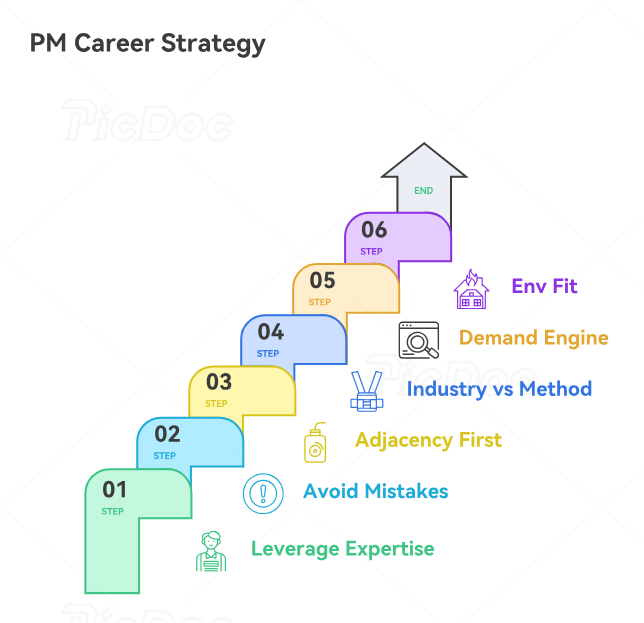
Start with what you already know that employers would have to teach another candidate. A software engineer understands architecture, dependencies, release risk, and technical estimation. A nurse understands clinical workflow and patient-care constraints. An accountant understands controls, financial reporting, and audit logic. A civil engineer understands drawings, contractors, site dependencies, and physical delivery. A scientist understands regulated processes and technical evidence. Preserving that expertise while adding project-management skills, business analysis, governance knowledge, and program-management capability usually creates a faster route than starting over in an unrelated fashionable sector.
This is where career changers often lose years. They see high tech salaries and abandon healthcare experience to chase SaaS. They leave financial operations to pursue generic PM roles because the title sounds more transferable. They collect certifications before deciding which industry will value them. A better strategy follows the logic behind career changes into project management, becoming a PM without experience, project coordinator progression, and certification-versus-experience hiring reality: use adjacency before reinvention.
Next, distinguish between industry experience and project-method experience. A healthcare operations analyst with no PM title may be more competitive for a healthcare project coordinator opening than an experienced advertising PM who has never worked around clinical systems. A construction project engineer may be more credible for an assistant PM role than a PMP-certified candidate whose projects were entirely digital. Reddit discussions repeatedly describe this domain barrier, including comments that regulated and technical industries such as manufacturing, pharma, construction, and healthcare IT often place heavy weight on real industry context. Certifications such as PMP, CAPM, SAFe, and Scrum@Scale work best when they reinforce a coherent delivery story.
Then evaluate where the industry's projects come from. Healthcare receives demand from demographics, regulation, technology, facilities, and service delivery. Construction receives demand from housing, infrastructure, energy, industrial facilities, retrofits, and capital investment. Finance receives demand from regulation, risk, payments, cybersecurity, customer platforms, and transformation. Pharma receives demand from product development, scientific innovation, compliance, commercialization, manufacturing, and technology. Tech receives demand from digital products, AI, infrastructure, cloud, cybersecurity, data, and enterprise implementation. Understanding the demand engine helps you judge long-term PM career value, future certification demand, technology disruption, and cybersecurity-driven project demand.
Finally, assess your desired PM operating environment. Construction PMs often live close to execution and commercial consequences. Finance PMs may spend more time in governance, risk, executive reporting, and cross-functional transformation. Tech PMs may operate through product and engineering teams with highly iterative delivery. Healthcare PMs navigate clinicians, administrators, vendors, compliance, technology, and patient-impact considerations. Pharma can require substantial documentation, regulatory discipline, cross-functional scientific collaboration, and long timelines. Your preferred environment should guide whether you build toward agile project management, project governance leadership, program management, or senior consulting.
5. Build an Industry Strategy That Improves Both Your Next Job and Your Five-Year Ceiling
Use job descriptions as market data before committing to a specialization. Collect 30–50 relevant vacancies in two industries. Track required domain experience, certifications, tools, project type, budgets, methodology, technical knowledge, regulatory exposure, location, salary, and seniority. Then measure how often each requirement appears. This approach is more informative than debating whether PMP is worth it, whether CAPM helps without experience, whether the Google PM Certificate beats CAPM, or which PM certification dominates long term without knowing what your target employers actually request.
Build an industry-specific portfolio, because “managed stakeholders and timelines” has become weak evidence. A tech PM portfolio might show release dependencies, architecture risks, backlog decisions, cutover planning, and adoption. Healthcare might show workflow implementation, regulatory constraints, training, data migration, and clinical stakeholder alignment. Construction should show schedule control, procurement, RFIs, change orders, cost exposure, and subcontractor coordination. Finance should demonstrate risk, governance, controls, vendors, regulatory change, and executive reporting. Pharma should show validation, regulatory milestones, cross-functional scientific work, quality, supply dependencies, or clinical-program coordination. That aligns with portfolio evidence employers trust, project coordinator readiness, PMO effectiveness, and business-analysis capability.
Also choose an industry where seniority compounds rather than resets. The best five-year path lets each project make the next role easier to obtain. A cybersecurity implementation PM can become a cybersecurity program manager, governance leader, portfolio director, and eventually executive. A construction coordinator can progress through project engineer, assistant PM, PM, senior PM, project executive, and operations leadership. A pharma PM can accumulate highly defensible regulatory and portfolio knowledge. That compounding logic is reflected in program-manager progression, project-management executive careers, senior consulting pathways, and eventual PM-to-COO movement.
Pay attention to AI resistance at the task level as well. PMI's 2026 certification refresh explicitly emphasizes durable judgment as automation changes technical work. Industries where PMs manage physical constraints, regulation, executive accountability, safety, financial risk, clinical consequences, or complex multi-party governance give humans more consequential work than roles centered on notes, updates, and task administration. That increases the value of cybersecurity knowledge, governance leadership, commercial project control, and executive project capability.
The practical conclusion is that healthcare offers an especially strong 2026 combination of growth and durability, construction offers unusually visible demand for true project talent, finance and pharma offer powerful specialization and compensation moats, while tech still offers excellent upside for PMs with technical credibility. Your strongest option depends on where you can build scarce expertise fastest. A defensible niche plus strong project experience, good certification strategy, program-level thinking, and governance capability gives you considerably more leverage than chasing whichever industry currently has the loudest salary headlines.
6. FAQs About Choosing the Best Project Management Industry in 2026
-
Construction and healthcare stand out particularly strongly on structural demand. PMI estimates construction may need nearly 2.5 million additional project professionals by 2035, while BLS projects medical and health services management employment to grow 24% between 2025 and 2035.
The better individual choice depends on existing experience. Someone with engineering or field experience can build through construction management, cost control, earned value, and program management. Someone with clinical, healthcare-operations, health-tech, or payer experience can use that domain knowledge as a hiring advantage.
-
High-end compensation can be excellent in technology, financial services, pharma, energy, defense, and specialized capital projects, but titles and compensation structures vary enough that one universal salary ranking would be misleading. Historical BLS industry data for project-management specialists already showed strong pay in computer systems design and financial-investment activities, while 2026 Reddit discussion frequently identifies finance, pharma, and enterprise technology as well-paying PM environments.
Compensation grows further when a PM adds technical domain expertise, program-management responsibility, senior consulting capability, and executive-level project leadership. Industry helps, while scope, geography, seniority, and specialization determine the actual paycheck.
-
Tech remains highly attractive for PMs with genuine technical or implementation depth. Cloud computing, cybersecurity, AI, data infrastructure, enterprise software, and digital transformation continue generating projects, and BLS projects computer and information systems manager employment to grow 16% through 2035.
The vulnerable profile is a generic coordinator competing for saturated corporate PM positions. Stronger candidates combine an IT-to-PM pathway, cybersecurity project knowledge, agile leadership, and portfolio evidence demonstrating that they understand the systems being delivered.
-
Healthcare can be difficult for outsiders because employers often value knowledge of clinical operations, payer systems, healthcare technology, regulation, privacy, compliance, or specific subsectors. A 2026 Reddit career changer with healthcare operations and public-health experience still encountered vacancies demanding narrower healthcare specialties or formal PM experience.
The strongest entry strategy is usually adjacency: healthcare analyst → project coordinator, clinical operations → implementation, health IT → technical PM, or healthcare operations → program coordination. Build real PM evidence, business-analysis capability, project governance, and cybersecurity awareness while preserving healthcare expertise.
-
Construction can provide strong compensation, visible responsibility, excellent commercial experience, and substantial long-term demand. BLS projects 9% growth for construction managers through 2035, while PMI expects a very large construction project-talent gap.
The lifestyle varies significantly by employer, project type, travel expectations, and project phase. Reddit experiences highlight long hours and burnout risk alongside attractive pay. Candidates should evaluate the role alongside construction-management credentials, cost expertise, earned value management, and the eventual senior PM pathway.
-
Some pharma PM functions are accessible from technology, operations, supply chain, finance, procurement, or enterprise transformation backgrounds, while clinical, regulatory, scientific, manufacturing, and quality-heavy roles often demand direct life-sciences experience. Reddit discussions show experienced PMs encountering explicit pharma-experience requirements, with contract work sometimes suggested as an entry bridge.
Build the missing domain layer alongside project-management evidence, business analysis, governance expertise, and program-management capability. Pharma's difficult entry barrier can become a career advantage once you are inside.
