
Software Engineer to Project Manager: Reddit Experiences on Pay, Technical Leverage, AI Anxiety & Career Trade-Offs
Software engineers considering project management are usually solving a harder problem than “Do I still enjoy coding?” The real decision involves compensation, technical identity, future employability, AI exposure, influence, and whether you would rather build systems yourself or make entire teams more effective. Recent Reddit career-change discussions show both successful transitions and serious regret risks. Understanding whether project management is still worth it, the real PM hiring market, and the IT-to-project-management path matters before abandoning a valuable engineering track.
1. What Reddit Engineers Reveal About Moving From Software Development Into Project Management
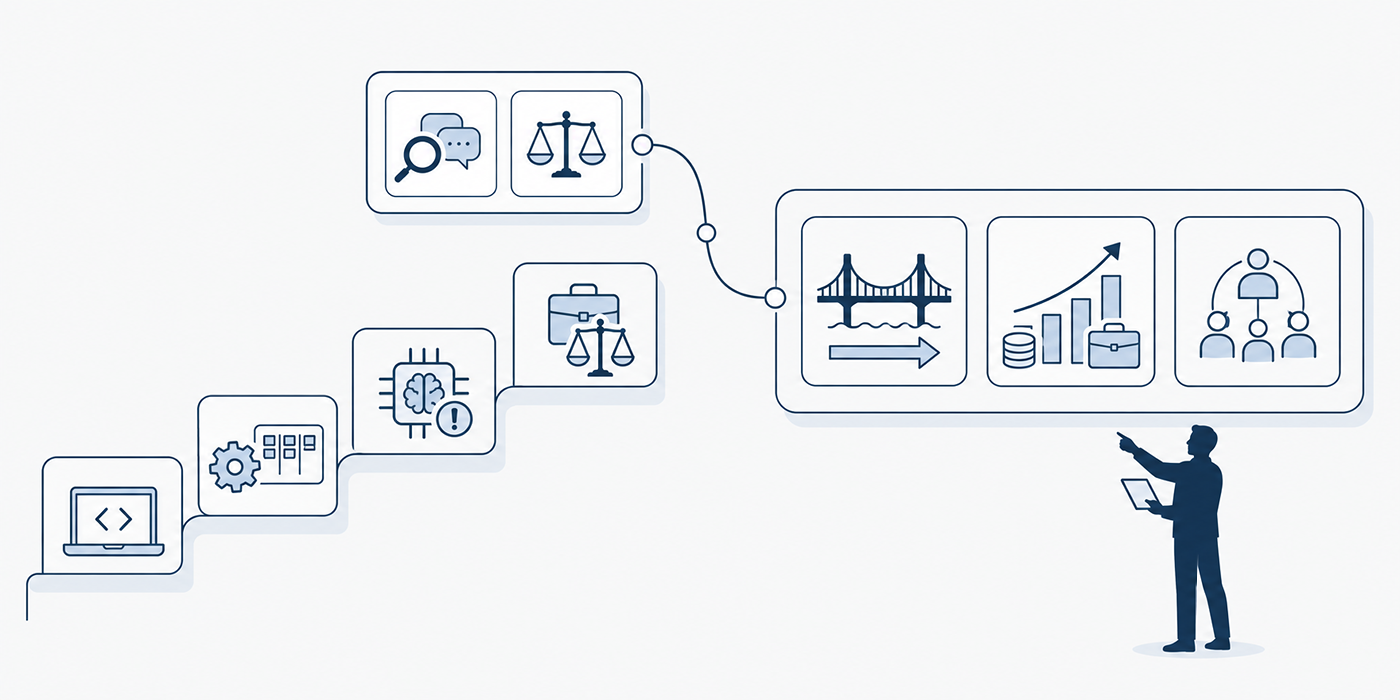
A revealing March 2026 Reddit discussion came from a software engineer, lead, and architect with roughly 20 years of experience who was considering a technical PM transition partly because of AI. His thesis was straightforward: deep engineering knowledge might create more leverage when coordinating AI-accelerated teams than when reviewing increasing volumes of generated code. Respondents who had already made similar moves repeatedly emphasized one advantage: technical credibility helps a PM challenge unrealistic estimates, detect scope creep, understand architecture constraints, and earn developer trust faster. That maps directly to the advantages described in the IT-to-PM career path, the value of real project-management experience, and the capabilities employers examine when certified PM candidates struggle to get hired.
The most important Reddit insight was more subtle: being technically strong does not automatically make someone a strong project manager. One respondent described the adjustment as moving from “I will solve this” toward deciding who should solve it, what they need, and which obstacles must be removed. That behavioral shift separates engineering execution from delivery leadership. A developer is often rewarded for producing the solution. A PM is rewarded for creating enough clarity, sequencing, ownership, risk visibility, and stakeholder alignment that the solution gets delivered by the right people. Studying project coordinator-to-PM progression, project governance careers, PMO effectiveness, and program-management progression makes that difference much clearer.
Another 2026 Reddit thread captures the opposite fear. A backend engineer moved into project management and immediately worried about losing coding ability, giving up the satisfaction of building things, and making a future return to engineering harder. One commenter who had made a similar transition warned that coding skills can atrophy unless deliberately maintained and suggested using a hybrid role or a defined trial period before committing permanently. This is a real career-risk issue, especially when comparing traditional and agile PM careers, the agile team member-to-PM route, long-term project-management executive paths, and eventual PM-to-COO progression.
The strongest pattern across these discussions is that successful transitions often begin before the title changes. Engineers start gathering requirements, coordinating releases, resolving cross-team blockers, leading planning sessions, communicating with stakeholders, helping estimate work, managing dependencies, or representing their team during delivery discussions. One Reddit software engineer described having already led 19 internal software projects across planning, stakeholder management, design, and development before attempting the formal switch. That type of evidence is considerably stronger than simply completing a course and applying cold. It mirrors the difference between certification and demonstrable project experience, the no-experience PM problem, and deciding whether CAPM adds enough value.
2. The Pay Question: Will a Software Engineer Take a Salary Cut to Become a Project Manager?
For U.S. workers, current occupational data make the pay concern legitimate. The Bureau of Labor Statistics reports a 2025 median annual wage of $135,980 for software developers and $102,320 for project management specialists. Those broad categories are not equivalent jobs at equivalent companies, but the roughly $33,700 difference is large enough that an engineer should never assume PM is automatically a lateral compensation move. Software-developer employment is also projected to grow 10% from 2025–2035, compared with 7% for project-management specialists. Anyone considering the switch should therefore examine PM market reality, PM certification ROI, experience versus credentials, and the IT-to-PM transition together.
The most dangerous move is quitting a strong engineering job and applying externally for generic “Project Manager” vacancies. That can erase much of the market value accumulated through backend, cloud, architecture, infrastructure, data, security, or platform expertise. A better transition often preserves the domain and changes the function: backend engineer → software delivery PM, cloud engineer → cloud migration PM, security engineer → cybersecurity PM, senior engineer → technical program manager. This maintains the commercial value of your technical capital while adding delivery responsibility. The same logic underpins project management and cybersecurity careers, the future of cybersecurity and PM, program-manager progression, and eventually senior project-management consulting.
This is why Reddit advice frequently favors internal transition. A company that already knows your technical ability, delivery record, domain knowledge, and relationships has less reason to discount you for lacking a formal PM title. One 2026 respondent who had moved from software engineering recommended transitioning inside the current organization where possible. Internal mobility can also preserve level and compensation better than entering another employer's PM ladder from scratch. Before taking a pay reset, compare the project coordinator-to-PM pathway, the value of PMP in 2026, PM certification options, and the longer-term route toward PM executive leadership.
Compensation also needs to be measured beyond base salary. Engineers moving into PM may gain or lose equity, bonus potential, on-call burden, interview portability, remote options, individual-contributor autonomy, and promotion speed. A $10,000 base reduction may be rational if the role creates a credible route to technical program management and broader organizational leadership. A $25,000 reduction for an administrative PM role dominated by meetings, note-taking, and task chasing is a very different bargain. Evaluate roles using the same discipline applied when assessing whether PM remains worth entering, how PMOs create value, how organizations choose project tools, and how professionals move from PM toward COO-level operations.
3. Which PM Roles Give Software Engineers the Strongest Career Leverage?
Technical Project Manager is the most obvious bridge when the work remains close to software delivery. The strongest versions of these jobs require enough technical fluency to understand architecture, integration, dependencies, security constraints, testing, release risk, and engineering estimates while still holding the delivery system together. This aligns naturally with the IT-to-project-management roadmap, project governance development, business-analysis capability, and the skills required to progress from project coordination into full PM ownership.
Technical Program Manager can be an even stronger destination for experienced engineers whose work already crosses teams. TPM jobs commonly reward system thinking, dependency management, technical credibility, roadmap coordination, risk management, and communication across engineering groups. A senior engineer who has coordinated platform migrations, infrastructure programs, architecture initiatives, or multi-service launches may be closer to this work than they realize. Building toward program management, learning project governance, understanding PMO operating models, and developing toward senior PM consulting creates a more coherent progression than abandoning technical context completely.
Cybersecurity PM, cloud migration PM, infrastructure PM, implementation PM, software delivery manager, and transformation PM are attractive because they reward accumulated domain expertise. An engineer who already understands threat remediation, Kubernetes migrations, enterprise integrations, APIs, data platforms, cloud architecture, or release engineering can evaluate delivery risks far faster than someone starting from zero. That technical advantage becomes particularly valuable as cybersecurity and project management converge, future PM responsibilities become more technical, remote project teams rely on collaboration systems, and organizations make more complex project-management software choices.
Be more careful with generic Project Coordinator jobs. They can be useful when you genuinely lack project-delivery exposure, yet an experienced engineer should scrutinize whether the role adds new capability or merely reduces compensation and authority. If you already lead releases, negotiate scope, coordinate multiple teams, manage stakeholders, and own delivery risk, a highly administrative coordinator role may undersell you. Compare the vacancy against the coordinator-to-PM roadmap, no-experience PM pathway, certification-versus-experience evidence, and actual PM hiring filters.
Also distinguish project management from product management and engineering management before applying. Product managers own more of the “what and why,” market problem, prioritization, and product outcomes. Engineering managers own engineering people, technical execution, team health, and capability. Project managers concentrate more heavily on delivery coordination, timelines, dependencies, risks, scope, governance, and stakeholders. Technical program managers operate across multiple related initiatives and teams. Choosing the wrong lane creates unnecessary dissatisfaction, especially when comparing agile career progression, traditional-to-agile transitions, program-management careers, and eventual project-management executive work.
4. AI Anxiety: Is Project Management Actually Safer Than Software Engineering?
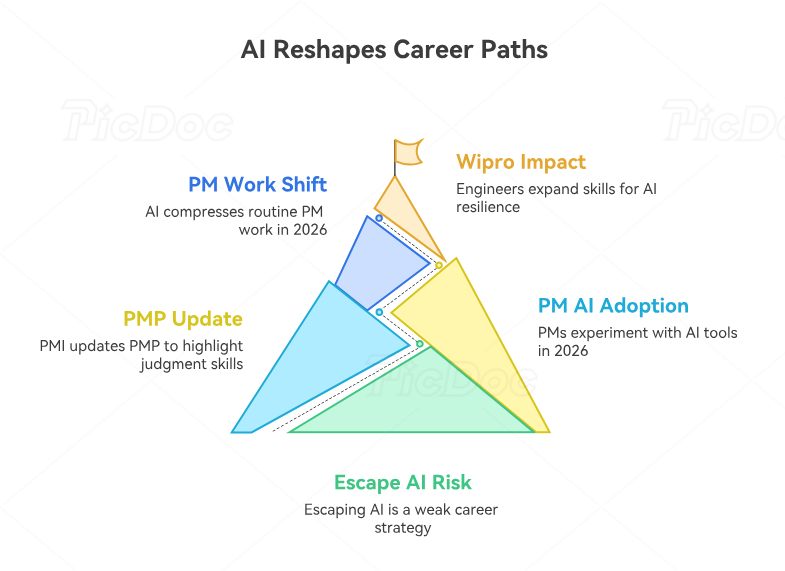
Switching careers primarily to “escape AI” is a weak strategy because AI is reshaping project management too. A March 2026 Reddit engineer explicitly cited AI as part of the reason for considering technical PM work. Meanwhile, project managers are already using AI for meeting summaries, drafting status reports, structuring requirements, analyzing data, preparing presentations, and identifying risks. July and August 2026 Reddit discussions show PMs actively experimenting with AI while also warning that outputs become generic when tools lack deep project context. Anyone evaluating the future should therefore combine the 2026 PM job-market picture, future PM certification trends, cybersecurity-PM convergence, and modern collaboration-tool adoption.
PMI's own 2026 direction reinforces this. Its updated PMP positioning emphasizes judgment, strategy execution, uncertainty, and durable decision-making skills, while PMI has also published a global standard specifically for AI in project work. The implication for engineers is powerful: technical literacy plus judgment may become more valuable than either coding fluency or administrative PM capability alone. Engineers who understand AI systems, data quality, architecture, security, APIs, evaluation, and implementation risk can bring unusual value to AI projects. Building that hybrid position fits naturally with technical project-management careers, business-analysis skills, project governance leadership, and program-management progression.
AI will likely compress some of the PM work that weak practitioners rely on for visibility. Meeting notes, first-draft status reports, basic schedules, summaries, risk prompts, presentation formatting, and administrative documentation are increasingly automatable. A September 2026 Reddit discussion even warned that inexperienced PMs can let AI generate overly complex plans they lack the domain knowledge to validate. That makes the ability to challenge outputs more important. The durable capability sits in deciding whether the plan is credible, which stakeholder is withholding a dependency, what risk leadership is ignoring, which requirement is actually ambiguous, and what trade-off the team should make. Those are exactly the capabilities emphasized in real PM hiring evidence, PMO effectiveness, project governance, and senior PM consulting.
For a software engineer, the strongest AI hedge may therefore be expanding your value surface rather than abandoning engineering. Continue understanding systems while becoming better at requirements, financial trade-offs, stakeholder management, governance, delivery strategy, risk, and cross-functional leadership. Wipro's September 2026 disclosure illustrates why this matters: the company said AI productivity had freed capacity equivalent to roughly 20,000 workers, with capacity redeployed as the organization moved toward a human-AI operating model. Future resilience will come from owning harder business problems. That makes PM and cybersecurity knowledge, program-management capability, executive PM progression, and even the PM-to-COO path increasingly relevant.
5. A Low-Risk 90-Day Transition Plan for Software Engineers Considering PM
Start with 30 days of role experimentation inside your current engineering job. Volunteer to run one release, dependency-heavy initiative, migration, or cross-team feature. Own the project mechanics: scope baseline, stakeholder map, milestone plan, RAID log, decision log, weekly status, and retrospective. Keep coding responsibilities where appropriate, but resist rescuing every blocker personally. Your goal is to discover whether you enjoy coordinating outcomes when the work is completed through other people. This tests the core behavior required in IT project-management careers, project coordinator progression, project governance roles, and program management without resigning first.
During days 31–60, build a credible delivery portfolio. Select two or three technical initiatives you materially helped deliver. For each, document the objective, stakeholders, scope, constraints, dependencies, major decisions, schedule pressure, risks, technical trade-offs, changes, and measurable outcome. Include sanitized artifacts such as a dependency map, release plan, RAID register, status report, decision log, and lessons learned. That evidence directly addresses the gap discussed in certification versus real experience, PM hiring failures, no-experience PM transitions, and the project coordinator-to-PM route.
Next, rewrite the resume around delivery leverage, while keeping your engineering titles truthful. “Built Node.js APIs” becomes more valuable for PM applications when paired with evidence such as “coordinated API migration across four dependent teams, surfaced integration risks before release, aligned acceptance criteria, and supported staged rollout.” “Led backend development” should expose scope decisions, stakeholders, estimates, dependencies, risk, and outcomes when those responsibilities genuinely existed. This same evidence discipline matters when moving from business analysis to project management, pursuing agile PM leadership, preparing for project governance roles, or eventually targeting senior PM consulting.
During days 61–90, test the market without burning the engineering bridge. Apply across three role families: Technical Project Manager, Technical Program Manager or delivery-oriented program roles, and domain-specific PM positions in software, cloud, security, infrastructure, data, or AI. Track response rates separately. If TPM applications generate interviews while generic PM applications do not, the market is telling you where your technical leverage is strongest. Compare results against the current PM employment market, what PM employers actually screen for, project-management certification choices, and PMP career value.
Handle certification last. Experienced engineers frequently have enough adjacent delivery work that evidence translation matters more than collecting an entry-level credential. Someone eligible for PMP can evaluate the PMP return on investment. Someone earlier in their career may compare CAPM without formal PM experience against the Google PM Certificate versus CAPM. Anyone entering agile-heavy organizations should understand agile career pathways and the traditional-to-agile PM transition. Credentials should close a demonstrated market gap rather than become a substitute for testing the career itself.
Finally, protect technical optionality deliberately. Maintain one meaningful technical surface: architecture reviews, an internal tool, open-source work, a small production side project, cloud labs, technical design reviews, or AI prototyping. You do not need to remain a full-time coder forever. You do need enough current technical literacy that your value proposition as a technical PM remains believable. The strongest long-term position may be a professional who understands project delivery, modern PM tooling, cybersecurity delivery, and program-level leadership while still being able to challenge the technical assumptions underneath a project plan.
6. FAQs About Moving From Software Engineering to Project Management
-
It can be an excellent move when you enjoy coordination, ambiguity reduction, stakeholder management, prioritization, and delivery leadership more than spending most of your time implementing systems. Recent Reddit experiences show engineers reporting successful transitions while also emphasizing that technical skill alone does not create PM competence.
Before switching, compare the IT-to-project-management path, current PM market conditions, experience requirements behind PM hiring, and long-term program-management progression. The decision should be based on the work you want to perform for the next decade, rather than temporary frustration with coding.
-
A pay cut is possible, especially when moving from established software engineering into generic project-management roles. U.S. BLS data show 2025 median pay of $135,980 for software developers versus $102,320 for project-management specialists. Individual technical PM, TPM, finance, enterprise technology, and senior program positions can differ substantially from those broad medians.
Protect compensation by leveraging domain expertise, pursuing internal transfers, and comparing PMP salary leverage, technical PM career positioning, program-management careers, and eventual PM executive progression before accepting a major reset.
-
It can create substantial leverage in technical environments. You can evaluate estimates more intelligently, understand dependencies, identify hidden complexity, communicate credibly with engineers, and detect when a seemingly small request changes architecture or security risk. Reddit career changers repeatedly described technical depth as a real advantage.
The leverage grows when combined with business-analysis skills, project governance, PMO discipline, and program-management capability. A PM still needs facilitation, negotiation, communication, planning, commercial judgment, and the ability to achieve outcomes without personally solving every engineering problem.
-
They can weaken rapidly when unused. A 2026 Reddit discussion from an engineer entering PM specifically raised fear about technical skill deterioration and the difficulty of returning to engineering later. The risk becomes larger as years away from production engineering accumulate.
Maintain selective technical depth while building IT project-management expertise, agile delivery capability, cybersecurity-PM knowledge, and technical program-management scope. A small amount of deliberate coding, architecture review, AI experimentation, or cloud work can preserve technical judgment without requiring a second full-time job.
-
Treating PM as an AI safe zone creates false confidence. AI is already being used for project documentation, summaries, planning support, reporting, risk identification, data analysis, and stakeholder communication. PMI has formalized AI guidance for project work, while Reddit PM communities are actively debating where automation helps and where human context remains essential.
A stronger hedge combines technical knowledge with PM capability, governance expertise, business-analysis judgment, and cross-functional program leadership. The professional who can validate AI output, understand technical constraints, manage human conflict, and connect technology to business outcomes has a stronger position than someone relying on administrative work AI can increasingly accelerate.
-
Target Technical Program Manager when your strongest evidence involves multi-team systems, architectural dependencies, platform work, migrations, infrastructure, technical roadmaps, or coordination across engineering organizations. Target Technical Project Manager when your evidence centers on delivering a defined technical initiative with clear scope, schedule, risks, stakeholders, and outcomes.
Evaluate your background against the program-manager career path, IT-to-PM roadmap, project coordinator-to-PM framework, and senior PM consultant progression. Apply where your existing evidence already explains why the company should trust you.
