
PMP Application Rejected or Audited? Reddit Experiences, Common Documentation Mistakes & How to Fix Your Submission
Receiving a PMP application rejection after documenting years of project experience is frustrating, particularly when your supervisor has already verified your work. Reddit discussions reveal recurring problems involving vague project descriptions, overlapping experience, missing leadership evidence, and misunderstood audit requirements.
The solution begins with identifying exactly what PMI questioned. This guide explains the official requirements, examines applicants' reported experiences, and provides a practical documentation framework to help you correct your submission, prepare for another audit, and avoid expensive application mistakes.
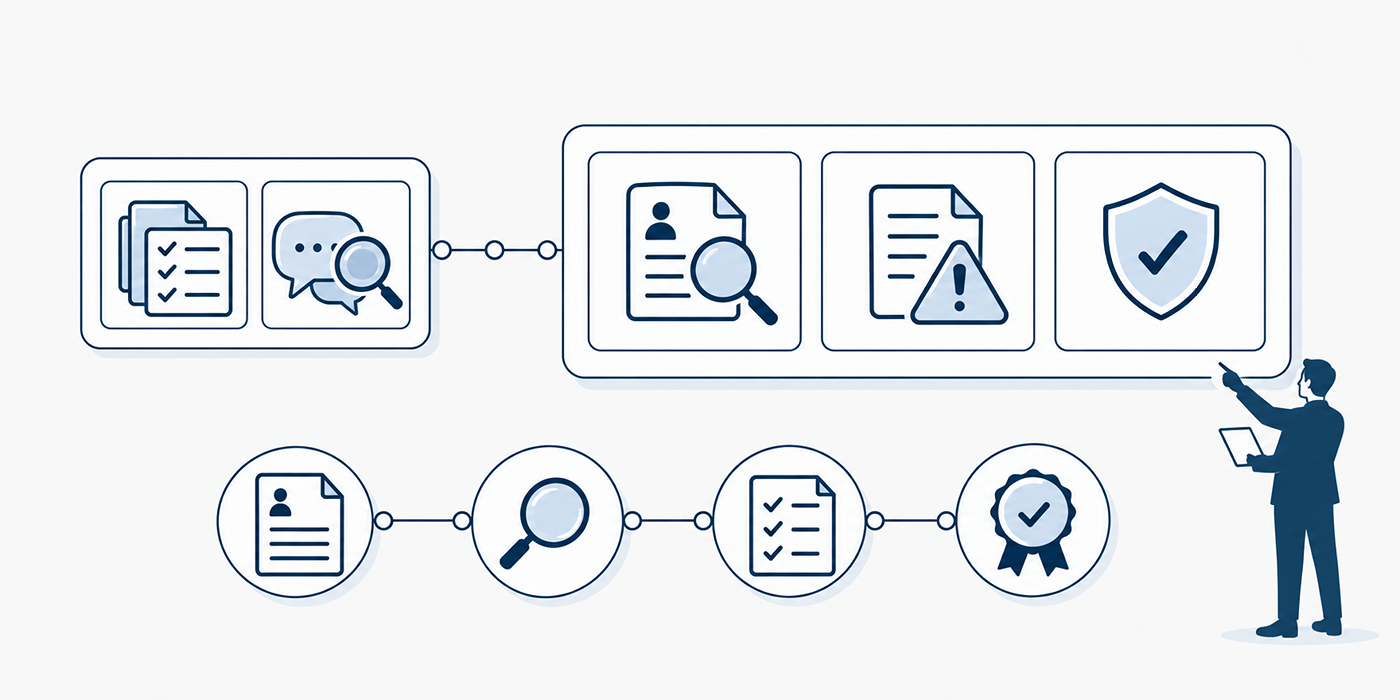
1. Why PMP Applications Get Rejected or Audited: What Reddit Experiences Reveal
The first thing to establish is whether you received an audit notification, an eligibility rejection, or an unsuccessful audit decision. Each requires a different response.
An audit notification is a verification request. PMI's certification handbook states that applications selected for audit require supporting documentation, potentially including educational credentials, training records, and professional experience verification.
Selection can be random. An audit notification alone provides no evidence that PMI suspects misconduct or has identified an error.
An eligibility rejection means the information submitted fails to establish that you satisfy the certification requirements. An unsuccessful audit can involve documentation problems, unmet eligibility requirements, or failure to complete the requested verification.
Understanding these distinctions matters when evaluating whether PMP certification is worth pursuing, especially if application delays are interfering with your project management career development.
What rejected Reddit applicants actually experienced
Three documented Reddit discussions illustrate the importance of diagnosing the specific problem.
Case 1: A project advisor whose application grouped unrelated projects
In a March 2026 Reddit discussion about a rejected PMP audit, an applicant described combining multiple maintenance and capital projects into one entry.
The applicant also reported that PMI questioned whether the description established sufficient responsibility for leading and directing projects.
Following the rejection, the applicant separated projects and revised the descriptions. A subsequent Reddit update reported approval.
The practical lesson is particularly important for professionals pursuing an operations manager to project manager transition.
Holding a management position for several years establishes employment history. Your application must connect that employment to identifiable projects and explain your responsibilities on each.
Case 2: An applicant who requested a second review
In an April 2024 Reddit post, an applicant reported submitting supporting documentation and receiving an audit rejection.
The stated problems involved unclear project leadership and the way projects were presented. The applicant contacted PMI customer support and requested another review.
According to their account, PMI subsequently approved the audit.
This experience demonstrates the potential value of requesting clarification when you believe PMI has misunderstood accurately documented experience. Individual outcomes provide useful examples, although they cannot establish that another applicant will receive the same result.
Case 3: A rejected applicant who subsequently received approval
A July 2026 Reddit discussion describes an applicant whose initial submission failed to demonstrate their project management role adequately.
The applicant revised their description, submitted another application, underwent another audit, and later reported approval.
The important detail is the correction itself. The revised description explained how actual responsibilities corresponded to recognizable project management activities.
This is particularly relevant when preparing the portfolio evidence employers expect from certified project managers. Your application and professional portfolio should communicate responsibilities accurately, using concrete decisions and deliverables.
The official eligibility baseline
Under PMI's July 2026 PMP requirements, professional experience must fall within the previous 10 years and must involve leading projects.
The experience requirement depends on your educational background:
Secondary education: 60 months of qualifying experience.
Recognized associate-level or equivalent education: 48 months.
Recognized bachelor's degree or higher: 36 months.
Qualifying degree from a PMI Global Accreditation Center-accredited program: 24 months.
These pathways have additional educational conditions. Applicants should verify their credentials against the official requirements rather than assume that a particular diploma or certificate qualifies.
The PMP also requires qualifying project management training. Candidates considering alternative credentials can examine the differences between PMP, CAPM, PRINCE2, and AgilePM.
Before revising your submission, confirm that your underlying experience genuinely qualifies. Better descriptions can establish responsibilities more clearly, but cannot replace missing experience.
Official references: PMI's 2026 PMP eligibility requirements and PMI's guide to qualifying project experience.
| Application Check | Common Problem | Corrective Action | Evidence to Prepare |
|---|---|---|---|
| 1. Experience window | Projects fall outside the eligible period. | Check experience against the current 10-year window. | Dated project records |
| 2. Eligible months | Total qualifying experience is insufficient. | Calculate eligible calendar months. | Experience timeline |
| 3. Overlapping dates | Concurrent projects are counted twice. | Count overlapping months once. | Monthly experience map |
| 4. Project separation | Several projects appear as one assignment. | Describe each distinct project separately. | Individual project records |
| 5. Project objective | The purpose is too vague. | Identify the specific business objective. | Project charter or brief |
| 6. Project boundaries | Routine operations resemble project work. | Establish temporary scope and defined outcomes. | Scope statement |
| 7. Leadership evidence | Responsibilities suggest general participation. | Describe actual leadership decisions and actions. | Responsibility records |
| 8. Job title | The title obscures qualifying duties. | Explain the project leadership responsibilities performed. | Verified role description |
| 9. Stakeholders | Coordination responsibilities are unclear. | Identify the stakeholder groups managed. | Stakeholder register |
| 10. Project deliverables | The intended result is unspecified. | State concrete outputs or outcomes. | Deliverable records |
| 11. Planning | Planning contribution is ambiguous. | Specify the planning activities you performed. | Schedule or approved plan |
| 12. Risk management | Risk responsibility is described generically. | Explain an actual risk-management responsibility. | Risk register |
| 13. Change control | Scope changes lack context. | Describe relevant change decisions and approvals. | Change log |
| 14. Delivery approach | The stated methodology conflicts with actual work. | Identify the approach genuinely used. | Project methodology records |
| 15. Outcomes | The project result remains unclear. | Describe completed deliverables or project status. | Acceptance records |
| 16. Supervisor selection | The reference cannot verify the experience. | Choose an appropriate knowledgeable verifier. | Reference contact information |
| 17. Former supervisors | The original supervisor has changed employers. | Contact them and confirm their ability to verify. | Current reference details |
| 18. Verifier consistency | The supervisor remembers different dates or duties. | Reconcile factual discrepancies before verification. | Shared project timeline |
| 19. Educational records | The credential cannot be verified. | Provide the required official documentation. | Diploma or degree copy |
| 20. Qualification level | An unfamiliar qualification lacks recognized equivalence. | Obtain authoritative qualification-level evidence where required. | Official equivalency documentation |
| 21. Training hours | Qualifying training cannot be substantiated. | Verify hours and provider documentation. | Training certificates |
| 22. Training dates | Course records and application dates differ. | Reconcile records against actual attendance. | Course completion records |
| 23. Audit deadline | Documentation remains incomplete. | Track the deadline stated in the audit notification. | Audit checklist |
| 24. Supporting files | Evidence is unreadable or incomplete. | Inspect each document before submission. | Legible supporting documents |
| 25. Description consistency | Project entries contradict supporting evidence. | Cross-check every material claim. | Application-to-evidence checklist |
| 26. Rejection diagnosis | The applicant rewrites without identifying the problem. | Map PMI feedback to specific corrections. | Rejection correspondence |
| 27. Resubmission | The same unresolved issues appear again. | Correct the underlying problems before reapplying. | Revision log |
| 28. Final verification | Last-minute changes introduce inconsistencies. | Complete a final factual and eligibility review. | Verified application copy |
2. The Documentation Mistakes Behind PMP Application Rejections
Most correctable applications benefit from a detailed review of project boundaries, experience calculations, responsibilities, and supporting evidence.
A useful starting point is understanding why certification alone cannot establish professional experience. PMP applicants face a similar evidence problem when their descriptions make professional achievements difficult to verify.
Mistake 1: Combining several projects into one employment entry
Imagine managing three initiatives during four years with one employer: implementing an enterprise resource planning system, redesigning a customer onboarding process, and launching a regional reporting platform.
Submitting these as one continuous operational transformation creates uncertainty about individual objectives, dates, deliverables, and responsibilities.
PMI explicitly instructs candidates to list individual projects separately.
Prepare an inventory identifying each initiative's purpose, duration, delivery approach, and your responsibilities. Professionals making an IT-to-project-management career transition or moving from business analysis into project management should pay particular attention to this distinction.
Mistake 2: Confusing operational responsibility with project leadership
Consider someone responsible for weekly production schedules, employee supervision, and recurring performance reports.
Those duties establish operational experience. They do not automatically establish qualifying project management experience.
However, leading a temporary initiative to introduce a new production system could qualify if the candidate actually directed relevant project activities.
This distinction affects applicants moving through operations management career pathways and professionals examining project coordinator versus junior project manager responsibilities.
Document the project's defined objective, your contribution to directing the work, and the deliverables produced.
Mistake 3: Describing participation instead of demonstrating responsibility
A description such as "participated in project meetings and helped track progress" leaves several important questions unanswered.
Who established milestones? Who coordinated the responsible teams? Who managed delivery risks? Who made or escalated important decisions?
Specify your actual contribution.
For example:
"I coordinated requirements across four departments, developed the implementation schedule, managed delivery dependencies, escalated unresolved resource conflicts, and coordinated acceptance testing."
Use this type of description only when it accurately represents your work.
Someone studying how project coordinators advance into project management can use the same framework to distinguish coordination responsibilities from broader project leadership.
Mistake 4: Counting overlapping project months twice
Suppose you managed Project A from January through June and Project B from April through September.
Each project lasted six months. Together, they represent nine distinct calendar months of experience because April, May, and June overlap.
This difference can determine eligibility.
Build a spreadsheet listing every qualifying project and its active months. Create one consolidated calendar and count each qualifying month once.
Use the resulting total when evaluating your PMP certification investment or comparing certification requirements across different career stages.
Mistake 5: Using vague objectives or artificial terminology
A statement such as "managed organizational improvements to increase efficiency" provides insufficient detail about what the project actually delivered.
An objective identifying the implementation of a new inventory platform across six warehouses gives the reviewer substantially more information.
Describe what made the assignment a distinct project.
Similarly, inserting every possible project management term into your description can create misleading information.
Agile initiatives should reflect the activities actually performed. Predictive and hybrid projects should be described according to their genuine delivery methods.
Candidates exploring advanced Agile certifications or traditional-to-Agile career transitions should apply the same factual discipline.
Mistake 6: Submitting evidence that supervisors cannot confidently verify
An applicant may remember project responsibilities differently from a supervisor who oversaw several initiatives simultaneously.
Prepare a factual project summary before requesting verification. Include dates, objectives, your responsibilities, and major deliverables.
Ask the verifier to review the information independently and identify discrepancies.
Never request verification of work that the individual cannot substantiate.
The credibility of your documentation matters throughout your project management career, including subsequent applications for senior consulting positions.
3. How to Fix a Rejected PMP Application and Write Stronger Project Descriptions
Begin by preserving your original submission and PMI's complete rejection correspondence.
Identify every stated reason for rejection. Separate missing factual evidence, unclear writing, eligibility problems, and issues requiring clarification from PMI.
Correcting one problem while overlooking another can lead to another unsuccessful application.
Step 1: Reconstruct your project history
Create one record for every project you intend to claim.
Each record should establish the organization's name, project objective, dates, your role, stakeholders, responsibilities, and deliverables.
Compare your descriptions with actual project records wherever available.
For applicants with backgrounds in software engineering, marketing project management, or construction project management, this exercise helps separate technical execution from project direction.
Step 2: Use a consistent description framework
Structure each project around five questions:
Objective: What specific result was the project intended to achieve?
Responsibilities: What project management responsibilities did you personally undertake?
Actions: What planning, coordination, risk, delivery, or stakeholder activities did you lead?
Deliverables: What outputs did the project produce?
Outcome: What was completed, accepted, implemented, or transferred?
Consider a hypothetical hospital implementation project.
Weak description:
"Responsible for implementing hospital software and coordinating teams throughout deployment."
Stronger description:
"Led the implementation of an electronic scheduling platform across three hospital departments. Established the implementation schedule, coordinated clinical and technical stakeholders, managed deployment risks, tracked testing milestones, and organized the transition to operational teams. The project delivered the scheduling platform for departmental use."
The stronger description identifies the project, responsibilities, execution activities, and deliverable.
Applicants pursuing healthcare project management opportunities or developing requirements engineering expertise can adapt the framework to their actual work.
Step 3: Conduct a contradiction audit
Read every description alongside your supporting records.
Check whether project dates match the supervisor's recollection, whether responsibilities are consistent with your documented role, and whether the reported outcomes accurately describe the project's status.
Review your descriptions for exaggerated authority, unsupported results, and ambiguous language.
If you used AI to organize the application, verify every sentence independently. AI-generated language can introduce responsibilities you never performed.
Familiarity with AI-assisted project management workflows and the limitations of AI automation is useful here. Treat AI-generated descriptions as editable drafts requiring factual verification.
Step 4: Decide whether to request clarification or submit again
When PMI identifies a specific factual or eligibility problem, address that problem directly.
When you believe your application already satisfies the stated requirements, contact PMI through its official support channels. Provide your application reference and request clarification about the disputed decision.
Ask whether additional documentation, another review, or a new application is appropriate.
Maintain copies of all correspondence and follow the instructions given for your individual case.
A previous rejection should remain part of your factual application history. Revisions must reconcile with information previously submitted.
This is an important distinction when considering certification versus experience and determining whether your current career stage supports a PMP application.
What's Your Biggest Obstacle in Getting Your PMP Application Approved?
Select your biggest challenge:
4. How to Pass a PMP Application Audit: Documents, Deadlines, and Verification
PMI's certification handbook gives applicants 90 days to submit the requested audit documentation.
Once the necessary documentation has been submitted, the handbook estimates approximately five to seven business days for the audit process.
Successful completion depends on satisfying the relevant verification requirements.
Build a complete audit package
Start with the audit notification available through your PMI account.
Depending on the request, the package can include educational credentials, supervisor verification, and documentation establishing qualifying professional training.
Organize your preparation into three categories.
Educational documentation: Obtain legible copies of the requested academic credentials. If qualification equivalence requires additional evidence, obtain documentation from the appropriate authoritative source.
Professional experience verification: Contact the relevant supervisors or managers. Confirm that they understand the request and can verify your actual work.
Training documentation: Retrieve certificates or letters establishing the qualifying training claimed in your application.
Candidates comparing PMP and CAPM requirements, evaluating the Google Project Management Certificate against CAPM, or considering Agile certifications should verify that their specific training satisfies PMP requirements.
A completed certification and qualifying PMP training hours are different forms of evidence.
Handle unavailable supervisors carefully
Former supervisors may have retired, changed employers, or become difficult to contact.
Start by checking whether they remain reachable and can accurately verify the project information.
If verification is unavailable, contact PMI before substituting another person. Explain the situation and request instructions appropriate to the audit.
Provide alternative verification only when PMI permits it.
Creating documentation that appears to come from an unavailable supervisor introduces a serious integrity problem and can jeopardize certification.
The same standards of professional documentation and evidence apply when transitioning into project governance roles.
Protect yourself from audit deadlines
Create an internal deadline several weeks before PMI's stated submission deadline.
This provides time to contact references, retrieve old certificates, resolve discrepancies, and replace unreadable files.
Track who has responded, which documents remain outstanding, and what PMI has specifically requested.
The distinction between an eligibility rejection and an incomplete audit becomes especially important here.
PMI's handbook states that candidates who fail to fulfill audit requirements, or choose not to comply, face a one-year suspension before becoming eligible to reapply.
Applicants should therefore seek clarification promptly rather than abandon an audit because they expect to submit a better application later.
Official reference: PMI Certification Handbook.

5. Your PMP Resubmission and Prevention Checklist: A Practical Recovery Plan
An effective recovery plan should address the problem identified by PMI while improving the accuracy and verifiability of the entire submission.
Use the following sequence.
Days 1–2: Diagnose the decision. Read the rejection correspondence carefully. Extract every specific objection and identify whether it concerns eligibility, documentation, individual project descriptions, or missing verification.
Days 3–4: Rebuild the experience inventory. Map qualifying projects within the applicable experience window. Recalculate distinct calendar months and eliminate double-counting.
Days 5–6: Rewrite only the descriptions requiring correction. Use real responsibilities, distinguish individual projects, and describe concrete deliverables. Compare every revision with available project records.
Days 7–8: Complete an independent verification review. Ask appropriate references to identify factual discrepancies. Verify educational credentials and training documentation.
Days 9–10: Resolve outstanding issues. Contact PMI where the decision remains unclear. Follow its instructions for a further review or new submission.
This is an illustrative preparation schedule. PMI's formal deadlines and instructions take precedence.
What if you genuinely lack qualifying experience?
Consider the requirements as a professional development target.
A CAPM certification pathway may suit someone who needs to establish project management knowledge while gaining experience.
Other practical routes include developing broader responsibilities through a project coordinator role, exploring realistic entry-level project management positions, or following a career transition roadmap for inexperienced applicants.
Where possible, seek assignments involving identifiable project responsibilities, such as planning delivery milestones, coordinating stakeholders, managing risks, and directing cross-functional work.
Maintain contemporaneous records of your role and projects. This makes future certification applications easier to substantiate.
How to prevent another documentation problem
After resolving the immediate application issue, maintain a personal experience register.
Record project objectives, dates, leadership responsibilities, key stakeholders, deliverables, and suitable verification contacts.
Update it when projects finish or responsibilities change.
This record can also support future project management job applications, internal promotion discussions, and advancement into senior project management positions.
The central objective is to create an application that accurately establishes your eligibility and can withstand independent verification.
6. FAQs: PMP Application Rejection, Audit, and Resubmission
-
An audit is a verification process. PMI may select applications randomly, and selection alone does not establish a problem.
Follow the instructions in your notification, assemble the requested evidence, and ensure that your professional experience and training documentation are consistent.
Applicants exploring PMP certification outcomes should account for possible verification time when planning their certification schedule.
-
Your options depend on the reason for rejection and the instructions PMI provides.
Some Reddit applicants report submitting corrected applications and subsequently receiving approval.
However, an unsuccessful audit caused by failing to fulfill audit requirements can trigger a one-year suspension under PMI's handbook.
Review your specific notification and obtain clarification from PMI before proceeding.
-
PMI evaluates actual professional project experience rather than relying exclusively on employment titles.
Applicants working as project coordinators, analysts, operational managers, and other professionals may have qualifying experience when their responsibilities meet the eligibility requirements.
Our business analyst to project manager guide and career transition roadmap examine related professional pathways.
-
PMI requires applicants to list each project separately and document sufficient qualifying experience.
There is no universal requirement to submit three, five, or any other fixed number of projects.
The appropriate number depends on your genuine project history, duration of experience, and applicable eligibility pathway.
-
You can list both qualifying projects.
However, overlapping months count only once toward the experience requirement.
Calculate the distinct eligible calendar months across your project history and confirm that the total satisfies your educational pathway.
-
Try to contact the supervisor and establish whether they can verify the work.
If that proves impossible, contact PMI and request instructions about acceptable verification arrangements for your circumstances.
Avoid submitting unsupported statements or assuming another person can automatically replace the original verifier.
