
From Entry-Level to Executive: Ultimate Project Management Career Path (2026-27 Guide)
Project management careers don’t “grow” — they compound. If you treat each year like a clean slate, you’ll stay stuck in mid-level execution. If you treat each role as an asset-building cycle (skills → proof → leverage), you can climb from entry-level coordination to executive ownership in a predictable way — even in a tougher 2026–27 market. This guide breaks the path into stages, shows what hiring panels actually reward, and gives you the proof artifacts that turn “I can do it” into “I’ve already done it.”
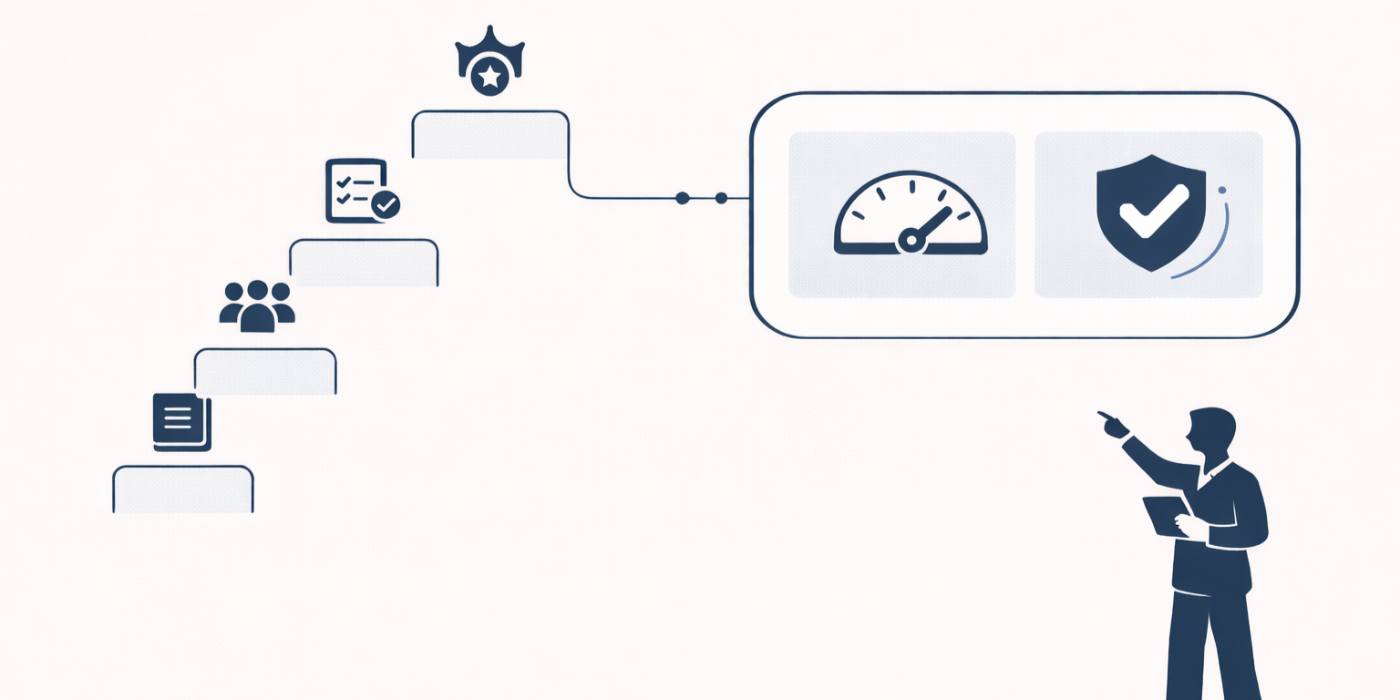
1) The 2026–27 PM Ladder: How Promotions Actually Work (Not How People Talk About Them)
Most people think the PM ladder is “years of experience.” It isn’t. It’s scope, risk, and decision rights — and whether you can prove you reduce chaos without creating bureaucracy. The fastest climbers understand one truth early: every level has a different “job.” Entry level is about operational reliability. Mid-level is about delivery leadership. Senior is about portfolio tradeoffs and governance. Executive is about strategy execution and org design.
Here’s the ladder in plain English:
Entry Level (Coordinator / Junior PM / PMO Analyst): You create control in the noise: meeting cadence, follow-ups, RAID, docs, and schedules. You become the person who makes commitments real. Pair this with foundational training like a structured how to become a project manager roadmap so your work isn’t random effort — it’s intentional progression.
Core PM (Project Manager): You own delivery outcomes: scope, timelines, stakeholders, cost, quality. You become competent in systems like issue tracking and consistent reporting like project reporting & analytics to stop firefighting and start controlling risk.
Senior PM / Program Manager: You manage ambiguity and interdependencies. You lead across teams, vendors, and governance bodies. If you want leverage, learn procurement and contracting realities using contract management terminology and real-world tools like contract lifecycle management software.
Director / Head of PM / PMO Lead: You own delivery systems. You standardize what “good” looks like, define KPIs, staffing models, and escalation paths. This is where people start moving toward a project management director path or scaling into a VP track through PM → VP of PM.
Executive (VP, CPO, CPOfficer-level): You translate strategy into executable portfolios and build the org that ships outcomes. If you’re aiming for the top, study the decision rights and influence models behind a Chief Project Officer path and the cross-functional portfolio control required of a project portfolio manager.
The “secret” is not being perfect. It’s being auditably good: your work is traceable, decisions are documented, and tradeoffs are visible. That’s why modern PMs win with documentation systems like document management software and operational consistency powered by dashboards & data visualization.
2) Entry-Level: Build Reliability, Then Build Evidence (The “Proof-First” Strategy)
Entry-level PM roles are where careers stall — not because the work is hard, but because people stay “helpful” instead of becoming measurably useful. Your job is to turn uncertainty into structure fast, using repeatable systems and visible outputs.
The pain points hiring managers won’t say out loud
They’ve seen “coordinators” who book meetings but can’t control outcomes.
They’ve seen juniors who track tasks but don’t surface risks early.
They’ve seen people who “communicate” but can’t align stakeholders using structured language like critical stakeholder terms and crisp project communication techniques.
So your first goal is not “do more.” It’s ship a control system:
RAID discipline: risks, assumptions, issues, dependencies — not as a spreadsheet graveyard, but as a weekly decision trigger. Use a proper issue tracking system so nothing disappears into Slack.
Decision logging: every major choice should have who/why/when and what it impacts. This is how you become promotion-safe.
Baseline + change control: even on “small” projects. Without a baseline, you can’t prove improvement. Pair this mindset with tools like Gantt chart software and scheduling discipline from calendar & scheduling tools.
The Entry-Level Proof Pack (what you should keep in your portfolio)
A recruiter can’t “see” your potential. They can see your proof pack. Build these (sanitized):
1-page project charter (scope boundaries, success metrics, risks).
Weekly status pack (RAG status, milestones, top risks, decision requests).
Stakeholder map (influence + expectations + communication mode).
Simple budget tracker (even if the budget is small) powered by budget tracking software.
Document hub structure using document management software so deliverables don’t die in email.
This is also the stage where smart candidates pick a domain to reduce hiring friction: IT, construction, healthcare, or government. If you want a fast, credible path, model your next steps on a domain roadmap like IT project manager career guide, construction PM guide, or healthcare PM roadmap.
3) Mid-Level PM: Stop “Managing Tasks” and Start Owning Tradeoffs
Mid-level PMs don’t fail because they lack effort. They fail because they lack tradeoff authority — or they don’t prove they can handle it. At this stage, your career growth comes from becoming the person who can say:
“Here are the options.”
“Here are the risks.”
“Here is the recommendation.”
“Here is the decision we need — by when.”
The 3 mid-level upgrades that unlock promotions
Upgrade #1: Estimation becomes a system, not a guess.
You don’t need perfect estimates. You need a method that improves over time — historicals, ranges, confidence levels, and explicit assumptions. This connects directly to future-proof thinking like how machine learning transforms estimation because modern orgs will expect you to understand both people-based estimation and AI-assisted forecasting.
Upgrade #2: Stakeholder management becomes boundary management.
Mid-level PMs get crushed by stakeholders because they accept vague requests. Your job is to translate “urgent” into scope, constraints, and acceptance criteria using shared language from stakeholder terms and crisp communication techniques.
Upgrade #3: Tooling becomes leverage, not busywork.
You don’t “use tools.” You build visibility:
health dashboards via dashboard & data visualization tools
executive-ready insights via project reporting & analytics
stable documentation flows via knowledge management software
The mid-level role that accelerates everything: hybrid PM
In 2026–27, companies aren’t debating Agile vs Waterfall — they’re blending. If you can operate a hybrid delivery engine, you become promotion-resistant. Study market direction through rise of hybrid project management and build credibility with a structured certification path like becoming a certified agile project manager.
And if you want to widen your promotion options, consider bridging into product, because product owners speak value. Use the product owner roadmap as a deliberate skill-building lane, not a random job hop.
4) Senior PM → Director: Become a “Delivery System,” Not a Single High Performer
This is the career hinge. Senior PMs who become Directors don’t just deliver projects. They build repeatable delivery. The executive question shifts from “Can you run a project?” to “Can you scale outcomes through other people?”
What “Director-ready” actually looks like
Governance that accelerates decisions
Directors create decision velocity. They don’t create meetings. They create decision gates with clear inputs and owners. This is why government-style rigor can be an advantage — it teaches structured control. Study what a formal roadmap looks like in government PM career guidance.A hiring and skill model that reduces risk
At Director level, your team is your product. You need a skills matrix, role expectations, and a rubric for what “good” looks like. If you want to see the full ladder logic, use the dedicated Project Management Director roadmap.Procurement and vendor control
Vendor failure is one of the fastest ways to lose credibility. If you can’t navigate contracts, change orders, and SOW constraints, you’ll be treated like a “project admin.” Build fluency with contract management terminology and operationalize it with procurement management tools plus CLM platforms.Reporting that executives trust
Executives don’t want detail. They want truth + implications. Directors build reporting systems that don’t lie. That means consistent definitions, aligned metrics, and analytics that show trends. Use project reporting & analytics software and dashboards & visualization tools as the distribution mechanism — but your real skill is the narrative: “Here’s what’s happening, here’s why, here’s what we’re doing.”
The fastest director-level “proof assets”
A one-page operating model (rituals, artifacts, escalation).
A portfolio intake system (form + scoring model + capacity logic) aligned with portfolio management thinking.
A risk operating system (risk categories, triggers, mitigation owners).
A delivery playbook for hybrid execution aligned with hybrid PM trends.

5) Director → Executive: Strategy Execution, Portfolio Tradeoffs, and Org Design
Executives are paid for tradeoffs. That’s the whole job. If you want to reach VP/CPO level, you must prove you can decide:
what not to do
what to fund
what to kill
what to sequence
what risk to accept
what capability to build
Executive promotion is about three capabilities
Capability #1: Portfolio leadership (value delivery, not project delivery)
A VP/CPO needs portfolio control — not just running a big project. That means intake, prioritization, capacity planning, and measurable value delivery. Study the blueprint mindset in the CPO roadmap and the scaling logic in PM → VP of PM.
Capability #2: Executive communication that creates alignment
At senior levels, communication isn’t “updates.” It’s alignment creation. You’ll use stakeholder language from critical stakeholder terms and distill decisions into simple frames: options, impact, recommendation, decision request.
Capability #3: Future-proof delivery (AI, automation, and workforce design)
In 2026–27, executives will expect you to understand AI’s impact on delivery systems — not because you’re building models, but because the operating model changes. Learn the landscape through AI & project management predictions, workforce shifts via automation transforming PM careers, and skill requirements via future PM skills by 2030.
Two executive tracks you can choose (and how to pick)
Track A: Enterprise Delivery Executive (VP PM / CPO)
You’ll be evaluated on portfolio performance, risk exposure, and cross-functional execution. Your ladder is clean: Director → VP of PM → CPO.
Track B: Independent Leader (Consulting / Freelance / Remote specialization)
If you want autonomy, build a consulting track using starting a PM consultancy, or scale credibility through freelance PM career building and remote/virtual PM roles. This path is brutal if you don’t have proof assets — but it’s explosive if you do.
The executive resume reality check (what gets you filtered out)
You list responsibilities instead of outcomes.
You claim leadership without evidence of systems (operating model, governance, KPIs).
You talk about Agile but can’t explain where Scrum is heading or why hybrid delivery wins in complex orgs.
You can’t show risk control, contract fluency, or decision velocity.
If you want the “ultimate” outcome: become the person who makes execution predictable. That’s what executives pay for.
6) FAQs: From Entry-Level to Executive PM Career Path
-
If you build a proof pack (charter, RAID, status cadence, stakeholder map) and can show control systems using issue tracking plus clean scheduling via Gantt tools, you can move faster than “time-based” promotions. The gating factor is whether a hiring manager trusts you to own delivery outcomes — not whether you’ve waited long enough.
-
Pick the domain where you can build proof assets quickly and reduce hiring risk. For many candidates that’s IT via an IT PM roadmap, construction via the construction PM guide, healthcare via the healthcare PM path, or government via government PM career guidance. The “best” one is the one where you can prove execution.
-
Certifications are signals, not substitutes. Your best bet is pairing role-relevant training with proof assets. If you’re moving into Agile-heavy environments, anchor your plan with the certified agile PM roadmap and role-specific clarity like Scrum Master or Product Owner depending on your lane.
-
Build director-level artifacts on your own scope: a delivery playbook, intake system, KPI definitions, and governance gates. Learn the expectation set directly from the Project Management Director roadmap, then implement a small version where you are. Directors are promoted when they’re already operating like directors.
-
Portfolio tradeoffs, org design, and decision velocity. Senior PMs deliver projects. Executives deliver strategy through systems. Study the ladder explicitly through PM → VP of PM and the enterprise execution scope of a Chief Project Officer. Then build proof that you can prioritize, sequence, and kill work intelligently.
-
Don’t compete with automation on task management — compete on judgment. AI will accelerate reporting, scheduling, and documentation, but it won’t replace tradeoff leadership. Learn the shift through AI & PM impacts by 2030, automation’s career impact, and future PM competencies. Then double down on stakeholder alignment, risk decisions, and portfolio logic.
