
Detailed Career Roadmap: Becoming a Certified Agile Project Manager
Becoming a Certified Agile Project Manager isn’t about collecting badges — it’s about proving you can deliver outcomes when scope shifts, stakeholders disagree, and deadlines don’t care. If you’re stuck in “I know Agile” territory but keep losing roles to candidates with sharper proof, this roadmap fixes that. You’ll learn exactly which skills hiring panels reward, what to document, which certifications map best to your background, and how to build a portfolio that survives ATS filters and real interviews — without wasting months on low-signal activity.
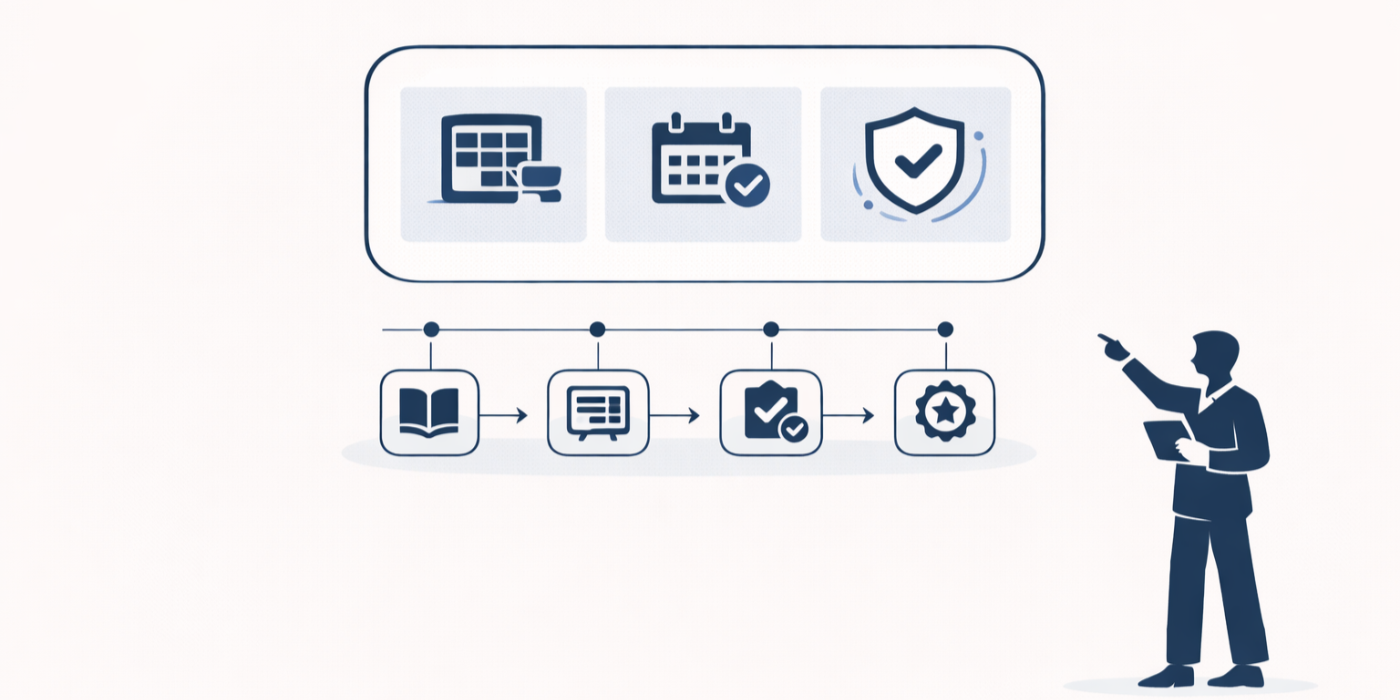
1. What a “Certified Agile Project Manager” Actually Means in 2026–2027
A Certified Agile Project Manager is trusted to lead delivery across ambiguity — not just facilitate ceremonies. In most interviews, “Agile PM” is shorthand for: can you plan realistically, manage dependencies, unblock teams, manage risk, and keep stakeholders aligned while protecting focus. If you can’t show that in artifacts, you’ll be treated like a Scrum event coordinator instead of a delivery leader.
Here’s what hiring managers quietly test:
Delivery literacy: Can you move from roadmap to sprint execution without losing the business narrative (use the language of outcomes, not tasks)? This is why candidates who’ve studied a clean project management career roadmap communicate stronger than “I ran standups.”
Agile + governance blend: Real organizations run a hybrid reality — Agile inside teams, stage gates outside. If you can’t speak hybrid, you get filtered out. Read the hiring bias toward hybrid in Rise of Hybrid PM.
Decision facilitation under pressure: Panels want proof you can resolve conflict, not just “collaborate.” Strengthen your language with stakeholder terms every PM should master.
Artifacts that make trust easy: Backlogs, release plans, risk logs, RAID, RACI, dependency boards, reporting cadences — and the ability to explain why they exist. If you’re weak here, you’ll also struggle in tools-heavy environments (start with project reporting & analytics software and dashboard & data visualization tools).
Outcome control: Agile doesn’t mean “no deadlines” — it means smart control. Candidates who can talk estimation and forecasting with nuance stand out (pair with AI + PM predictions so you don’t sound outdated).
Most candidates fail because they describe Agile, but can’t demonstrate delivery. The rest of this roadmap is designed to fix that gap — using proof assets, not motivational fluff.
| Capability | What “Good” Looks Like | Evidence / Artifacts | Metrics It Moves | Common Failure Pattern |
|---|---|---|---|---|
| Backlog strategy | Backlog reflects outcomes, constraints, and sequencing logic — not a dumping ground. | Prioritized backlog, refinement notes, decision log | Throughput, predictability | “Everything is P1” backlog chaos |
| Sprint planning | Capacity-based planning with explicit assumptions and trade-offs. | Capacity sheet, sprint goal, scope trade-off notes | Commit reliability | Over-commit + blame cycle |
| Estimation discipline | Uses estimation to reduce risk and align expectations, not to “guess harder.” | Story points history, forecast model, calibration notes | Forecast accuracy | Treats points like hours |
| Release planning | Roadmap ties to milestones, dependencies, and decision gates. | Release plan, milestone map, dependency board | On-time releases | Roadmap = wish list |
| Stakeholder alignment | Creates a cadence where decisions get made and rework drops. | Steerco deck, RACI, comms plan | Decision latency | Endless meetings, no decisions |
| Scope control | Manages scope through outcomes and constraints; prevents silent scope creep. | Change log, scope boundaries, acceptance criteria | Overrun reduction | Scope creep disguised as “Agile” |
| Risk management | Risk is tracked, owned, and actively reduced sprint by sprint. | Risk register, mitigation plan, RAID | Firefighting rate | Only reacts after incidents |
| Dependency management | Maps dependencies early and negotiates sequencing before blockers hit. | Dependency map, integration plan | Blocked time | Finds deps during UAT |
| Quality leadership | Definition of Done is enforced; quality is a system, not a phase. | DoD, test strategy, defect trends | Defect escape rate | “We’ll fix later” culture |
| Metrics fluency | Uses the right metrics for the right audience, without vanity charts. | Dashboards, narrative metrics brief | Trust, clarity | Drowns leaders in noise |
| Forecasting | Forecasts with ranges, confidence, and options — not false precision. | Forecast model, scenario plan | Expectation control | Single date promises |
| Facilitation | Runs meetings that produce decisions, action, and ownership. | Agendas, decision log, follow-up tracker | Cycle time | Meetings = status theatre |
| Conflict resolution | Separates people from problems; resolves priority fights fast. | Escalation path, alignment memo | Rework reduction | Avoids conflict until it explodes |
| Product partnership | Protects discovery time and enforces outcome-based planning. | Discovery plan, experiment log | Value delivery | Feature factory habits |
| Documentation clarity | Documents only what reduces risk and accelerates decisions. | One-pagers, PRD-lite, runbooks | Onboarding speed | Either no docs or bloated docs |
| Tooling mastery | Configures workflows to match delivery, not the other way around. | Workflow configs, issue types, WIP rules | Flow efficiency | Tools become the process |
| Executive reporting | Turns messy delivery into a crisp narrative: risks, decisions, options. | Exec brief, heatmap, decision asks | Decision velocity | Status without implications |
| Change leadership | Preps org for change: training, adoption, comms, resistance plan. | Change plan, training schedule | Adoption success | Ships features nobody adopts |
| Customer feedback loops | Feedback is structured, prioritized, and tied back to roadmap changes. | Feedback log, prioritization rationale | NPS, retention | Random feedback whiplash |
| Vendor / partner delivery | Aligns contracts, SLAs, and integration timelines with sprint reality. | SOW milestones, integration plan | Delivery delays | Assumes vendors “just deliver” |
| Budget awareness | Tracks burn and trade-offs; explains cost implications of scope shifts. | Budget tracker, burn notes | Overrun control | No financial narrative |
| Compliance / audit readiness | Evidence trails exist: decisions, approvals, requirements traceability. | Trace matrix, approval logs | Audit pass rate | “We’re Agile” as excuse |
| Roadmap hygiene | Roadmap is revisited; assumptions and constraints are visible. | Roadmap changelog, assumption log | Stakeholder trust | Roadmap never updated |
| WIP control | Limits WIP so work finishes; flow beats frantic multitasking. | WIP policies, flow board | Cycle time | Everything in progress |
| Team health | Detects burnout early; protects sustainable pace and focus. | Retro themes, action logs | Attrition risk | Morale collapse surprises leaders |
| Incident learning | Runs blameless postmortems and converts pain into prevention. | Postmortems, action follow-through | Repeat incidents | Same failures repeat |
| Decision architecture | Clarifies who decides what, when, and with what inputs. | Decision map, governance cadence | Speed + clarity | Decisions drift forever |
| Value validation | Defines “done” as user impact, not “deployed to prod.” | Success metrics, adoption plan | ROI | Ships outputs, not outcomes |
| Cross-functional delivery | Aligns design, engineering, QA, ops, and business without bottlenecks. | Integration calendar, handoff rules | Lead time | Handoffs break silently |
| Hiring-panel storytelling | Explains complex delivery with crisp “problem → decision → outcome” arcs. | Case stories, STAR/CARE notes | Offer rate | Rambling, tool-focused answers |
2. Capability Roadmap: Skills You Must Prove (Not Just Learn)
If you want to be hired as “Certified Agile PM,” your roadmap is simple in concept and brutal in execution: turn skills into proof assets. Hiring panels don’t reward potential — they reward reduced risk. Your goal is to look like the candidate who will not create delivery chaos.
Step 1: Convert Agile theory into delivery control
If your Agile knowledge is mostly definitions, you’ll get crushed by candidates who can speak outcomes. Build fluency by studying how roles evolve (see the career path to a project management consultant) because consultants win interviews by making delivery feel inevitable.
What to prove:
You can translate strategy into execution (support your story with a roadmap mindset like From entry-level to executive PM path).
You understand Agile in real org structures (tie your language to future PM leadership styles).
You can use tools as amplifiers, not crutches (review modern stack options like issue tracking software and calendar & scheduling tools).
Pain point to attack: “I did Agile, but I can’t prove impact.” Fix it by building a short “delivery narrative” for each project: problem, constraints, decision points, outcome, metrics. If you don’t have metrics, you’re not doomed — you’re just under-documented. Strengthen that with a terminology refresh like project communication terms & techniques so your interviews sound like an operator, not a learner.
Step 2: Master the hiring-panel “hidden checklist”
Most panels are quietly evaluating five things:
Can you make trade-offs without panic?
Can you run governance without killing speed?
Can you forecast honestly and still inspire confidence?
Can you control scope in a way stakeholders respect?
Can you communicate without creating confusion?
That’s why “Agile-only” candidates lose to hybrid operators (again: hybrid PM future). It’s also why candidates who can talk clearly about tooling and reporting stand out (use project budget tracking tools and reporting & analytics to frame how you build visibility).
Pain point to attack: Stakeholders don’t trust Agile timelines. Your edge is learning to forecast with ranges and confidence levels — and backing it with data from sprint history. Then you communicate it in dashboards leaders actually understand (see dashboards & visualization tools).
Step 3: Build the “Agile PM spine” (the skills that transfer across industries)
If you only know one domain, you’ll be filtered out when the job title changes slightly. Build transferable capability by studying adjacent paths: an Agile PM often collaborates closely with product roles (learn how Product Owners are evaluated in becoming a Product Owner). Many Agile PMs grow into coaching (see career path to becoming an Agile Coach) or consulting (see Scrum Master to Agile PM consultant).
Pain point to attack: You’re seen as “ceremony support,” not “delivery leadership.” Your fix is to speak in the language of risk, dependencies, scope, and decisions — the vocabulary of leaders (reinforce with stakeholder mastery terms).
3. Credential Path: Choosing the Right Certification Stack
Certifications only matter if they do two things:
Pass ATS filters (keywords, requirements), and
Improve your interview proof (framework → artifacts → stories).
If you pick the wrong certification, you waste time and still sound vague.
The “right” stack depends on your starting point
If you’re new to PM: Build foundation first (use the complete PM roadmap so your Agile knowledge sits on real PM mechanics).
If you’re a Scrum Master: Don’t stay trapped at ceremony level — bridge into delivery + governance with the Scrum Master certification guide and then climb into consultant-level execution with Scrum Master → Agile PM consultant roadmap.
If you’re already a PM: Add Agile proof that hiring managers recognize (compare credential choices using PMP vs PRINCE2 if you’re also deciding foundational direction).
If your market demands PMI language: Consider PMI-ACP prep (use how to prepare for PMI-ACP in 30 days and pressure-test yourself with PMI-ACP exam questions).
If your company is hybrid: You’ll win by communicating hybrid mechanics (study future PM methodologies so your answers sound aligned with where orgs are going).
Avoid the certification trap
A painful truth: many candidates pass exams and still fail interviews because they can’t translate frameworks into “here’s how I delivered under constraints.” If you want to be hired, build your certification around artifacts and tools:
Reporting: project reporting & analytics
Planning: best Gantt chart solutions (yes, Agile PMs still need timeline fluency)
Execution: issue tracking software
Team flow: automation tools for PM efficiency
Pain point to attack: “I have certs, but I’m not getting interviews.” That’s almost always ATS + weak keyword alignment + weak evidence. Fix it by pairing certifications with proof assets, and by writing resumes that mirror the competency matrix above (and using the language from APMIC-style career roadmaps like Agile PM roadmap themes — you’ll be doing that here).
4. Portfolio Proof: Build Assets That Survive ATS + Panel Interviews
If certifications open the door, proof assets close the deal. Your portfolio doesn’t need to be public or fancy — it needs to be credible. Think: “If I hand this to a hiring manager, will they trust me faster?”
The five proof assets that create instant trust
One-page delivery case study (x3):
Structure: Context → constraints → decision points → what you did → what changed → outcome. This aligns perfectly with leadership paths like PM → Director roadmap because directors are judged on decision quality and outcomes, not task lists.Backlog-to-release narrative:
Show how items moved from discovery to refinement to delivery. Borrow the product partnership mindset from Product Owner roadmap so you demonstrate value thinking, not just sprint mechanics.Forecasting artifact:
A simple forecast model (ranges + confidence) based on historical throughput. Then explain it like a leader: risks, assumptions, options. This is where candidates who understand AI’s impact on estimation and scheduling sound more current than “we used story points.”Executive reporting sample:
One slide or one page: progress, risks, decision asks, next milestones. Pair your thinking with tools knowledge from project reporting & analytics and keep it clean.Tool workflow map:
Show your Jira-style workflow logic: issue types, states, WIP rules, definitions. Reinforce your credibility with modern ops stack awareness like top resource allocation software and document management software.
Pain point to attack: You’re competing against candidates who “look safer.” Proof assets make you the safer candidate — not because you claim competence, but because your evidence reduces uncertainty.
ATS survival checklist (what filters you out)
ATS doesn’t understand your potential; it understands keyword alignment and role match. If you’re not getting callbacks:
Mirror the job description language using credible topic pages like Scrum vs Agile certification comparison so your phrasing matches market expectations.
Add tool + artifact keywords (reporting, dashboards, issue tracking, planning) backed by relevant knowledge: Gantt software, calendar tools, automation tools.
Add leadership trajectory signals if you’re aiming higher (read the language patterns in PM → VP of PM path to level up your framing).
Interview conversion: how to answer like a Certified Agile PM
Most candidates answer with activities (“I ran standups”). You answer with operating systems (“I built a cadence that forced decisions and reduced rework”). Use the competency matrix language and make your stories decision-centric — similar to how a Chief Project Officer roadmap frames leadership: visibility, alignment, outcomes.
A high-conversion story structure:
Problem: delivery risk + business impact
Constraints: deadline, dependencies, stakeholder conflict
System: cadence + artifacts + decision points
Trade-off: what you cut / delayed / simplified
Outcome: what improved + what you learned
That structure makes you sound like someone who can scale — whether toward project portfolio manager or toward consulting via starting a PM consultancy.

5. 90-Day Execution Plan: From Study to Offer Letter
This is where most people fail: they “study” without building hireable proof. Your plan needs to produce artifacts every week.
Days 1–14: Foundation + positioning
Pick your certification track based on your market (PMI-heavy? Start with PMI-ACP 30-day prep; Scrum-heavy? Start with CSM guide).
Write your “Agile PM identity statement” for your resume: what outcomes you deliver, what systems you run, what evidence you have. Use language aligned with leadership career narratives like Agile PM consultant roadmap.
Build your artifact template pack: decision log, risk log, dependency map, exec brief format (tie to issue tracking and dashboards).
Pain point to attack: You keep restarting because you don’t know what “done” looks like. Your “done” is a portfolio with 3 case studies and 5 artifacts, not “finished reading.”
Days 15–45: Portfolio building + certification momentum
Each week, produce one deliverable:
Week 3: backlog strategy + prioritization rationale (anchor with product thinking from Product Owner guide)
Week 4: release plan + dependency map (support with hybrid realism from hybrid PM future)
Week 5: forecasting model + stakeholder comms version (strengthen communication language with PM communication terms)
Week 6: executive brief + dashboard mockup (guided by reporting & analytics tools)
Continue exam prep with realistic practice questions (for PMI track, drill PMI-ACP questions; for broader PM, use structured preparation approaches like PMP exam guide if you’re stacking credentials).
Pain point to attack: You feel like you’re doing work, but nothing is changing. If you aren’t producing artifacts, you’re not progressing toward hiring — you’re just consuming content.
Days 46–75: Interview system + applications that don’t get ignored
Build 12 “panel-ready” stories using the matrix capabilities: scope control, risk, dependencies, forecasting, reporting, conflict resolution.
Optimize resume for ATS and human scanning: list tools, artifacts, outcomes (and show leadership trajectory language if relevant with PM → Director or PM → VP).
Apply with a targeted strategy: fewer applications, higher fit, better customization. If you’re going remote, align your narrative with remote & virtual PM roles.
Days 76–90: Close the loop — offer conversion
Run mock interviews focused on:
“Tell me about a time a roadmap changed”
“How do you forecast without lying?”
“How do you handle stakeholder conflict?”
“How do you make Agile work with governance?”
Bring proof assets to interviews (even if they’re sanitized). Your goal is to create a moment where the interviewer thinks: “This person already runs the system we need.”
If you want a north star for long-term growth: Certified Agile PM is often a stepping stone to portfolio leadership (PPM roadmap) or to high-impact executive paths like Chief Project Officer.
6. FAQs
-
Start by upgrading from ceremonies to delivery control: build release planning, dependency management, forecasting, and executive reporting proof. Use the credential ladder in the CSM guide and then transition your positioning using the Scrum Master → Agile PM consultant roadmap.
-
It depends on your market and target employers. If roles ask for PMI language, build toward PMI-ACP and follow a structured plan like PMI-ACP prep in 30 days. If roles emphasize Scrum delivery, start with Scrum certs — but don’t stop at ceremonies (see Scrum vs Agile certification comparison).
-
Create proxy evidence: sprint goal success rates, cycle time trends from your issue tracker, defect escape rate, stakeholder decision latency (how long approvals took before/after your cadence changes). Back your proof with a clean reporting narrative aligned to project reporting & analytics.
-
At minimum: issue tracking workflows, reporting dashboards, documentation systems, scheduling visibility, and automation for repeatable processes. Strengthen your stack awareness through issue tracking software, dashboard tools, and automation tools.
-
Because organizations still have external commitments (launch windows, regulatory deadlines, vendor dependencies). A modern Agile PM can translate Agile execution into timeline visibility without pretending it’s perfect. Build fluency with Gantt chart tools and pair it with hybrid understanding from hybrid PM future.
-
They chase the credential before building proof. Certifications help filters, but evidence wins interviews. Your fastest path is: choose a cert track, then produce 3 case studies + core artifacts (forecast, risk log, dependency map, exec brief) — and practice telling those stories like a delivery leader (study leadership framing from PM → Director).
