
A stakeholder requests an additional feature, the delivery team agrees informally, and three weeks later the project is over budget with no record of who approved the extra work. This is how uncontrolled changes become expensive disputes. A change request template establishes what is being proposed, why it matters, and what accepting it would cost. A project change log preserves every decision and its implementation status.
This guide provides a practical change request format, a 30-entry example change log, approval workflows, impact calculation methods, and a completed example you can adapt to real projects.
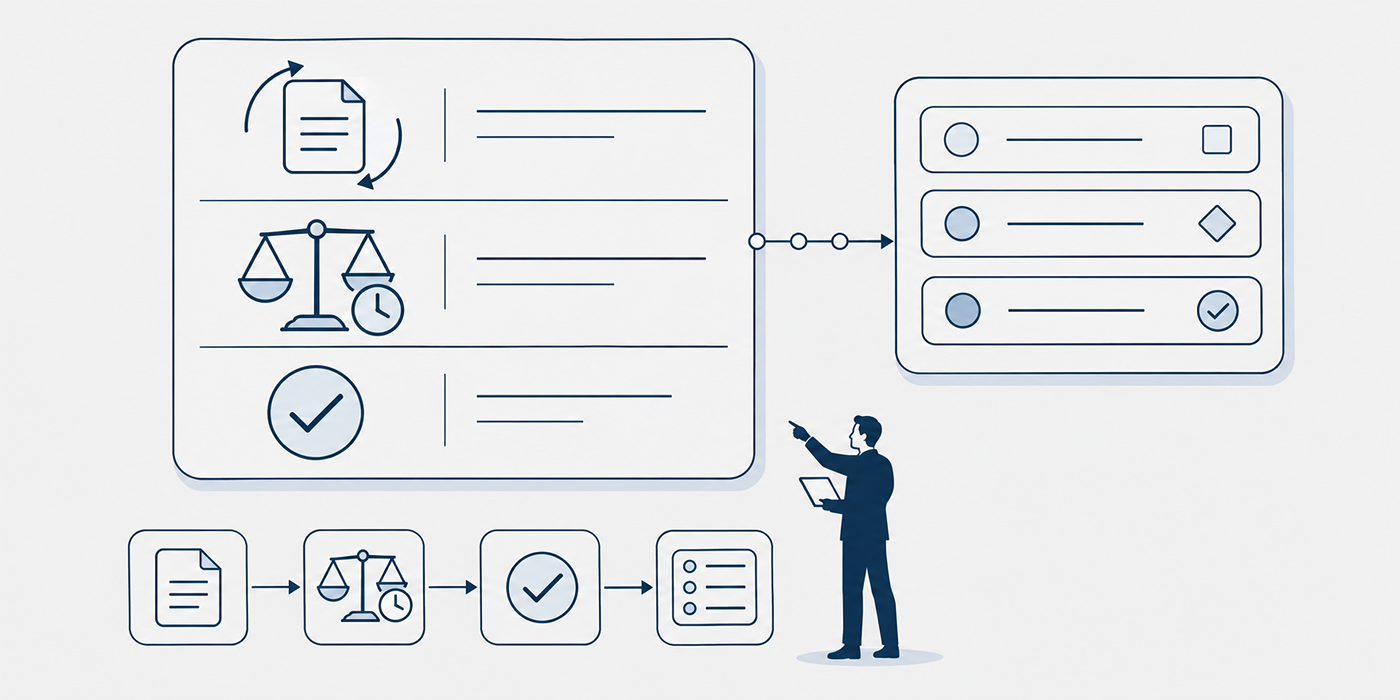
1. Change Request Template: Essential Fields, Approval Requirements, and a Ready-to-Use Format
A project change request is a documented proposal to modify an approved project baseline, deliverable, requirement, or other controlled element. It gives decision-makers enough information to understand the proposed change and its consequences before committing resources.
The accompanying change log tracks requests from submission through assessment, decision, implementation, and closure. Both documents should connect to the project's approved planning documents, responsibility assignment matrix, governance structure, and project monitoring controls.
When should a project change request be raised?
Use a formal request when a proposal affects approved scope, schedule, budget, quality requirements, resource commitments, contractual obligations, or agreed benefits.
Examples include adding a product feature, changing acceptance criteria, replacing a specified material, accelerating delivery, modifying a supplier obligation, or adopting a new compliance requirement.
A minor correction within existing authorized tolerances may follow a lighter delegated process defined in the project's change-control policy. The key is to establish approval thresholds before disagreements arise.
A change originating from an identified project risk or an active issue should also be linked to its original record. Project initiation documentation establishes the original objectives, while monitoring and control practices determine whether the proposed response changes an approved commitment.
Ready-to-use project change request template
Copy the following structure into a document, form, or project management system. Each field supports a specific evaluation or approval decision.
A. Request identification
Project name and project ID:
Change request ID:
Submission date:
Requester and department:
Change title:
Change category: scope, schedule, cost, quality, technical, regulatory, or other
Priority and requested decision date:
B. Business justification
Current approved requirement or baseline:
Proposed modification:
Reason for the request:
Problem or opportunity being addressed:
Expected measurable benefit:
Consequence of rejecting or deferring the request:
Assumptions and supporting evidence:
C. Impact assessment
Additional or reduced scope:
Affected deliverables and acceptance criteria:
Estimated one-time cost:
Estimated recurring cost or savings:
Schedule impact in working days:
Affected milestones and dependencies:
Resource and supplier impact:
Quality, security, compliance, and operational impact:
New or changed risks:
Alternatives considered:
D. Decision and implementation
Recommended decision and rationale:
Approval authority:
Decision: approved, rejected, deferred, or withdrawn
Decision date and conditions:
Implementation owner:
Approved baseline revision:
Verification and acceptance evidence:
Final closure date:
Use a unique change ID such as CR-2027-014 consistently across the form, schedule, cost forecast, action records, and change log. That identifier should survive edits and version changes.
A properly completed request creates an audit trail linking the proposal to project cost management, stakeholder responsibilities, risk and issue documentation, and executive decision reporting.
Make the justification measurable
A weak request says, "Customers want a better dashboard."
A stronger request specifies: "Add an export function allowing regional managers to download weekly performance data. The feature is expected to eliminate approximately 15 hours of manual reporting per month across the pilot group."
The stronger version establishes a deliverable and a measurable benefit. The estimate should identify its source and assumptions rather than presenting an unverified benefit as guaranteed.
When analyzing the request, compare the expected value with the total cost, delivery impact, and opportunity cost of postponing other work. This connects business analysis practices, project performance forecasting, and strategic governance decisions.
Distinguish a request from an issue or risk
A risk describes an uncertain future event. An issue describes something requiring attention now. A change request seeks authorization to alter an approved plan or controlled deliverable.
One situation can generate all three records.
For example, supplier insolvency may begin as a risk, become an issue after the supplier fails, and lead to a change request proposing an alternative supplier with different costs and delivery dates.
Maintain the relationships between the risk register, project control records, and approved schedule. The change log becomes the authoritative record of whether the proposed response was authorized.
| Change ID / Type | Proposed Change & Business Trigger | Estimated Impact / Decision Basis | Current Status | Owner & Required Next Action |
|---|---|---|---|---|
| CR-001 · Scope | Add automated customer SMS notifications to a service portal. | +$18,000; +4 working days. Expected reduction in support calls. | Approved conditionally | Sponsor: confirm funding and privacy approval before implementation. |
| CR-002 · Security | Add multifactor authentication to an employee application. | +$9,000; +3 working days. Reduces account takeover exposure. | Impact assessment | Security lead: finalize integration and testing estimate. |
| CR-003 · Schedule | Accelerate a system deployment to meet an earlier launch date. | Potential 7-day gain; +$12,000 acceleration cost. | Deferred | Sponsor: reconsider if the customer deadline becomes contractual. |
| CR-004 · Reporting | Add a CSV export to the management reporting dashboard. | +$4,000; no forecast milestone delay. | Approved | Product owner: confirm acceptance criteria and authorize backlog work. |
| CR-005 · Supplier | Replace a delayed equipment supplier with an alternative provider. | +$25,000; potential 5-day recovery versus current forecast. | Pending decision | Procurement lead: confirm contract exit cost and substitute warranty. |
| CR-006 · Quality | Add independent penetration testing before production launch. | +$7,500; +2 working days unless testing overlaps. | Approved | QA lead: schedule assessment and document release gate. |
| CR-007 · Scope | Include an advanced analytics module beyond the contracted deliverables. | +$38,000; +12 working days. Benefits not substantiated. | Rejected | Sponsor: retain decision rationale and original scope. |
| CR-008 · Resource | Introduce a second implementation engineer to remove a bottleneck. | +$6,000; possible 3-day schedule improvement. | In implementation | Delivery manager: validate resource availability and revised dates. |
| CR-009 · Compliance | Update retention controls following a revised regulatory interpretation. | Estimate pending; legal review required. | Under review | Compliance owner: establish mandatory requirement and deadline. |
| CR-010 · Design | Replace the approved user interface design with a newly proposed layout. | +$11,000; +5 working days; limited proven benefit. | Rejected | Product owner: document decision and continue approved design. |
| CR-011 · Procurement | Use expedited shipping for time-critical hardware. | +$2,400; expected 4-day lead-time reduction. | Closed | Procurement: retain proof of delivery and approved expenditure. |
| CR-012 · Integration | Add a new payment provider to a checkout implementation. | +$14,000; +6 working days; settlement testing required. | Pending decision | Finance and technical leads: confirm transaction, fraud, and reconciliation impacts. |
| CR-013 · Training | Expand end-user training to two additional regional offices. | +$3,600; no critical-path delay if sessions run in parallel. | Approved | Training lead: update session schedule and attendance criteria. |
| CR-014 · Accessibility | Expand the product's accessibility acceptance requirements. | +$8,500; +3 working days; additional validation required. | Impact assessment | UX and QA leads: map affected components and test requirements. |
| CR-015 · Construction | Substitute a specified flooring product with an approved alternative. | −$4,000 estimated; no schedule delay after approval. | Pending decision | Engineer: verify technical specification, durability, and contractual acceptance. |
| CR-016 · Data | Extend a legacy data migration to include archived customer records. | +$10,000; +4 working days; extra reconciliation risk. | Deferred | Data owner: evaluate regulatory need and phased migration option. |
| CR-017 · Contract | Extend the warranty period for delivered equipment. | +$5,000; no direct delivery-date effect. | Pending decision | Commercial manager: compare warranty value with vendor premium. |
| CR-018 · Testing | Introduce automated regression tests for a recurring release process. | +$6,500 initially; potential future test savings. | Approved | Test lead: define coverage target and implementation acceptance. |
| CR-019 · Capacity | Increase hosting capacity to meet revised peak-load assumptions. | +$1,200 monthly; security and reliability review required. | Under review | Infrastructure lead: verify capacity forecast and recurring cost. |
| CR-020 · Customer | Add a second customer review cycle to improve sign-off confidence. | +3 working days; additional stakeholder effort. | Approved | Customer lead: publish revised approval milestones. |
| CR-021 · Risk | Establish a backup supplier for a critical component. | +$4,800 readiness cost; reduces supply disruption exposure. | In implementation | Risk owner: verify qualification, contingency trigger, and contractual terms. |
| CR-022 · Scope | Remove an unused reporting feature from the initial release. | Potential −$7,000; 2-day schedule recovery subject to dependency review. | Approved | Business owner: revise scope, test coverage, and acceptance criteria. |
| CR-023 · Privacy | Introduce an additional customer data consent screen. | +$5,500; +2 working days; legal approval required. | Verification | Privacy officer: approve evidence and confirm production behavior. |
| CR-024 · Communications | Expand launch communications to a newly included stakeholder group. | +$1,800; no expected milestone movement. | Approved | Communications lead: finalize recipient list and message approvals. |
| CR-025 · Emergency | Apply an urgent production configuration change following a security incident. | Immediate containment; post-change testing and review required. | Verification | Incident authority: document emergency approval and validate recovery. |
| CR-026 · Scope | Introduce a second mobile application language during the current release. | +$13,000; +5 working days; localization testing required. | Deferred | Sponsor: reassess for the next release using demand evidence. |
| CR-027 · Operations | Extend operational handover support from one week to three weeks. | +$7,200; additional staffing requirement. | Impact assessment | Operations lead: verify staffing, service coverage, and acceptance criteria. |
| CR-028 · Vendor | Change a contract deliverable from a fixed monthly report to a live dashboard. | +$9,500; +4 working days; contract variation required. | Pending decision | Commercial owner: negotiate statement-of-work amendment. |
| CR-029 · Technical | Replace a deprecated software library with a supported version. | +$3,800; +1 working day; lowers maintenance exposure. | Closed | Technical lead: retain test results and approved configuration revision. |
| CR-030 · Benefits | Add post-launch measurement of customer response time improvements. | +$2,000; no delivery-date impact; strengthens benefits evidence. | Submitted | Benefits owner: confirm metric baseline, collection method, and approval route. |
2. Project Change Control Process: From Submission to Approved Baseline
A controlled change follows a repeatable decision process. The level of analysis can vary with the size and urgency of the request, but every meaningful baseline modification needs documented authority.
The Association for Project Management's change-control guidance describes logging requests, conducting initial and detailed evaluations, recommending a decision, updating plans for approved changes, and monitoring implementation.
Step 1: Register the request before work begins
Assign the next available change ID and record the requester, description, submission date, affected baseline, and current status.
Every request should be visible, including rejected, deferred, and withdrawn proposals. Otherwise, the organization loses the history needed to explain why certain work was accepted or excluded.
For example, a sponsor's verbal request for a new reporting feature should enter the same project governance workflow as a written supplier proposal.
A structured project documentation system can assign IDs automatically, while project reporting procedures ensure requests awaiting decisions appear in the correct management reports.
Step 2: Triage completeness, urgency, and authority
Check whether the change has a defined outcome, sufficient supporting information, and a genuine effect on controlled project commitments.
Classify its urgency separately from its business priority. A sponsor may consider a proposed feature valuable without needing a decision immediately. A security vulnerability may require urgent action even when the effort is relatively small.
Use predetermined thresholds to route changes. For example, a project manager might be authorized to approve minor changes inside specified tolerances, while budget increases, contractual alterations, and milestone changes require sponsor or board approval.
These are illustrative governance rules; the actual authority limits belong in the project's approved policy.
A clear RACI responsibility structure, project charter, and governance escalation process prevent requests from being approved by people without the authority to commit the organization.
Step 3: Calculate integrated project impacts
Assess the change against the current approved baseline and the latest credible forecast.
Scope: Identify every deliverable, requirement, and acceptance criterion affected.
Schedule: Determine which activities change, whether they are on the critical path, and how milestones move.
Cost: Estimate labor, suppliers, testing, procurement, contingency effects, and recurring operating expenditure.
Resources: Identify whether the required capacity exists and which other commitments would be displaced.
Quality and compliance: Evaluate testing, security, regulatory, contractual, and assurance consequences.
Risk and benefits: Determine both the risks introduced by the change and the consequences of doing nothing.
Use earned value calculations to understand current financial performance, predictive schedule analysis to evaluate timing, risk assessment records to quantify exposure, and project controls terminology to maintain consistent reporting.
Step 4: Evaluate alternatives, including doing nothing
A change request should compare more than one solution where the consequences justify it.
For a requested reporting feature, alternatives may include a full automated integration, a smaller export capability, a temporary manual process, or deferral until a later release.
Compare each alternative using the same criteria: benefit, cost, finish-date impact, operational burden, risk, and contractual feasibility.
The evaluation should identify the recommended option and explain why. This supports senior project management consulting decisions, executive trade-off analysis, and business-case governance.
Step 5: Record the authorized decision
The appropriate authority approves, rejects, or defers the proposal, ideally with a clear rationale.
An approval should state any conditions, such as confirmed funding, successful security review, contract amendment, or revised acceptance criteria.
Deferral should have a review trigger or date. Rejection should retain its rationale so the same proposal can be evaluated consistently if raised again.
For decisions made by a change control board (CCB), record the members, decision date, voting or approval mechanism where relevant, and any conditions.
A change board is useful for significant cross-functional decisions, while project governance design should keep routine decisions proportionate.
Step 6: Authorize work and update the correct baseline
For approved requests, update the affected controlled documents using an authorized revision process.
Possible updates include the scope statement, schedule baseline, cost baseline, requirements traceability records, resource assignments, risk register, supplier commitments, and communications plan.
Preserve the preceding baseline version and the change approval that justified the revision. Historical comparison becomes impossible when a team simply overwrites approved records.
Coordinate the updates across integrated project management systems, schedule performance reporting, dependency management practices, and project governance records.
Step 7: Verify implementation and close the change
Approval alone does not demonstrate completion.
The implementation owner must deliver the approved modification, confirm its acceptance criteria, and provide the required evidence.
The project manager then checks whether the change was implemented within its authorized scope, cost, and schedule allowances.
If additional work becomes necessary beyond approval, assess whether a further change request is required.
Close the log entry with the actual outcome, verification date, and reference to acceptance evidence. This maintains the relationship between project execution records, weekly performance reports, and formal governance decisions.
3. Completed Change Request Example: Scope, Budget, Timeline, and Approval Decision
Consider a fictional customer portal implementation with an approved budget of $320,000 and a 12-week delivery baseline.
During development, customer operations requests an automated SMS notification feature. The proposed enhancement would reduce manual customer follow-up but requires new integration, testing, consent handling, and operational support.
This example illustrates how to complete the template, calculate the impact, and record the resulting decision. The figures are hypothetical estimates, and the calculations assume the projected benefits are realized.
Completed change request: CR-2027-014
Project: Customer Service Portal Implementation
Requester: Customer Operations Director
Request: Add automated customer SMS notifications with consent management and an opt-out capability.
Original scope: Web-based notification center and email updates.
Proposed scope: Automated SMS notifications for selected customer milestones, approved message templates, delivery failure handling, consent tracking, and opt-out processing.
Business rationale: Reduce repetitive calls handled by customer support agents and improve communication during service milestones.
One-time implementation cost: $18,000.
Estimated recurring annual SMS/platform cost: $6,000.
Estimated annual gross operational savings: $36,000.
Estimated critical-path effect: Four additional working days.
Affected deliverables: Integration module, consent workflow, privacy documentation, testing scripts, training materials, and operational handover.
Risk considerations: Customer privacy, messaging-provider availability, invalid contact data, delivery failure handling, and additional support requirements.
Recommended decision: Conditional approval, subject to funding, privacy review, and acceptance of the revised launch date.
Approval authority: Project sponsor under the fictional project's governance rules.
Calculate the financial impact
Original approved budget: $320,000
Proposed implementation cost: $18,000
Illustrative revised budget after approval: $338,000
Percentage budget increase:
($18,000 ÷ $320,000) × 100 = 5.625%
Annual operating savings after incremental recurring costs:
$36,000 − $6,000 = $30,000
Simplified first-year net benefit after the one-time implementation cost:
$30,000 − $18,000 = $12,000
The first-year calculation excludes discounting, taxes, timing differences, and potential service disruption costs. Decision-makers should examine whether the underlying call-volume assumptions support the estimated savings.
This analysis connects the request to project financial controls, predictive benefits assessment, and executive business-case decisions.
Calculate the delivery impact
Suppose development and testing for the SMS feature add six working days of effort, but available schedule overlap absorbs two days.
The forecast launch delay is therefore four working days.
The team should validate that overlap through dependency analysis, staffing availability, integration readiness, and testing requirements. Six days of additional effort do not automatically mean six days of schedule extension.
Record both the original 12-week baseline and the revised completion forecast. If the sponsor approves the modification, the controlled schedule baseline can be revised through the authorized process.
The difference between effort and schedule duration is crucial when using project scheduling and analytics tools, resource responsibility models, and project reporting controls.
Record the decision and acceptance conditions
For this example, assume the sponsor approves the change once additional funding and privacy controls are confirmed.
The change log should record the conditional approval, its date, the authorized $18,000 increase, the four-working-day schedule adjustment, and the implementation owner.
Keep the entry open until the conditions are satisfied, the approved work is completed, and acceptance evidence is available.
When the feature passes agreed testing and the updated records are approved, mark the request closed with the actual outcome.
This ensures that an executive status report, project control review, and governance audit can all trace the decision back to its original justification.
Select the change-control problem that creates the most disruption in your projects and click Submit for personalized guidance.
4. How to Maintain a Project Change Log: Statuses, Ownership, and Reporting Metrics
A change log is the central record of requested project modifications. It provides visibility into which changes are proposed, assessed, approved, deferred, rejected, implemented, or closed.
A reliable log should distinguish the decision outcome from implementation progress. An approved change can remain unimplemented, while a rejected change should remain visible in the historical record.
Use consistent status definitions
A practical status workflow is:
Submitted: The request exists and has a unique ID.
Under Review: Completeness, priority, and decision route are being checked.
Impact Assessment: Relevant teams are estimating consequences.
Pending Decision: Analysis is complete and awaiting authorized approval.
Approved: The responsible authority has accepted the request.
Deferred: The decision has been postponed with a review trigger.
Rejected: The request was declined with a recorded rationale.
Withdrawn: The requester or authorized owner has formally removed it from consideration.
In Implementation: Approved work is actively underway.
Verification: Delivery is complete and awaiting acceptance evidence.
Closed: The approved change has been verified and the record finalized.
These states should have defined transition permissions. For example, an assessor should not be able to mark an unapproved change as authorized merely by changing a spreadsheet cell.
A structured governance workflow, RACI authorization model, and project controls system help enforce the distinction.
Track decision age and approval delays
For open requests, calculate the number of calendar days since submission:
Open Request Age = Reporting Date − Submission Date
For decided requests:
Decision Cycle Time = Decision Date − Submission Date
For implemented requests:
Implementation Cycle Time = Closure Date − Approval Date
A project can use these measurements to identify requests waiting on incomplete analysis, sponsor review, or technical implementation.
For example, a change awaiting a decision for 14 days may be harmless when implementation is scheduled six months away, but highly disruptive if a supplier purchase must be confirmed tomorrow.
Set escalation rules using the required decision date and downstream consequences. Integrate them with weekly project reporting, stakeholder ownership, and schedule forecasting.
Measure approved change exposure
The change log should allow management to distinguish requests submitted from work actually authorized.
Useful measures include the number of pending decisions, approved-but-unimplemented changes, rejected requests, overdue assessments, and approved budget increases.
For the current reporting period, calculate:
Approved Change Value = Sum of authorized incremental cost changes
Include signed decreases as negative values where applicable.
Approval Rate = Approved Decisions ÷ Total Finalized Approval Decisions × 100
Define the denominator consistently. One reasonable approach includes approved and rejected requests while reporting withdrawn and deferred requests separately.
Outstanding Implementation Count = Approved Requests Not Yet Closed
Avoid adding estimated costs from pending or rejected requests into the approved budget. Report potential exposure separately.
This distinction supports earned value management, project financial reporting, and portfolio governance.
Control revision history and linked evidence
A change log should retain the original request and subsequent authorized revisions.
If the estimate changes from $18,000 to $22,000 before approval, preserve the earlier estimate and explain the revision. If the approved scope later expands, determine whether the existing authorization covers it or a separate decision is necessary.
Store supporting records using a stable document location or system reference. Relevant attachments can include impact assessments, revised schedules, vendor quotes, approvals, testing results, and signed acceptance records.
Reliable document integration practices, project governance documentation, and performance reporting standards reduce the risk of multiple departments working from conflicting versions.

5. Change Control Best Practices: Approvals, Agile Teams, Suppliers, and Emergency Changes
The purpose of formal change control is to support informed adaptation while protecting approved project commitments. A proportionate process should make necessary decisions quickly and preserve enough evidence to explain their consequences.
Establish thresholds before requests arrive
Define who can authorize each class of change.
A small internal configuration adjustment may fit within a project manager's delegated authority. A supplier contract amendment may require procurement and legal approval. An increase to an authorized funding ceiling may require a sponsor, steering committee, or another specified governance body.
Thresholds can use cost, schedule movement, scope significance, safety, regulatory exposure, or effects on expected benefits.
Document the authority route in the project governance plan and connect it to a responsibility matrix.
Apply change control appropriately in Agile and hybrid projects
An Agile product backlog can evolve within the agreed product and governance boundaries. Teams should distinguish ordinary backlog refinement from a material change to an approved funding limit, contractual milestone, release commitment, or required business outcome.
For example, reprioritizing stories within a fixed sprint capacity may be handled through the agreed product decision process. Adding an externally mandated capability that increases the approved budget may require formal authorization.
The objective is consistent decision rights rather than forcing every backlog update through a steering committee.
Teams following an Agile project management career pathway, traditional-to-Agile transition, or SAFe Agilist career path should establish which changes are delegated to product owners and which require higher approval.
Treat supplier change orders as commercial commitments
Supplier change requests frequently affect price, delivery dates, liability, acceptance conditions, or warranty obligations.
Before authorizing work, reconcile the proposed change with the contract's variation procedure, pricing mechanism, notice requirements, and signature authority.
A supplier email acknowledging an additional feature may be insufficient authorization under the contract. Conversely, delayed written decisions can create schedule and commercial exposure.
Link commercial approvals to project controls, cost forecasts, and governance records.
Create an emergency change procedure
Safety, cybersecurity, or business continuity incidents may require urgent decisions.
Define an emergency route with named approvers, immediate risk assessment, limited implementation authority, communication requirements, and subsequent formal review.
The process should allow necessary action while retaining accountability and a record of what was changed.
A serious cybersecurity project risk may justify rapid containment, but the resulting configuration changes still need verification, documentation, and appropriate authorization.
Avoid five common change-control failures
Informal approval: Stakeholders assume a meeting discussion constitutes authorization. Require a recorded decision linked to the relevant change ID.
Incomplete impact analysis: Teams estimate implementation effort but overlook training, testing, support, and security costs. Include all material affected workstreams.
Premature implementation: The delivery team begins work while approval is pending. Use explicit authorization gates and defined emergency exceptions.
Automatic rebaselining: Original commitments disappear whenever a forecast changes. Preserve historical versions and the approval linking each revision.
Unclosed requests: Approved changes remain open indefinitely without acceptance evidence. Assign an implementation owner, verification criteria, and closure deadline.
These failures can be reduced through structured project reporting, RACI ownership controls, risk management records, and project governance reviews.
6. FAQs: Change Request Templates, Project Change Logs, and Approval Workflows
-
A useful template includes a unique request ID, requester, submission date, current baseline, proposed modification, business rationale, scope impact, cost and schedule estimates, affected stakeholders, risks, alternatives, decision authority, approval status, and implementation verification.
The form should provide enough information to make a defensible decision. Connect it with project planning templates, RACI responsibility mapping, and governance controls.
-
A change request describes one proposed modification and the information required for assessment and approval. A change log is the consolidated record tracking multiple requests and their current statuses, decisions, owners, and outcomes.
An approved request remains in the log throughout implementation and closure. A rejected request remains part of the historical record.
Teams using project reporting systems and integrated project tools should link each log entry to its corresponding request record.
-
Approval authority depends on the project's documented governance model, delegated limits, and contractual obligations.
A project manager may authorize changes within approved tolerances. Significant modifications may require a sponsor, change control board, customer, procurement authority, or steering committee.
The approved RACI matrix, project governance structure, and applicable commercial terms should identify the correct decision-maker.
-
Yes. Keep rejected requests with the decision date, authority, and rationale.
This historical record helps prevent repeated debate, supports contract discussions, and explains why certain features or expenditures were excluded.
A rejected request should have no approved baseline impact. If the proposal is resubmitted with materially different assumptions, link the new submission to the earlier record.
Reliable governance documentation and project monitoring controls help maintain this distinction.
-
Estimate the additional or reduced labor, supplier expense, testing, procurement, and operating costs. Compare the proposed total with the current approved baseline.
For schedule impact, update affected activities and dependencies, then recalculate the projected completion date. Additional effort may be absorbed by available capacity or float, while a smaller change on the critical path may still move the finish.
Use earned value analysis, predictive scheduling, and project risk analysis to support the assessment.
-
Agile projects still need clear governance over approved commitments, funding, contractual obligations, and significant changes.
Routine backlog reprioritization may fall within delegated product authority. Major changes affecting approved costs, delivery commitments, or contractual scope should follow the agreed authorization process.
An effective Agile project management approach and hybrid delivery framework should define those boundaries in advance.
