
Microsoft Project Management Restructuring 2025
Microsoft’s 2025 workforce reduction — 6,000 jobs cut across engineering, program management, and operations — is not a simple cost-saving measure. It is a structural reset of how the company defines project value, manages capacity, funds strategic initiatives, and eliminates work that no longer supports long-term priorities. For project managers, this shift offers a rare inside look at how a global enterprise redesigns delivery frameworks under market pressure. More importantly, it signals what your PMO must evolve into — especially as companies increasingly adopt practices found in the economic uncertainty agile adoption report, the global PM salary analysis, and the CAPM–PMP comparison guide.
The following breakdown gives you a high-precision view into Microsoft’s new project management architecture — and how PMOs everywhere can adapt their governance, workforce planning, and portfolio decision-making to survive similar contractions.
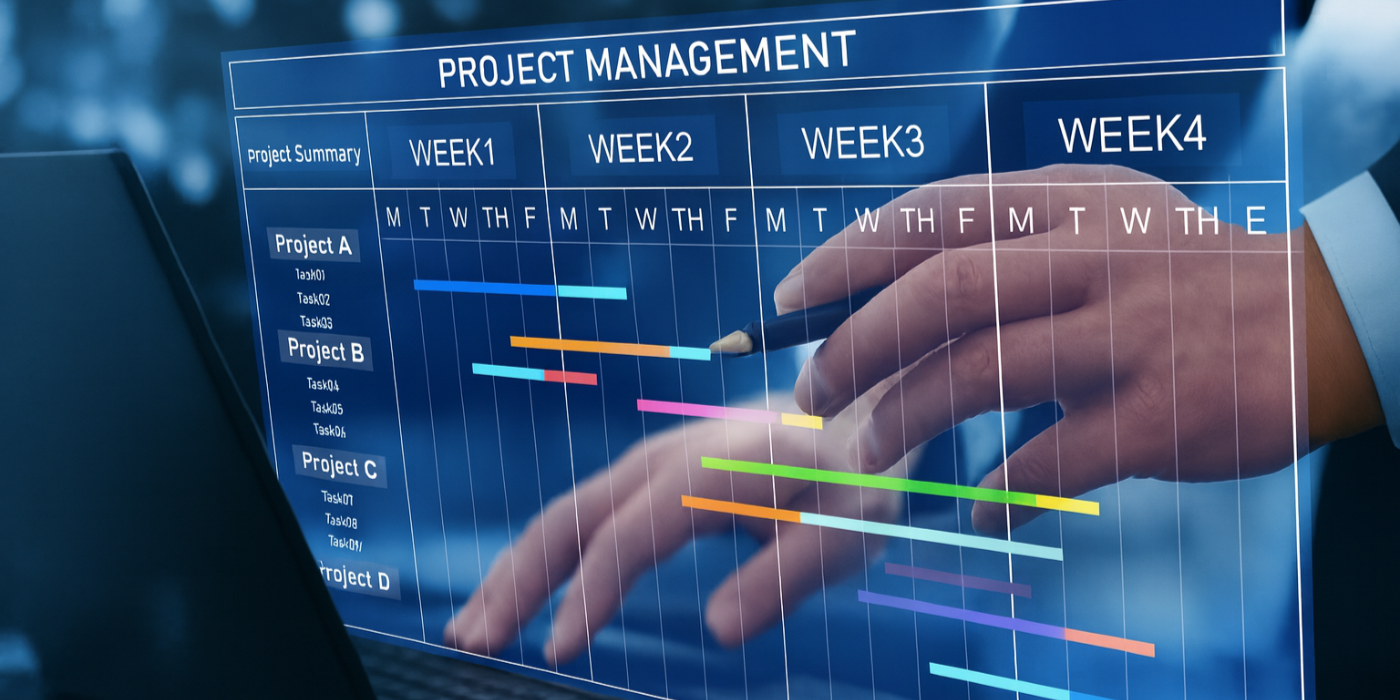
1. Why Microsoft’s Job Cuts Are Really a Project Management Reset
The headline reads “6,000 layoffs,” but behind the scenes, Microsoft is eliminating entire categories of low-yield projects, collapsing redundant program layers, and restructuring how cross-functional execution works. The layoffs are simply the visible symptom of a deeper transformation: the company is aligning resources to support AI, Cloud, and Security, while sunsetting legacy projects that drain portfolio capacity.
This reflects patterns identical to those reported in the digital transformation acceleration study and the AI adoption in project management trends. Project managers who rely on slow governance cycles, unclear metrics, and siloed decision-making are becoming liabilities — while PMs fluent in agile governance, benefits tracking, and value prioritization are becoming indispensable.
The internal pain points Microsoft is trying to eliminate include:
Portfolio bloat: thousands of small, disconnected initiatives consuming cost without measurable outcomes.
Redundant PM layers: too many program leads, not enough execution alignment.
Slow escalation paths: blockers taking weeks to resolve due to unclear ownership.
Low visibility into cross-team dependencies: recurring release delays and rework.
These are the same issues highlighted in the project scheduling glossary, risk identification glossary, and stakeholder terminology guide. Microsoft is not unique; they are simply acknowledging these pain points at enterprise scale — and acting ruthlessly.
| PMO Priority | What It Fixes | Expected Outcome | Relevant PM Concept |
|---|---|---|---|
| Portfolio Simplification | Too many low-value initiatives | Lean, ROI-aligned project mix | Portfolio governance |
| Program Layer Reduction | Excess managerial overhead | Faster decision-making | Program governance |
| Value-Based Roadmapping | Output-focused planning | Outcome-driven execution | Roadmap governance |
| Skills-Based Resource Allocation | Misaligned staffing | Higher utilization variety | Resource management |
| Cross-Functional Pods | Silo delays | Better dependency management | Agile frameworks |
| Unified Escalation Path | Slow issue resolution | Fewer release delays | Issue tracking |
| AI-Enhanced Risk Detection | Invisible blockers | Proactive mitigation | Risk intelligence |
| Cloud & AI Prioritization | Legacy project clutter | Modernized strategic focus | Strategic alignment |
| Lean Governance | Overbuilt approval chains | Higher velocity | Lean PMO |
| Cost Controls | Budget overruns | Predictable spending | Cost management |
| Skills Mapping | Wrong talent on key projects | Better project-team fit | HR in project management |
| ESG & Compliance Integration | Audit rework | Reduced risk exposure | Compliance governance |
| Centralized PM Terminology | Miscommunication | Consistent execution language | PM glossaries |
| Security-First Architecture | Vulnerabilities in delivery | Safer releases | Security governance |
| Dependency Mapping | Cross-team conflicts | Smoothed release cycles | Critical path methods |
| Unified Performance Metrics | Vanity KPIs | Outcome-aligned KPIs | Benefits realization |
| Vendor Optimization | Redundant vendor spend | Cost savings | Procurement terms |
| Change Impact Scoring | Rollout failures | Smoother transitions | Change management |
| Automation of PM Workflows | Manual reporting | Time saved for actual delivery | Automation in PM |
| Cross-Business OKR Alignment | Conflicted priorities | Unified direction | OKR methodologies |
| Scenario-Based Budgeting | Static financial planning | Dynamic spend controls | Cost-risk analysis |
| AI Workforce Planning | Under/overstaffed teams | Balanced workforce | Predictive planning |
| Project Termination Guardrails | Zombie projects | Faster kill decisions | Governance models |
| Centralized Knowledge Hubs | Lost learnings | Reusable project patterns | Knowledge management |
2. The New Microsoft Project Management Architecture (2025)
Microsoft’s revised project management structures now center on portfolio clarity, execution velocity, and AI-enhanced governance — shifts that reflect patterns highlighted in the AI-in-project-management insights, the project issue tracking framework, and the resource allocation methodologies. To eliminate operational drag, Microsoft is dismantling structures that produced slow decision cycles, including multi-layered PM roles that duplicated oversight, fragmented teams driving overlapping initiatives, and legacy reporting mechanisms that generated noise rather than actionable intelligence. This reduction of structural complexity positions the PMO to operate with sharper focus, fewer cross-team conflicts, and higher strategic alignment — echoing the performance themes discussed in the project scheduling terminology guide.
In place of these outdated frameworks, Microsoft is rebuilding around a modern execution engine. Cross-functional delivery pods now merge engineering, PM, design, data, and security to slash handoff friction. Execution is governed by measurable outcomes rather than activity outputs, a principle reinforced in the project quality terminology guide. Funding has shifted to strategic themes, eliminating individual budget pitches and aligning teams to enterprise priorities, similar to the patterns noted in the project manager salary comparison. AI-powered early-warning systems detect risks and dependency conflicts long before they escalate. Finally, Microsoft has mandated PM upskilling across benefits realization, cross-team planning, cost governance, and security compliance — development paths strongly aligned with the competency frameworks in the CPD certification roadmap and the strategic capabilities highlighted in the IAPM exam insights.
3. How Microsoft Determines Which Projects Live or Die (2025 Ruleset)
Post-layoff Microsoft has adopted a zero-sympathy governance approach:
A project survives only if it meets three criteria:
Direct alignment to strategic themes (AI, Cloud, Security, Enterprise Collaboration).
Quantified benefits hypothesis — no vague business value claims.
Acceptable risk & cost profile validated through structured frameworks similar to the risk glossary and cost management concepts.
Projects are killed rapidly if they:
cannot justify engineering investment beyond 1–2 quarters
show poor early signal metrics
introduce compliance or security risk
duplicate functionality offered by other teams
This resembles patterns described in the project issue escalation guide and the procurement terminology framework.
4. What This Reorganization Means for Project Managers Globally
Microsoft is redefining the role of a PM into four competencies:
1. Strategic clarity
Understanding budgets, tradeoffs, and portfolio scoring (reinforced by the CAPM exam study plan).
2. Technical-risk fluency
You must now speak security, privacy, data governance, and compliance — echoing concepts in the APT threat mechanisms guide.
3. Cross-team orchestration
Dependency navigation is becoming a critical core skill, as emphasized in the critical path terminology.
4. Value storytelling
If a PM cannot articulate why a project matters, the project simply won't survive — a trend reinforced by the project communication terminology guide.
PMs who cling to task tracking and status reporting will struggle.
PMs who master strategy, value, and cross-functional execution will thrive.

5. How PMOs Can Adapt Before Similar Layoffs Hit Their Organizations
Whether you work in tech, finance, telecom, manufacturing, or government — Microsoft’s shift is a signal for your PMO.
Here is what you must implement immediately:
1. Build a portfolio scoring model
Use weighted criteria similar to the patterns in the CPD certification guide.
2. Define strategic themes
Like Microsoft’s AI–Cloud–Security alignment.
3. Kill non-strategic legacy projects
Use guidance from the project scheduling glossary.
4. Integrate compliance & risk reviews
This mirrors the security emphasis found in the cybersecurity overhaul report.
5. Reskill PMs based on business priorities
Use structured learning paths like the:
These methods increase PM maturity while decreasing organizational fragility — exactly what Microsoft is optimizing for.
6. FAQs: Understanding Microsoft’s Project Management Transformation (2025)
-
Because these functions were supporting fragmented portfolios, duplicated work, and outdated delivery structures. The company wants leaner teams aligned with strategic themes like AI and Cloud. This aligns with patterns seen in the economic uncertainty agile adoption report.
-
Expect fewer generalist PM roles and more specialized roles focused on portfolio governance, risk-security integration, and AI-driven execution oversight. PMs with skills aligned to the PMP vs CAPM comparison will stand out.
-
Yes. Layoffs often follow portfolio inefficiencies. The same signals Microsoft saw — bloat, misalignment, slow execution — are visible in most organizations. Strengthening your PMO using the resource allocation framework reduces your risk.
-
Risk intelligence, cross-team orchestration, AI-assisted planning, benefits realization, and compliance literacy — all supported by APMIC resources like the risk glossary and project initiation terminology.
-
-
Integrated systems that cover intake → portfolio scoring → execution → benefits realization. Companies following guidance from the PM software comparison are already shifting this way.
-
By becoming the translator between strategy, execution, and risk — a theme throughout the top 100 PM terms glossary and the communication terminology guide.
